
Quick Facts on Water
- 96.4% – Percentage of water volume on earth that is salty water and found in seas and oceans.
- 3.4% – Percentage of fresh water on our planet. This fresh water is broken down as follows:
- 2.15% – Equivalent to 70% of total fresh water is contained in the glaciers or as permanent snow.
- 0.63% – Equivalent to 22% of total fresh water is found in groundwater.
- 0.019% – Equivalent to 0.6% of total fresh water constitutes surface waters such as lakes and rivers.
- 0.001% – Percentage of water volume on earth contained in the atmosphere.
Introduction
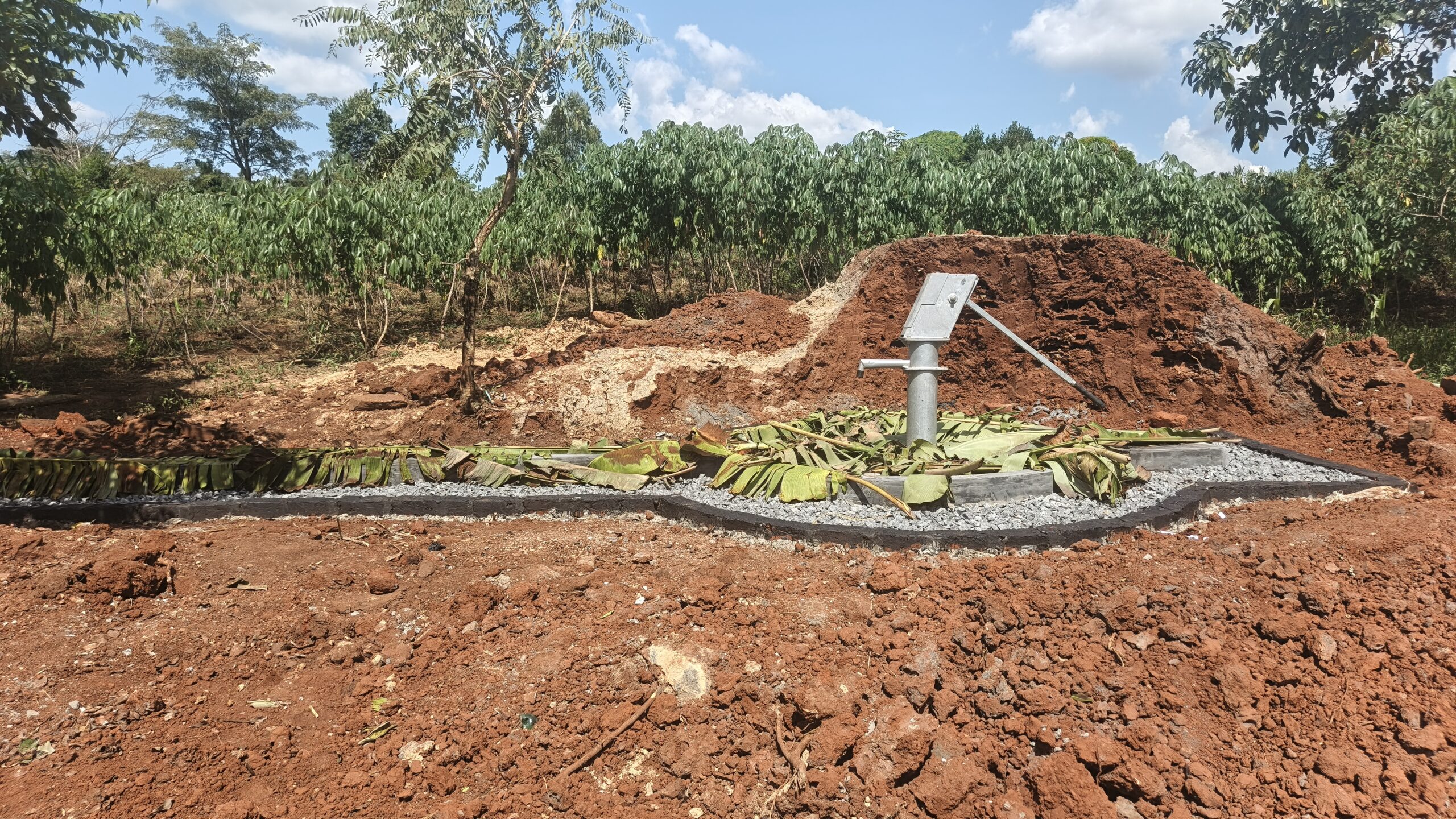
Borehole drilling refers to the process of creating a narrow, deep, cylindrical hole, or borehole into the earth’s surface using specialized drilling equipment like drilling rigs. This fundamental technique is employed across numerous sectors, most commonly to access underground resources such as water (creating a water well).
Often used for deep boreholes, it taps into deep underground aquifers to provide a cleaner, consistent, and more reliable water supply than shallow hand dug wells. Conversely, a hand-dug well or natural spring is typically shallow and dug manually. These shallow wells are usually only a few feet deep and their locations chosen based on surface clues like vegetation or soil conditions. The water they reach is often subsurface groundwater, which is highly susceptible to contamination from animal waste, human sewage, and agricultural chemicals like fertilizers and pesticides.
In Uganda, property owners can drill boreholes on their private land, providing an effective remedy to rising municipal water costs, intermittent and unreliable mains water supply, and water restrictions (rationing). Borehole drilling is key to secure independent and consistent water supply for individuals, businesses, and institutions requiring high volume of water abstraction such as schools, leisure facilities like hotels, irrigation and livestock water supplies, estates, and industrial and commercial users such as factories. By engaging reputable drilling companies, property owners can be guided on the entire process of securing the necessary permits, licenses, and approvals from relevant authorities, ensuring that the undertaking is legal and the drilling works are of high quality, compliant with environmental regulations and local bylaws. The process of drilling boreholes involves numerous stages, which are briefly discussed below.
Hydrogeological Survey
Hydrogeology is the branch of geology that focuses on the distribution, movement, and quality of groundwater. Hydrogeology provides information on how surface water is recharged into the ground and its movement in subsurface (through aquifers) in between soil and rock strata.
A hydrogeological survey or geophysical survey is a scientific study and analysis of underground water sources (aquifers) to determine groundwater availability, location, depth, quality, and sustainability. The survey involves collecting data on hydrologic and geologic parameters such as the geology, soil structure, rock fractures, water table levels, and other factors that influence the presence of underground water. It is carried out using resistivity or magnetic field based instruments (geophysical instruments) to locate fractured zones and water bearing zones within the earth’s surface for groundwater exploration purposes.
Conducting a hydrogeological assessment is a critical step before initiating any borehole drilling project. It is important for:
- Confirm groundwater availability/borehole siting. Determines the presence and quantity of groundwater (expected borehole yield), ensuring the proposed well location can yield sufficient water to meet the intended demand.
- Determine borehole depth. A borehole must be drilled deep enough to access a reliable water supply. A hydrogeological survey helps to determine the optimal depth to reach water, avoiding unnecessary drilling costs.
- Assessing water quality. Evaluates potential contaminants and natural water quality parameters such as salinity, fluoride, bacteria, helping in determining the suitability of groundwater for its intended use. This as well helps decide if additional filtration or treatment is needed, and the cost implications of such.
- Informing well design and placement. By understanding subsurface conditions, the hydrogeological assessment guides the optimal design and placement of wells, enhancing efficiency and longevity.
- Identifying geological risks. A hydrogeological survey assesses soil and rock formations to identify potential risks, such as collapses or contamination pathways, informing safe and stable borehole construction.
- Regulatory compliance. A hydrogeological assessment is required to ensure groundwater extraction does not adversely affect the environment or neighboring water users.
Investing in a hydrogeological survey (geophysical survey/borehole siting/groundwater survey) increases the chances of getting a productive, safe, and sustainable borehole. By identifying the best drilling sites, hydrogeological surveys save money by reducing the likelihood of unsuccessful drilling attempts (dry wells).
Borehole Drilling
The process of borehole drilling is initiated once a hydrogeological survey has been completed and the most optimal drilling point located. Below are key borehole drilling steps.
Mobilization and drilling. The drilling rig arrives, sets up, and drills the borehole using various techniques (air, mud, or jetting) to the required depth, collecting geological samples. Air drilling is suitable for rocky formations and dry environments while mud drilling is ideal for loose soils and areas with high water tables.
Casing and gravel packing. Pipes (casings and screens) are installed to prevent collapse and contamination, with gravel packed around them to enhance filtration and maintain water quality. Casing and lining of the borehole stabilizes the borehole and prevents collapse, ensuring the longevity of the well.
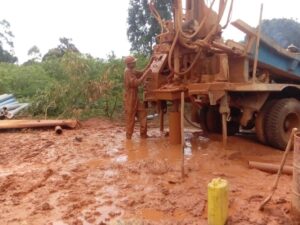
Well development and cleaning. The borehole is flushed (airlifted/surged) to remove drilling debris, fine particles, drilling fluids, and enhance water flow and quality.
Test pumping. Water is pumped continuously for hours (24hrs, 48hrs, or 72hrs) to measure the borehole’s yield (flow rate/water volume per hour), static and dynamic water levels, and determine optimal pump size and pump installation depth.
Water quality testing. Thorough water sampling and testing to determine chemical and bacteriological properties, to determine whether it’s fit for consumption or needs prior treatment to remove chemical or bacteriological contaminants.
Pump installation and slab construction. After the successful completion of sampling and analysis, the necessary well components are installed. This step is crucial for transforming the drilled borehole into a functional well. The permanent pumping system (submersible pump, pipes, control panels and electro-mechanical components) is installed, and a concrete wellhead slab that prevents surface contamination.
Cleanup and site restoration. The final step in the borehole drilling process is cleanup and site restoration. It is critical for minimizing environmental impact and restoring the site to its original state. It involves carefully dismantling and removing all drilling equipment from site, temporary structures, and ensuring waste materials are properly collected and disposed in accordance with environmental regulations.
Maintenance. Boreholes require regular maintenance to prevent issues such as blockages, pump failures, and water contamination. This includes periodic inspections, cleaning, and emergency repairs.
Water abstraction license. If your abstraction is greater than a certain threshold per day, a water abstraction license/permit will be required, failure of which you risk penalties from the regulatory body. Once issued with an abstraction permit, continuous abstraction monitoring needs to be undertaken, and in case of withdrawals beyond the permitted maximum abstraction volumes, penalties are imposed by the regulatory body, and where necessary the abstraction permit cancelled.
Well Development
Well development is the post-drilling process of cleaning a new well by removing fine sediments, drilling mud, and restoring the aquifer’s natural hydraulic connection to maximize water flow, increase yield, improve water quality, ensure sand free water, and extend the well’s/pump’s lifespan. It transforms a newly drilled hole into a functional, efficient water supply.
Key reasons for undertaking well development.
Remove drilling byproducts. Eliminates drilling mud, silt, clay, and filter cake from the borehole and near the well aquifer that clog pores and reduce flow.
Maximize yield/efficiency. Increases the specific capacity (water flow rate) by improving the hydraulic connection between the aquifer and the well screen.
Prevent sanding. Stabilizes the surrounding formation and filter pack, preventing fine sediments from entering the well and damaging the pump.
Improve water quality. Ensures clearer water with less turbidity and reduces potential for bacterial growth.
Reduce costs and extend life. Lowers pumping costs (due to reduced friction), minimizes wear on the pump/well components, and extends the overall service life of the well.
Different well development techniques are applied, among them:
Airlift pumping. Airlifting is the process of pumping air into the water column to displace the water and dislodge any sediment or drilling material that may be on the screen of the well. This technology needs compressed air.
Over-pumping. The well is pumped at a rate exceeding its normal operating capacity to remove loose sediment. In terms of required material and effort, this is the simplest, but least effective method. It generally only develops the more permeable sections of the aquifer and, since water only flows inwards towards the borehole, it can draw excessive material against the screen openings, creating a condition termed bridging, in which the formation is only partially stabilized. Formation material may subsequently enter the hole if the formation is agitated and the bridges collapse.
Surging. This very common method flushes water backwards and forwards through the screen, as to prevent any bridging behind the screen and moving fines through into the hole. The surge effect can be generated by intermittent pumping and repeatedly allowing the water column to fall back into the hole, or preferably by mechanical means using a close-fitting plunger/bailer (surge block) moved up and down on the hole by the drilling rig. The bailer acts as a piston in the screen to pull loose material into the well for subsequent removal.
Jetting. This development method uses the injection of high-pressure air or water through the screens to remove fines and drilling fluids. It uses a special jetting tool that directs horizontal jets onto the screens to break up any filter cake and agitate and flush the adjacent gravel pack or formation. This method is most appropriate with rotary rigs.
Jetting and simultaneous pumping. This method combines high-pressure water jetting with pumping (usually using an airlift system) and is particularly applicable in unconsolidated sands and gravel. Essentially, the jetting process loosens the fine material and the pumping action draws it through the screen and directly to the surface.
Hydro-fracturing. In bedrock aquifers, groundwater is contained in fractures and borehole yields are often very low. In such cases, the yield may be enhanced by the use of an aquifer stimulation method such as hydro fracturing. This is a second level of development (of the aquifer) in which high-pressure pumps are used to inject fluid to overcome the overlying rock pressure and open up existing and new fractures that will enable water movement into the borehole. Considerable pumping pressure is required.
Supplementary development methods. Other development or stimulation methods include the use of acid or dispersant injection in carbonate aquifers to enlarge fissures by dissolution of aquifer material, and “shooting” in hard-rock terrain using explosive charges placed in the borehole to increase the number of fractures around the hole. Such methods are very specialized techniques, and are not commonly used in the majority of water borehole drilling work.
Test Pumping
Test pumping can be defined as the activity of pumping of a well from its measured static water level at known yield, and recording the rate at which the level of water in the well changes. At a particular point where the dynamic water level is attained, the rate of inflow is equal to the rate of pumping. Test pumping is necessary to determine a borehole’s sustainable yield (safe yield), assess aquifer characteristics, ensure water quality, and optimize pump selection, preventing over-extraction, contamination, and costly mistakes. It provides critical data for long-term water supply planning and regulatory compliance. The results from borehole test pumping aren’t just numbers; they’re used to make important decisions that affect communities, industries, and the environment.
Reasons for borehole test pumping.
Yield and sustainability. Measures how much water the borehole can consistently produce over the long-term without depleting the aquifer (safe yield).
Aquifer properties. Determines hydraulic characteristics like transmissivity and storage coefficient (how easily water flows through the aquifer).
Water quality. Checks for stability, suitability, and potential issues like drawing in pollutants as sediment, mineral content, or saltwater over time. It helps identify any water treatment needs early if water quality changes during pumping, so appropriate solutions can be designed and implemented before use begins.
Well performance. Evaluates how well the borehole structure (casing, screen) is performing.
Borehole design. Test pumping results are used to decide on borehole size and pump type. A borehole handling a large amount of water might require a bigger pump and stronger casing.
Pump selection. Guides the choice of the correct pump type, size, and optimal installation depth (preventing under or over pumping). Test pumping allows for the correct design of pumps, pipes, and storage systems based on real-world performance data, thus avoiding inefficient operation.
Environmental impact. Assesses the effect of abstraction on neighboring wells and the overall environment.
Cost and compliance. Helps estimate operational costs and provides data required for licensing and legal compliance.
Types of borehole pumping tests.
There are different types of borehole pumping tests, each designed to learn something specific about the borehole and the aquifer.
Step-drawdown test. The step-drawdown test gradually increases the pumping rate in “steps.” This means the water is pumped out faster and faster in set periods. Hydrogeologists measure the water level during each step to see how the borehole reacts to different pumping speeds. This test helps determine the borehole’s efficiency and shows how much water can be extracted without lowering the water level too much.
Constant rate test. In a constant-rate test, water is pumped from the borehole at a steady rate over several hours or even days. Hydrogeologists measure how much the water level drops (called “drawdown”) during this time. By studying the drawdown rate, they can estimate the amount of water available in the aquifer and predict how long the borehole can supply water without running dry.
Recovery test. Once the pumping stops, the water level rises again, returning to its natural level. This is called recovery. Hydrogeologists measure how quickly the water level returns to normal during a recovery test. A faster recovery indicates the aquifer can refill quickly, meaning a sustainable amount of water is available.
Borehole Instrumentation and Monitoring
Borehole instrumentation (borehole monitoring) involves installing sensors and probes into boreholes to monitor hydrological parameters like groundwater pressure and temperature at depth. These instruments provide real-time data for groundwater and environmental monitoring.
Common borehole instrumentation tools.
- Water level meters (dip meters/portable water level indicator).
- Multiparameter probes/data loggers (salinity, EC, turbidity, temperature).
- Wireless water level transmitter (remote digital groundwater monitoring terminal).
- Pressure transmitter/pressure transducer.
- Handheld ultrasonic depth meter.
- Turbidity meter.
- Video cameras (CCTV). Used for visual inspection of borehole conditions (casing integrity, blockages).
Groundwater monitoring is necessary to protect public health, ensure sustainable water supplies, detect contamination, manage aquifer levels, assess environmental impacts (like climate change), and comply with regulations. It provides crucial data for managing a hidden but vital resource that supports drinking water, agriculture, industry, and ecosystems.
Reasons for groundwater monitoring.
Public health and safety. Detects contaminants (nitrates, heavy metals, industrial chemicals) to prevent illness and ensure safe drinking water.
Sustainable water management. Helps balance withdrawal rates with natural recharge to prevent depletion and subsidence.
Contamination tracking. Identifies pollution sources (spills, agricultural runoff, saltwater intrusion) and tracks their spread.
Aquifer management. Determines aquifer characteristics, flow direction, and long-term changes in storage.
Environmental protection. Evaluates impacts on springs, rivers, wetlands, and assesses climate change effects.
Infrastructure protection. Prevents land subsidence that can damage public/private infrastructure.
Regulatory compliance. Ensures adherence to environmental laws and supports remediation planning.
Maintenance and Borehole Rehabilitation
Borehole rehabilitation and restoration.
Borehole rehabilitation and restoration refer to the processes involved in repairing and reviving a borehole that has lost its functionality or efficiency. Over time, boreholes can become blocked, experience reduced water yield, or face issues with water quality. Rehabilitation involves addressing these problems through a series of methods designed to restore the borehole’s original capacity and extend its lifespan. Rehabilitating a well or borehole is often the most cost effective alternative to re-drilling a new borehole at a different location and this can be done for a variety of reasons including.
- Reduced water flow (siltation, screen clogging, aquifer depletion).
- Deterioration in water quality (cloudy or discolored, dirty/contaminated, iron/limescale build-up).
- Structural damage and mechanical breakdown/blockage (wear and tear of pumps, casings, rusted parts).
- Bacteriological plugging. Bacteria and other microorganisms can also clog a borehole.
- Well collapse or structural damage.
- Chemical encrustation (iron/manganese oxides, calcium/magnesium carbonates, sulphates). Chemical encrustation is caused by the precipitation of minerals dissolved in the groundwater due to changes in flow and/or pressure conditions at the well, restricting the flow of water.
Procedure for borehole rehabilitation and restoration.
Site inspection and assessment. The first step in borehole rehabilitation is a thorough inspection of the borehole to determine the causes of the issues. This involves examining the borehole casing, checking for physical damage, and assessing the water quality and yield. A borehole inspection camera is used to inspect the borehole’s interior. A proper assessment helps to identify specific issues that need to be addressed, whether it’s a drop in water levels or a blockage in the borehole.
Cleaning the borehole. One of the most common steps in borehole restoration is cleaning. This is done by pumping water and using specialized equipment to remove debris, minerals, or biofilm that may have accumulated inside the borehole. In some cases, high-pressure water jetting may be used to clean the borehole walls. Cleaning a borehole is essential to restore the natural flow of water and increase the yield. It is a crucial part of any borehole restoration effort.
Repairing or replacing well screens and relining. The well screen is a critical component that allows water to enter the borehole while filtering out sand and debris. Over time, the screen can become clogged or damaged. In such cases, repair or replacement is necessary to ensure optimal water flow. A damaged well screen can cause the borehole to lose its efficiency. Replacing it helps restore the borehole to its original capacity. For partial or total relining, casings or screens that are installed should be of corrosion-resistant materials.
Installing new pumps and motors. If the pump or motor is damaged or inefficient, it is replaced to restore the borehole’s pumping capacity. New, more efficient pumps improve water flow and reduce energy consumption. Installing a new pump can greatly improve the performance of a borehole, especially if the old pump has been in use for many years.
Sealing and reinforcing the borehole structure. To prevent contamination and structural degradation, the borehole may need to be sealed or reinforced. This involves fixing any cracks in the casing or adding protective layers to prevent external contaminants from entering the water source. Reinforcing the borehole casing ensures that it remains secure and prevents pollutants from contaminating the water.
Borehole camera inspection.
Borehole camera inspection involves the use of a specialized camera system to visually inspect the interior of a borehole or well. Borehole camera inspection is necessary to visually assess downhole conditions, identify structural issues (cracks, corrosion, blockages), verify geology/water levels, and diagnose well problems without manual entry, leading to informed maintenance decisions and cost savings.
Reasons for borehole camera inspection.
Maintenance and rehabilitation. Used before and after treatments to confirm cleaning/rehabilitation effectiveness and plan future work.
Identifying potential issues. Camera inspection allows for a thorough visual examination of the borehole’s interior. This can reveal any obstructions, damages, presence of foreign objects, casing cracks, scaling, corrosion, sediment accumulation, loss of well casing integrity, or irregularities such as precipitates that may hinder water flow or compromise the integrity of the borehole structure.
Preventative maintenance. By detecting problems early, camera inspection helps prevent minor issues from escalating into costly repairs or equipment failures. Regular inspections can thus extend the lifespan of the borehole and associated equipment.
Ensuring water quality. Contaminants or sediment buildup inside the borehole can impact water quality. Camera inspections can detect such issues, enabling prompt remediation to ensure the water remains safe for consumption or other uses.
Optimizing performance. Understanding the condition of the borehole allows for targeted maintenance and optimization efforts. This can include cleaning procedures to remove sediment or scaling, or adjustments to equipment placement to improve water flow.
Data collection and documentation. Camera inspections provide visual documentation of the borehole’s condition over time. This data is invaluable for tracking changes, evaluating the effectiveness of maintenance efforts, and complying with regulatory requirements.
Safety assurance. Inspecting boreholes with a camera minimizes the need for manual entry, reducing the risks associated with confined spaces and ensuring the safety of personnel involved in maintenance operations.
The primary advantage of borehole cameras is their cost-effectiveness compared to traditional drilling methods. By providing real-time imaging, these cameras eliminate the need for costly and time-consuming manual inspections. Furthermore, borehole cameras offer non-destructive inspection capabilities, allowing operators to assess borehole conditions without disturbing the surrounding environment.
Borehole fishing.
No drilling operation is perfect and it is very common for broken pieces of equipment or tools to fall to the bottom of the drill well. In order to retrieve these objects, the drilling operation must be suspended in order to commence fishing.
Borehole fishing is a technical operation performed to retrieve lost, stuck, or broken equipment and foreign objects from within a wellbore. This can occur due to various reasons, including equipment failure, accidental drops, or natural sediment build-up. The primary purpose is to clear the well and allow normal operations, such as water extraction, drilling, or maintenance, to resume.
Reasons why borehole fishing is done include:
Retrieving dropped items. Pumps, motors, pipes, cables, or even hand tools can accidentally fall into the borehole during installation, maintenance, or operation.
Recovering stuck equipment. Submersible pumps or drill strings can become lodged due to blockages from mud, silt, sand, or formation collapse (sloughing shale).
Clearing obstructions. Foreign objects or debris (fish or junk) in the wellbore can obstruct the passage of tools and disrupt the flow of water.
Enabling continued operations. The lost item must be removed to continue drilling operations or restore the well’s functionality, which helps prevent costly delays.
Specialized fishing tools, such as fishing strings, overshots, spears, and junk baskets, are used to grip and pull the stranded objects out of the hole. Sometimes, camera-aided fishing is employed to monitor the process in real-time and increase the chances of a successful recovery. Other fishing methods include using boot baskets, permanent magnets, tapered mill reamers and wireline spears.
Borehole flushing.
Borehole flushing is a cleaning process that uses high-pressure water and/or compressed air to remove accumulated sediments, mineral deposits, and other materials from the borehole and the surrounding aquifer. The specific items removed by this process typically include:
Sediment and silt. Fine particles of soil and rock that settle at the bottom of the borehole or clog the screens and the surrounding aquifer.
Dirt and debris. General dirt, mud, and various loose materials that may have fallen into the well or accumulated over time.
Mineral deposits and scaling. Buildup of minerals like iron and calcium, which can form on the casing and screens, restricting water flow.
Bacterial buildup and biofilms. Organic contamination that can affect water quality (taste, odor, color) and system efficiency.
Lost items. In some cases, professional cleaning services may use tools (like a CCTV camera) to first remove larger lost items such as pump cables, PVC pipes, or even old pumps themselves before the main flushing begins.
The goal of flushing is to clear these obstructions, which helps to restore the natural flow of water, improve water quality (making it clearer and safer for consumption), and extend the life of the pump and the borehole itself.
Performance issues/system problems that necessitate borehole flushing.
Decreased water pressure throughout your property often indicates that sediment is restricting water flow through screens or that pump efficiency has declined due to buildup.
Pump cycling more frequently can signal that your pump is working harder to maintain pressure due to reduced water availability caused by screen clogging.
Higher electricity bills may reflect pump inefficiency caused by having to work against increased resistance from sediment and mineral deposits.
Reduced water yield during peak usage periods suggests that your borehole’s productive capacity has been compromised by contamination.
Pump overheating can occur when sediment forces the pump to work harder, reducing its lifespan and increasing maintenance costs.
Frequent pump repairs may indicate that abrasive particles are damaging pump components, requiring professional flushing to prevent ongoing issues.
Inconsistent water supply during different times of day often reflects partial screen blockage that affects water availability.
When is flushing not enough.
Structural issues. If your borehole has structural problems such as collapsed casing or damaged screens, flushing alone won’t restore performance. Professional assessment can determine whether repair or replacement is necessary.
Aquifer depletion. In cases where groundwater levels have dropped significantly, flushing won’t increase water availability. These situations may require drilling deeper or finding alternative water sources.
Severe contamination. Some types of contamination, particularly chemical pollution from industrial sources, may not be effectively addressed by flushing alone and require specialized treatment approaches.
Borehole decommissioning
No water well lasts forever; well heads get damaged, steel degrades and in some cases even brand new boreholes pose an immediate risk due to poor construction techniques. When boreholes reach the end of their operational life or become contaminated beyond repair, proper decommissioning becomes essential for environmental protection and public safety.
Decommissioning is the process of permanently sealing a borehole to restore the integrity of the ground. This typically involves backfilling the borehole with grout or bentonite to prevent vertical flow of groundwater and to protect aquifers. Boreholes are decommissioned primarily to protect groundwater resources and ensure public safety by permanently sealing the artificial pathway they create into the subsurface.
Reasons for decommissioning include:
Preventing groundwater contamination. An unsealed borehole acts as a direct channel for contaminants (surface runoff, farm chemicals, fuels, septic tanks) to bypass the natural filtration of the soil and reach underlying aquifers.
Poor water quality/low yield. Boreholes may be decommissioned if water becomes contaminated, salty, or flow rates become too low to be useful.
Preventing inter-aquifer mixing. Decommissioning stops the vertical migration and mixing of water between different geological layers or aquifers that may have naturally different water qualities or contaminant levels.
Eliminating safety hazards. Open or improperly covered boreholes pose significant physical risks and can be fatal for people, children, livestock, and other animals that may fall into them.
Stopping water wastage and pressure loss. For artesian boreholes where water flows to the surface naturally under pressure, proper sealing prevents the uncontrolled discharge and wastage of water, which can deplete the aquifer and affect other local water users.
Age/condition. Old boreholes may deteriorate, fail, or no longer meet modern construction standards, thus necessitate decommissioning.
Regulatory compliance. Environmental regulations mandate the proper abandonment of boreholes to protect the environment, public health, and water resources.
End of use or project completion. Boreholes are decommissioned when they are no longer needed for their intended purpose, such as when a water supply well is replaced by a mains connection or an abstraction license expires.
Structural failure or unreliability. Wells that have failed structurally (corroded or broken casing) or are no longer capable of rehabilitation are removed from active use.
Site redevelopment. Decommissioning is often required as a planning condition when a site is being redeveloped to ensure the land is safe and stable for future construction or other uses.
Stages involved in borehole decommissioning process.
Define the objectives. The objectives of decommissioning a borehole usually take into account removing trip/fall hazards, preventing the borehole acting as a conduit, stopping the mixing of water from different aquifers, and to stop the wastage of borehole water from the overflow from artesian boreholes.
Remove the headworks and casing. This process ensures the well is free from any obstructions that could interfere with the sealing of the borehole itself.
Backfilling. This is where the borehole is filled to restore to its pre-drilled condition. This requires a wide range of materials and must be carried out by a well drilling contractor who knows the area. Certain materials may change under the environmental/pH conditions they are subject to specific to the area. It is advisable to use inert, non-polluting materials such as gravel, sand, shingle, concrete, bentonite, rock, or cement grout.
Sealing of the borehole. The backfilled borehole should then be capped and sealed (with an impermeable plug) to prevent entry of any foreign objects, surface runoff, or contaminants from entering.
Documentation. Accurate records of the decommissioning process are essential for future reference. These records should include details such as reasons for abandonment, measurements taken before backfilling, materials used, and any challenges encountered during the process.
Costs in Borehole Drilling and Maintenance
Factors that determine cost of borehole drilling.
Borehole drilling costs are influenced by several geological and logistical factors, among them.
Depth of drilling. The deeper the borehole, the more resources and time required to drill, directly impacting the overall cost. Depth is usually determined by water table levels.
Soil and rock conditions. Hard or rocky terrain demands more advanced drilling equipment and techniques, which increase the overall cost compared to softer ground.
The intended purpose of the borehole. A domestic water well will have different requirements and associated costs than a borehole for agricultural irrigation.
Accessibility of the site. Remote locations or those difficult for heavy machinery to reach may incur additional transportation fees.
Type of casing and materials used. uPVC casing is typically less expensive than steel, but material choice depends on ground conditions and expected lifespan.
Drilling method. Rotary, percussion, or auger drilling, each with varying costs.
The type and cost of pump system installed i.e. India Mark II hand pumps or solar powered submersible pump systems. Additional costs for reservoir tank and all necessary plumbing and electrical connections.
Well development and test pumping, which involves flushing the well and conducting well yield tests to ensure proper water flow and quality and to guarantee long-term sustainability.
Water quality testing and potential inclusion of water treatment systems such as filtration or chlorination if the water does not meet potable standards.
Costs for borehole drilling and maintenance services in Uganda.
The costs for borehole drilling and maintenance in Uganda vary greatly. Below is a summary table for price ranges for various borehole drilling and maintenance services.
SERVICE | PRICE RANGE (UGX) |
Hydrogeological survey | 1,500,000 – 2,000,000 |
Borehole drilling | 18,000,000 – 30,000,000 |
Test pumping (per hour) | 100,000 – 300,000 |
Borehole camera inspection | 2,000,000 – 2,500,000 |
Borehole flushing | 3,000,000 – 4,500,000 |
Borehole fishing | 1,200,000 – 2,200,000 |
Borehole rehabilitation | 5,000,000 – 10,000,000 |
Borehole instrumentation (installation of sensors) | 7,000,000 – 10,000,000 |
Pump installation (India Mark II hand pump, U3 modified system) | 3,000,000 – 4,000,000 |
Borehole motorization (installation of electrical submersible pump or solar submersible pump). Varies depending on head and discharge | 1,500,000 to 10,000,000 |
Costly mistakes in borehole drilling.
- Ignoring a hydrogeological survey. A few property owners assume that water can be found anywhere and drill without a hydrogeological survey. This often leads to drilling in areas with little or no groundwater, resulting in a dry or low-yielding borehole. A proper survey helps identify the best drilling spot by assessing underground water availability, soil composition, and rock formations; for every property has unique underground conditions.
- Ignoring borehole depth and water table considerations. Drilling too shallow can result in seasonal water shortages, while drilling too deep without proper casing can lead to contamination from saline or mineral-rich layers. Many boreholes in Uganda fail because they don’t reach the right aquifer depth for sustainable water supply. A professional hydrogeologist determines the appropriate depth based on water table levels in your area. Ensure the drilling contractor follows these recommendations and does not stop drilling too soon to cut costs.
- Using low quality casing and materials. Some contractors use poor-quality casings that easily crack or corrode, leading to borehole collapse and water contamination. In Uganda’s harsh environmental conditions, using durable, corrosion-resistant casings is essential for long-term borehole integrity. High-quality materials may cost more upfront but save you from expensive repairs or re-drilling in the future.
- Poor installation of gravel packs. Improper gravel packing causes sand to enter the borehole, which clogs pumps and reduces water quality. Ensure a well-sized gravel pack is installed around the screened section. It filters fine particles and supports long-term flow.
- Skipping proper borehole development and cleaning. After drilling, some contractors rush the process and fail to properly clean the borehole, leaving behind drilling mud and debris. This reduces water yield and increases the risk of clogging and contamination. Borehole development, including flushing and airlifting, removes unwanted materials and improves water flow. Ensure your contractor follows best practices and allows enough time for proper borehole cleaning before installation. A well-developed borehole provides cleaner, higher-yielding water for years to come.
- Neglecting water quality testing. Borehole water isn’t automatically safe to drink. Underground water can contain harmful bacteria, heavy metals, or excessive minerals. Without proper testing, you may expose your family or community to serious health risks. A certified laboratory can analyze your water for safety and recommend necessary treatments. Simple solutions like filtration or chlorination can improve water quality if issues are detected. Always test your water before use and retest periodically to ensure continued safety.
- Improper pump selection and installation. Installing the wrong type or size of pump can lead to frequent breakdowns, inefficient water extraction, and increased electricity costs. Some people buy cheap or oversized pumps without considering their borehole’s depth, yield, and power supply. Work with a professional to select the right pump that matches your borehole’s specifications. Proper installation, including correct pipe sizing and positioning, prevents damage and maximizes efficiency. A well-matched pump ensures a steady and cost-effective water supply.
- Lack of proper borehole maintenance. After installation, many borehole owners forget about maintenance until problems arise. Over time, boreholes accumulate sediment, bacteria, and mineral buildup, reducing water quality and flow. Regular inspections, cleaning, and servicing of pumps prevent costly breakdowns. Schedule annual maintenance with a professional to check for leaks, blockages, or contamination. A well-maintained borehole lasts longer and provides a consistent water supply.
Not securing legal permits and compliance. In Uganda, drilling a borehole requires abstraction permits and letters of no objection from regulatory bodies like the MWE and NWSC, but many people ignore this step. Operating without proper documentation can lead to legal fines or borehole closure. Permits ensure that drilling follows environmental guidelines and does not negatively impact surrounding water sources. Before drilling, consult the relevant authorities to obtain the necessary approvals. Compliance protects your investment and prevents legal issues in the future.
Conclusion
A well-planned and professionally executed borehole can provide significant savings on water bills, enhance property value, and offer consistent access to water, even during periods of scarcity. It is a valuable asset that offers both practical and financial returns over many years.
Consulting experienced groundwater experts from reputable consulting firms can provide you with the expertise needed to seamless navigate the complexities of borehole siting, drilling, acquisition of water abstraction permits, and ensuring compliance with regulations. SANKOFA remains at the forefront as one of the leading water engineering and borehole drilling companies in Uganda, serving as a one-stop service center for high quality services in borehole siting and drilling of high yielding wells. Our wide experience enables us to expertly navigate through the technical and regulatory landscape and the intricacies of the permitting process.
