
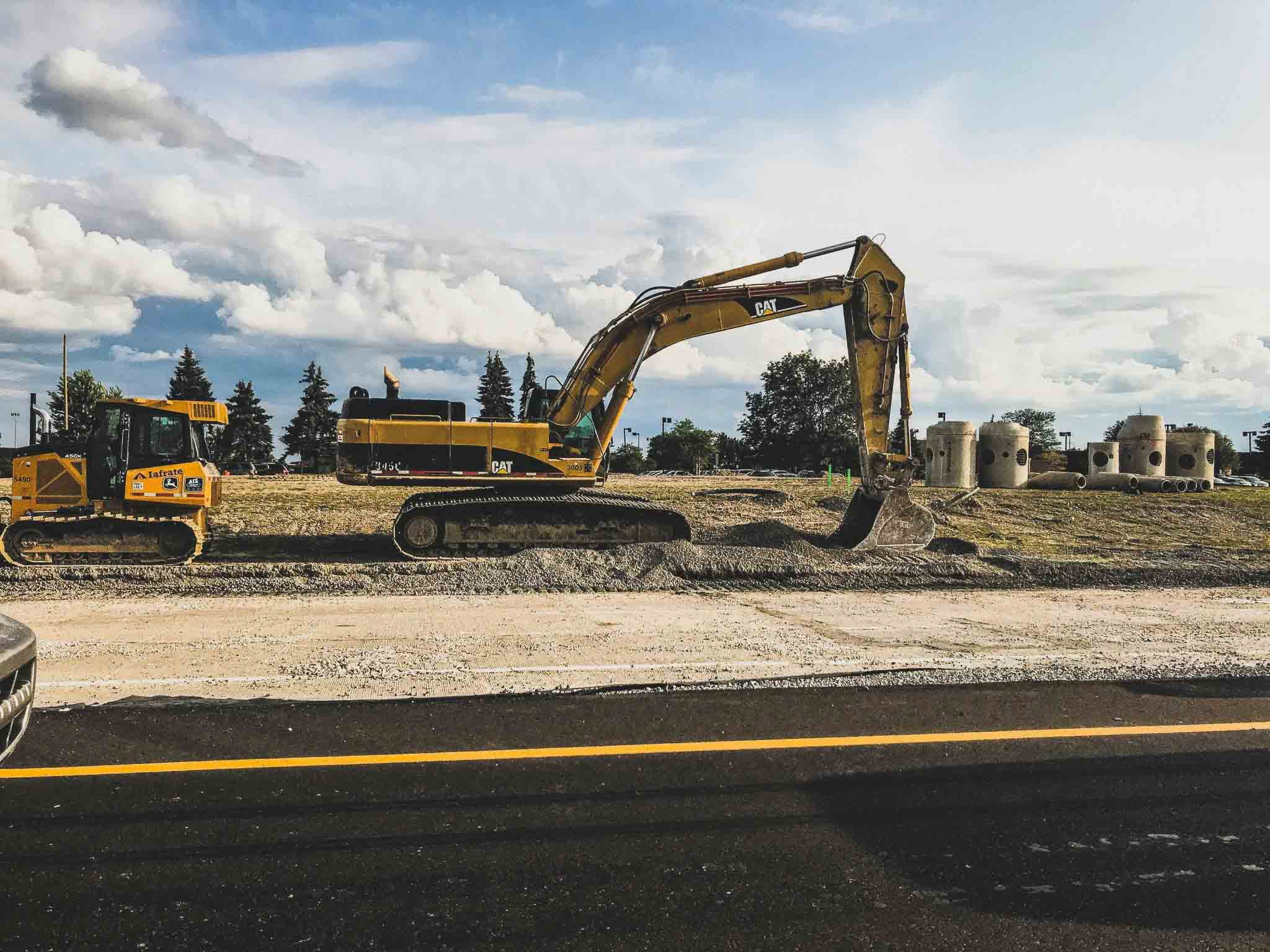
Bridges, Roads, and Highway Engineering
Under the bridges, roads, and highway engineering consulting subsector, we offer a comprehensive suite of services, including, but not limited to;
- Bridges, roads, and highways,
- Railway engineering,
- Tunnel engineering and subways,
- Drainage,
- Road machinery and equipment.
Bridges, Roads, and Highways
Bridges, Roads, and Highways
The design and construction of bridges, roads, and highways requires a deeper understanding of various environmental and international standards/regulatory know-how, careful planning, and execution. From feasibility studies to planning, engineering design, procurement, construction, and post-construction assessments, engineering expertise is required to ensure optimal efficiency and safety, while minimizing costs and environmental impacts. Our in-house professionals have planning, design, environmental, geotechnical, and surveying capabilities. We ably assemble highly qualified teams with the right specialties and backgrounds to match our clients’ needs and requirements. Our expertise in roads and highways is built on years of experience working with the ever expanding road networks across the country.
Our extensive experience includes the design and construction of new roads and rehabilitation and upgrading of existing roads. Our transportation specialists support a variety of construction environments, ranging from rural and urban roads, railroads, ports, terminals, barge landings, and community-based constructions. Our diversified experience and expertise in the wide range of geotechnical services enables us to provide end-to-end solutions for bridges and civil structures from investigation, testing and instrumentation, engineering design, and construction support, to monitoring, maintenance, and rehabilitations. Our services include feasibility studies, conceptual design, geometric design, bridge structures, stormwater management, materials investigation, surfacing and layer works design, pavement and management systems.
Bridge Engineering.
A bridge is a structure built to span a horizontal gap to carry a road, railway, pathway, canal, or pipeline over an obstacle such as a river, gorge, valley, or other obstruction.
There are several types of bridges, among them;
Beam bridges. These are the simplest bridge type normally consisting of one or more spans, supported by pier or abutment at each end. Beam bridges are usually constructed of RCC or steel or a combination of both RCC and steel.
Arch bridge. As the name suggests, the arch bridge consists of a curve-shaped abutment at each end. Generally, the roadway of the bridge lies on the arch structure.
Truss bridge. The superstructure of the truss bridge is constructed by using trusses which are composed of many small elements forming triangular trusses. Truss is used because it is a very rigid structure and it can transfer the load from a single point to a much wider area.
Tied-arch bridges. These can be built on elevated piers or in areas of unstable soil. One more positive attribute of this type of bridge is that it does not depend on horizontal compression forces for its integrity, which allows them to be built off-site and then transported into place.
Suspension bridge. The deck slab is suspended using ropes, chains, or high tensile strength steel cables. The roadway hangs from massive steel cables which are draped over two towers and secured by anchors on both ends of the bridge. The anchors are made from solid concrete blocks. The cables transfer the loads into compression in the two towers. Usually, this type of bridge can span 2000 – 7000 feet.
Cantilever bridge. This is constructed using a cantilever span. The span is supported at one end and the other end is open. Usually, two cantilever parts are joined to make the roadway.
Cable-stayed bridge. These are similar to suspension bridges as they also use cables but in a different form. They consist of fewer cables and the height of the towers is much greater than the suspension bridge.
We offer high quality consultancy and construction services in bridge engineering, including;
- Bridge asset management and condition assessment,
- Feasibility study, engineering design, and construction of bridges,
- Bridge infrastructure digitalization,
- Bridge owner’s engineer,
- Bridge planning,
- Bridge seismic design,
- Bridge monitoring i.e. slope stability analysis and provision of remedial design options for bridges showing signs of failure,
- Engineering design and construction of flyover bridges, underpasses, overpasses (overbridges), pedestrian bridges,
- Engineering design and construction of foot bridges (cable bridges),
- Geotechnical services for bridges and civil structures,
- Design and installation of sheet piles for bridge abutments,
- Engineering design and installation of bridge abutments, bridge piers, bridge decks, wing walls, retaining walls, and bridge embarkments,
- Bridge inspection i.e. bridge deck deterioration and rebar corrosion to effectively prioritize repair efforts,
- Bridge deck evaluation i.e. evaluate deterioration, corrosion of reinforcing steel, and delamination of asphalt and concrete,
- Bridge condition assessments detecting subsurface defects, such as delamination, corrosion, or voids, allowing for timely repairs and effective maintenance planning,
- Bridge inspection and assessment,
- Bridge scour analysis and mitigation measures.
Roads and Highways Engineering.
A road is a thoroughfare, route, or way on land between two places that has been surfaced or otherwise improved to allow travel by foot or some form of conveyance, including a motor vehicle, cart, bicycle, or horse. Roads have been adapted to a large range of structures and types in order to achieve a common goal of transportation under a large and wide range of conditions. The specific purpose, mode of transport, material and location of a road determine the characteristics it must have in order to maximize its usefulness.
Roads and highways solutions must be long-term, sustainable, and cost effective, from local access roads to major urban and rural strategic routes. Improving safety, easing congestion, and extending street and highway life are always top priorities for the government. Good road networks, especially paved roads have immense positive impact as they improve mobility of vehicles, reduce traffic congestion and hence travel time, reduce vehicle wear and tear hence reduced maintenance costs, lead to reduced dust levels, increase in value of land and property along the roads, increase in business opportunities, call for street lighting, and as well improve scenic beauty and aesthetics. Given the scale and duration of road network development, the strength and robustness of the scheme’s initial planning is undeniably important.
There are different types of roads based on different classifications. Out of all, road classification based on speed, accessibility, and materials used is the most crucial.
Based on the speed and accessibility.
- Freeways,
- Expressways,
- Highways,
- Arterials,
- Local Streets,
- Collector Roads.
Based on the Materials used.
- Earthen roads,
- Gravel roads,
- Murram roads,
- Kankar roads,
- Water bound macadam roads (WBM),
- Bituminous roads,
- Concrete roads.
Earthen Roads.
Earthen roads are very common in the countryside and few traffic areas. These roads are constructed by means of putting soil with fine gravels in the pathway to give compaction to the road. These roads are very successful in areas where there is a low ratio of rainfall. While in the areas of high rainfall, these roads become troublesome. These roads are successful in the sandy and stony areas, where the rainwater does not mix with soil to form mud.
Gravel Roads.
Like earthen roads, the gravel road is also included in the category of unpaved roads. Like the earthen road, the gravel is scattered in the way/path of the road. The top of the road is enriched with gravel. The gravels do not allow the rainwater to form mud. These types of roads are also constructed in rural countryside areas. These roads are very cheap, easy, and less time-consuming. These roads do not need any engineering skills. These roads can be built by ordinary labor.
Murrum Roads.
A murrum soil is a mixture of soil, sand and gravels, and concrete. The construction of these roads is quite similar to the above mentioned, the earthen and the gravel road, but are different on the basis of material used in their construction.
Kankar Roads.
Kankar is the impure form of line stone. Kankar gravels, like in the murrum and gravel roads, are scattered in the way. Kankar roads are very common in the areas where limestone is easily and cheaply available. These roads, if compared to paved roads, are low-quality roads. Limestone gets easily mixed with rainwater and forms mud, which can put the traffic in trouble.
WBM Roads.
WBM stands for Water Bound Macadam. WBM roads are constructed with a stone border. The border is filled with sand mixed with soil and very fine gravel called “screening”. The stone borders are bonded tightly with the help of screening. As the top wearing surface of this type of road consists of stone gravel and border, therefore the formation of mud is less likely in these types of roads. The stone border is compacted by the rolling process. Water is poured on the WBM during the rolling process. This type of road is very successful and compacted, especially in rainy areas.
Bitumen Roads.
Bitumen road, also called asphalt road, is a very smooth and soundless road. This type of road is a masterpiece of civil engineering. The construction of this road goes through a number of complex phases. The first phase of this road is “preparation of base course”. In this phase, the irregular landscape is graded with the help of a grader machine. The landscape is once levelled, then, murrum consisting of fine gravels and soil is placed on the road. This layer is compacted by means of rollers and compactors. After compacting it well, a layer of larger border of stone is placed. The spaces of the border are filled with screening. Again, the rolling work is conducted. Water is thrown all through this process. Now the second phase starts. The second phase of the construction of the road is the placement of a bituminous coat. The hot and molten bituminous is showered on the border filled with screening. The third phase of the construction starts with the placement of a bituminous mix. The bituminous mixture consists of concrete mixed with bitumen. This layer is 3 to 5 inches thick. The layer of the bituminous mix is placed either by machines or by hands. The fourth phase of the construction of this type of road starts and ends at rolling work. The rolling work is conducted by a roller machine. The purpose of rolling is to compact the road.
Concrete Roads.
Concrete roads are constructed with the help of concrete made up of cement and stone gravels. This road is very durable and strong. Its disadvantage is that it does not provide friction between the road surface and the tires of the vehicle. This type of work is generally done in streets and small size projects.
At SANKOFA, we offer a suite of road and highway engineering related consulting and implementation services, including;
- Feasibility study, detailed engineering design, and construction of roads and highways, including national trunk roads, international trunk roads, arterial roads, feeder roads,
- Periodic maintenance, rehabilitation, and reconstruction of road networks i.e. pothole patching, patching of surface defects, edge breaks repair, drain cleaning and desilting,
- Road safety audits and black spot identification (road traffic safety assessments),
- Road condition assessments i.e. visual condition assessments, geometric assessments, structural assessments, climatic assessments, drainage assessments, traffic assessments,
- Road drainage design and drainage installation,
- Road and highway lighting design and installation of outdoor LED street lighting (double arm and single arm LED street lights/lamps),
- Engineering design of non motorized transport (NMT) route corridors,
- Installation of road safety signs and road markings i.e. regulatory and mandatory signs, warning signs, and informative signs, reflective road studs, guardrails,
- Installation of traffic calming measures i.e. humps, rumble strips,
- Road network optimization and traffic signalization,
- Geometric road design and route corridor identification,
- Materials investigation, geotechnical investigations, surface and layer works design,
- Pavement design,
- Design of borrow pits,
- Detailed engineering design of express highways, road junctions, roundabouts, intersections, interchanges, sidewalks, pedestrian footpaths, cycling lanes, parking facilities, runaways, tunnel roads,
- Feasibility study and detailed engineering design for widening, capacity improvement to dual carriage ways, and signalization of roads,
- Earthworks design, earthworks implementation, soil stabilization, grading, and compacting,
- Detailed engineering design and construction of landing sites and ferry landing jetties,
- Construction of weigh stations/weigh bridges, including High Speed Weigh-in Motion (HSWIM) lanes,
- Utility mapping and utility line relocations,
- Traffic studies and planning,
- Engineering design and implementation of intelligent transport monitoring systems (ITMS) i.e. implementation and operation of field devices, road tolling technology, managed lanes, communications, travel information, and transit technologies,
- Engineering design and installation of road signalization and road traffic management systems i.e. traffic monitoring cameras (traffic control cameras/traffic cameras), speed cameras, traffic surveillance cameras (road CCTV cameras),
- Engineering design and installation of fuel service stations and underground storage tanks (UST) for petroleum products.
We supply bridge, road, and highway related equipment and material, including;
- Thermoplastic resin powder for road marking,
- Glass beads granules for road marking,
- Highway guardrail systems,
- Bridge parapets i.e. precast concrete and steel parapets,
- Cold paint road marking machines,
- Thermoplastic paint preheaters,
- Reflective glass beads for road paints,
- Road marking cleaning machines,
- Road paint marking line removal machines/paint stripping machines,
- Road marking materials i.e. white and yellow thermoplastic road marking paint, cold solvent road marking paint, two-component road marking paint, intermix and drop on glass beads, petroleum resin and road marking tapes,
- Accessories i.e. wearing parts of machines such as glass beads dispenser, marking die shoes, side blades, rear blades, spray guns and steel brushes,
- Guardrail post drivers,
- Post drilling machines,
- Guardrail beams (roadside stainless steel barriers),
- Guardrail bolts and nuts,
- Guardrail posts,
- Impact terminals (start and end terminals),
- Mobile safety steel barriers (expandable portable barriers, crowd control barrier fences/gates),
- Guardrail end terminals,
- Guardrail spacers,
- Guardrail forming machines,
- Guardrail repairing machines,
- Guardrail delineator reflectors,
- Rockfall netting/rockfall barriers
- Pontoon bridges (floating bridges),
- PVC traffic cones/PE traffic cones,
- Road barriers (including road spike barriers),
- Weigh bridges i.e. concrete deck weigh bridges, electronic truck scales, portable axle weighing scales, above ground truck scales, pit mounted scales,
- Pile driver machines/piling machinery,
- Sheet piles,
- Portable bridges,
- Trench shoring equipment,
- Road sign retro-reflection meters,
- Convex road marking paint,
- Thermoplastic paint whiteness testers,
- Line thickness measuring instruments,
- Reflective road studs i.e. plastic and aluminium road studs,
- Rubber speed bumps,
- Road safety barricade warning tapes,
- Barricades and barriers,
- Barricade lights,
- Delineators, channelizers, and drums,
- Barricade tape, marking flags, and paint,
- Flat top surface mount delineators,
- Road safety nets/safety barrier mesh,
- Traffic marker posts,
- Highway safety bollards (retroreflective bollards, T-top traffic bollards, slope top bollards, dome top steel bollards), LED sign lighting products, highway delineators, chevron boards, hazard markers,
- Asphalt and concrete road cutters,
- Asphalt crack sealing machines,
- Crack router machines i.e. road grooving,
- Pavement marking retro reflectometers.
Railway Engineering
Railway Engineering
Railway engineering is the design, construction, and operation of rail transport systems, encompassing diverse fields like civil, mechanical, and electrical engineering to ensure the safe, efficient, and reliable movement of people and goods. It involves planning and design of track layouts, designing and constructing bridges and tunnels, implementing signalling and traffic control systems, and ongoing maintenance and operations management of rail systems. Railway transport (train transport) is a means of transport using wheeled vehicles running on tracks, which usually consist of two parallel steel rails.
Railway lines transport people and cargo and enable eco-friendly travel. According to a forecast report by Statista, demand for global urban passenger train travel is projected to more than double by 2050, increasing faster than for any other transport mode. Steps the sector needs to take to meet these targets include the electrification of rail networks to phase out diesel engines; ensuring lines are resilient against the impacts of environmental disasters and increased extreme weather events such as flooding; and reassessing how biodiversity and land use planning are implemented lineside to promote enhancing and maintaining natural environments while still protecting the railway from risks to safety.
We offer consulting services across rail transit systems, including mainline rail, freight, metros, heavy rail, light rail, and high-speed railway networks. We help clients to maintain and enhance the natural and built environment during implementation of large rail infrastructure projects. Our work in railway engineering spans from feasibility study and detailed engineering, to construction supervision. SANKOFA is a recognized expert in full-service rail infrastructure and facility engineering solutions.
Systems Of Railway.
According to the local topography, trains can be installed above and below the ground’s surface. Additionally, the railways below the ground’s surface might be built at higher depths or just below it.
There are four different railroad systems;
- Surface railways,
- Elevated railways,
- Underground railways,
- Tube railways.
Surface Railway.
There are above-ground railways in this system. This is the best and most widely used railing in the entire world. The safe and effective crossing of the rail and road traffic requires the provision of a variety of measures, such as level crossings, overbridges, underbridges, etc. on surface railways.
Elevated Railway.
The rails in this system are located higher up or on an elevated part above the ground. The track is carried on the steel deck of a continuous viaduct supported by piers, columns, etc. Because stations, waiting areas, and offices must be built at higher levels, needing stairways, escalators, etc., this system is exceedingly expensive. This kind of railroad is demonstrated in densely populated urban areas when underground railroads cannot be built.
Underground Railway.
This technique provides a railway that is slightly below the surface. The purpose of tunnel construction is to carry trains through them, and every road crossing requires an overbridge to cross over railroad traffic. Electricity is the only power source for traction on underground railways due to tunnel ventilation issues. This technique is available in areas with high traffic densities and crowded roads.
Tube Railway.
Tube railways are those that are offered underground at greater depths of 18 meters or more (up to 52 meters).
As a result of the track-carrying portion of the underground tunnels’ tube-like shape, this railway system has that name. The major goal of supplying tube railways is to prevent track interference with oil or drainage pipes, water and gas pipes, sewage systems, and other pipes.
The following list of key characteristics of tube railways includes:
- The railroad stations must be cylindrical in shape,
- To access the tube railways, escalators or moving staircases must be built,
- Only electric traction should be used to prevent the smoke and ventilation issues.
Rail Design.
Design is critical to the success of any transport project. An effective design can attract additional passengers through well-thought (and better looking) stations, vehicles, and other elements of public transport networks.
Specific services for all rail modes include;
- Track design (alignment, layout, plain line and switch and crossing, gauge clearance),
- Signal and train control design (scheme development, construction design),
- Communication system design,
- Overhead catenary design,
- 3rd rail traction power design,
- Mechanical and electrical design,
- Station design,
- Civil and structural design,
- Rail transit digitalization i.e. automation of train lines,
- Rail electrification,
- Fare collection technologies,
- Railway geotechnics,
- Engineering design and implementation of electric train systems,
- Optioneering, feasibility studies, and detailed engineering designs of light rail systems,
- Identifying critical geotechnical and geoenvironmental issues,
- Engineering design including for construction drawings,
- Settlement analysis,
- Ground investigation,
- Slope stability analysis,
- Geotechnical design,
- Railway rehabilitations,
- Satellite monitoring of railway networks for geohazards, risks, ground displacement.
We supply railway components and equipment as;
- Railway sleepers i.e. metal sleepers, concrete sleepers, wooden sleepers,
- Track ballast,
- Railway wagons,
- Rails,
- Rail clips,
- Rail clamps,
- Railway fastenings,
- Weigh in motion train weighing,
- Static and dynamic train weighing systems,
- Train wagon weighbridges,
- Train balancing systems,
- Railway lifting equipment/mobile lifting jacks,
- Bogie turntables,
- Railcar weighers,
- Electronic rail scales,
- Locomotives,
- Electric trains,
- Cable cars,
- Tram cars.
Tunnel Engineering and Subways
Tunnel Engineering and Subways
To meet continuous population growth, governments are increasingly looking to underground space to free valuable land. Underground space requires complex networks of tunnels. In most of the cases tunnel construction is expensive but it saves time and provides comfort. Large excavation of soil or rock etc. is necessary for a tunnel construction.
Tunnels, especially underground excavations are used to transport public utilities like water, sewage, and electricity, along with transport infrastructure. In civil engineering, tunnels are often constructed to avoid pre-existing infrastructure, to avoid disturbance above ground, or to build more direct routes through varying terrain. The two most common methods of tunnel construction are the cut-and-cover technique and the use of tunnel boring machines (TBM).
Tunnels and other underground infrastructure play an important role in a well-functioning society. This critical infrastructure has to continuously tolerate heavy stress and last not just for decades, but centuries. Water pressure, toxic chemicals and bacteria, gas diffusion, geostatic stress, traffic vibrations, extreme temperature swings, other weather and climate stresses; the list of what underground infrastructure must tolerate is long. This is why it is vital that high-quality materials and protection systems with a long lifetime are used.
Our tunnel engineering works encompass underground passages used for transportation purposes. These tunnel subways include underground train routes and pedestrian roads that are located underground. Our extensive services offered include;
- Tunnel and subway mapping i.e. mapping the subsurface conditions along tunnel routes, identifying potential hazards, and detecting voids or water ingress. This helps in ensuring the safety and stability of underground transportation systems,
- Fire safety. Planning and designing robust fire safety in tunnels,
- Ground movements and building impacts. Geotechnical expertise and analysis for tunnels and utilities infrastructure,
- Tunnel inspection and maintenance,
- Tunnel ventilation i.e. controlling temperature, air quality and experience,
- Tunnel design,
- Seismic design,
- Tunnel ventilation design,
- Installation of ventilation ducts,
- Waterproofing systems for tunnels,
- Air flow monitoring systems,
- Visibility monitoring systems,
- Gas monitoring in tunnels,
- Inspection and rehabilitation of existing tunnels and underground structures,
- Shaft design and construction,
- Tunnel safety engineering,
- Rock consolidation design,
- Effective monitoring, issue identification, and maintenance.
There are various types of construction techniques developed for construction of tunnels;
- Cut and cover method,
- Bored tunnel method,
- Clay kicking method,
- Shaft method,
- Pipe jacking method,
- Box jacking method,
- Underwater tunnels.
Waterproofing for Tunnels.
Tunnel waterproofing is a crucial process that protects underground passageways from the relentless power of water. As underground arteries that facilitate transportation and infrastructure networks, tunnels are constantly at risk of water ingress, which can lead to structural damage, corrosion, and compromised safety. Tunnel waterproofing involves the application of specialized techniques and materials to create an impermeable barrier that prevents water from entering into the tunnel.
Shaft Design and Construction
Shafts are critical to the construction and operation of tunnels of all types and must balance earth, water, and rock pressures.
Shafts are critical to the construction and operation of tunnels of all types. They enable access from the ground surface to the tunnel level, for all tunnel types, including giving passengers access to mass transit and underground rail tunnels. They act as drop shafts for wastewater tunnels and downtake and uptake shafts for water supply tunnels, as well as inlet and outlet structures for flood control tunnels and dams. Shafts also provide ventilation for highways, mass transit, and rail tunnels.
Shafts generally are circular or elliptical in section for structural efficiency reasons, although more complex geometries may be appropriate for particular shafts. Shafts are designed to resist lateral pressures during construction and throughout their service lives. These include water, earth, and rock pressures.
Drainage
Drainage
The road drainage system is a mechanism to effectively collect and divert all water that is gathered around the road. If adequately designed, it can help to “harvest” a large part of the runoff from the catchment uphill of the road and avoid waterlogging upstream of the road. The importance of road surface drainage cannot be understated. This is because the presence of excess water on a road can cause damage once it gets into the pores of the surface. Good road drainage is essential to prevent early deterioration and failures of various components of a road including the road pavements.
Drainage channels include;
- Road side channels running parallel to the road and in cut sections to remove water from the road cross section,
- Toe of slope channels to convey the water from any cut section and from adjacent slopes to the natural watercourse,
- Intercepting channels placed back of the top of cut slopes to intercept surface water,
- Chutes to carry collected water down steep cut or fill slopes.
Drainage channels perform the vital function of collecting and conveying surface water from the road right-of-way. Therefore, drainage channels should have adequate capacity for the available peak runoff, should provide for unusual storm water with minimum damage to the road, and should be located and shaped to avoid creating a potential conflict with traffic. Channels should be protected from erosion with the lowest cost protective lining that will withstand the flow velocities expected. Channels should be kept clean and free of material that would lower the capacity of the channel. Channel deterioration can reduce channel capacity and overflow may occur. In populated areas, deep and open road side drain channels are hazardous to vehicles and pedestrians. It is therefore recommended to use covered drain channels or under drain systems, depending on the size of the town, design class of the road, as well as the construction and maintenance cost of said drainage.
At SANKOFA, we offer high quality drainage services, including but not limited to;
- Engineering design and construction of retaining walls, gabion embankment dams, runoff control berms, drainage canals, and drainage channels,
- Engineering design and construction of drainage channels i.e., domestic, municipal, institutional, etc,
- Installation of box culverts and armco steel culverts for bridge and road works,
- Development of urban drainage master plans,
- Engineering design and construction of road side drains lined with concrete, mitre drains (offshoot drains), culverts (precast concrete drains), catchwater drains, interceptor drains, U drains, wet stone pitching, dry stone pitching,
- Drain maintenance and desilting, culvert inspections, and drain cleaning and unblocking,
- Design, supply, and installation of geosynthetic drainage materials i.e. woven geotextiles, non-woven geotextiles, HDPE geomembrane liners, and geo-grids in roads and drainage works.
- Supply and installation of of gabion boxes/gabion check dams/reno mattresses (river mattresses) to control water flow and for erosion and sediment control,
- Design and installation of French drains, tile drainage, and trench drains/trench grating drainage systems, mainly for fuel stations, concrete lining channels/channel lining and ditch lining (concrete lined channels),
- Installation of road batters for soil erosion control,
- Slope protection and construction of retention walls,
- Engineering design of road drainage networks,
- Design and construction of flood control structures i.e., dikes, drainage canals, flood ways, sluice gates, aqueducts, spillways, etc,
- Design and implementation of initiatives such as sponge cities, urban storm water parks, stormwater harvesting, bio retention systems, porous roads and pavements, permeable pavers, green rooftops and nature-based flood prevention measures and resilience initiatives,
- Hydraulic modelling of surface water drainage networks,
- Design and construction of stormwater harvesting and rainwater regulating pits (infiltration trenches), and underground detention ponds to harness flash floods,
- Dewatering/pumping of urban flood water to stormwater regulating pits (infiltration trenches).
We supply a number of drainage related equipment and materials, including;
- Channel gratings,
- U drains,
- Catch basin filters,
- Sand traps/sand baskets/filter baskets/catchpits and silt trap manholes,
- Drain cleaning robots and drain porta reels for confined and hard to reach spaces,
- Trapezoidal channel forming machines,
- Culverts i.e. prefabricated concrete culverts and armco steel culverts,
- Double wall corrugated drainage pipes,
- Gabion baskets and river mattresses (reno mattresses),
- Hydro jetting equipment,
- Geosynthetic clay liners (GCL),
- Geocells,
- Geobags,
- HDPE geomembrane liners (dam liners) i.e. 0.25mm – 3.00mm thickness. They consist of 3 types of smooth HDPE geomembranes, textured HDPE geomembrane liners, and multi-coloured dam liners. The dam liners have excellent chemical corrosion resistance, a large operating temperature range, and a long service life,
- Dam liner seaming equipment i.e. hot air guns, hot wedge welding machines,
- Geogrids,
- Woven geotextile fabric, non woven geotextile membrane, needle punched geotextile membrane, polyester filament geotextile fabric. Geotextile is applicable for erosion control, separation, drainage, and water passage,
- Heavy duty dewatering pumps,
- Drainage boards,
- Geotechnical mats,
- Silt drain guards.
SANKOFA is your trusted partner to undertake the design and implementation of high-quality, advanced drainage solutions for your noteworthy projects, be it for roads, dams, gardens, fuel stations, etc. We design all our drainage solutions to the highest quality standards humanly possible, with our excellent drainage products delivered with exceptional service. We offer expert guidance at each step of the design process, and our deep technical experience and practical knowledge allows us to provide the most informed and professional service possible. We are always there for you from planning stages through the project phase and long after the installation is complete.
Road Machinery and Equipment
Road Machinery and Equipment
We supply road machinery and equipment, including;
- Mobile asphalt plants,
- Asphalt sprayers,
- Rough terrain forklifts,
- Road rollers,
- Plate compactors,
- Concrete mixers, including side tilting concrete mixers,
- Multi-function dust suppression trucks,
- Street washing and sweeping trucks (sweeper trucks),
- Electric high pressure cleaning trucks,
- Backhoe loaders,
- Road cutting machines/concrete road saws,
- Hydraulic excavators,
- Dump trucks,
- Grand dumpers,
- Mini dumpers,
- Dragline excavators (for sand dredging),
- Electronic truck scales/portable axle weighing scales, and highway weigh-in-motion (WIM) systems,
- Telehandlers,
- Feller bunchers,
- Pile boring equipment,
- Pile driving equipment,
- Trenchers/pipe trenching machines,
- Utility vehicles,
- Bulldozers,
- Rammer compactors,
- Graders,
- Front end loaders,
- Mobile cranes (telescopic and knuckle boom cranes),
- Pan mixers,
- Concrete batching plants.