
Wednesday, December 3, 2025 1:18 pm

Dam Liners in Uganda – A Deep Dive Discussion into Design, Applications, and Installation

Selecting the right type and thickness of geomembrane dam liner is more than just a technical decision; it is a strategic investment in the longevity and success of your project. With a wide range of options available, understanding the nuances of thickness, tensile strength, cost, chemical resistance, UV resistance, and installation requirements is essential. This guide dives deep into the factors that matter most, helping you make a choice that is as unique as your project.

Quick Facts on Dam Liners

  • Dam liners are manufactured in thicknesses ranging from 0.20mm to 3.00mm.
  • Dam liners are manufactured in fixed standard widths ranging generally from 4.0m to 10.0m.
  • Dam liners are manufactured in different colors such as black, white, blue, and green. Black is the most popular choice owing to its ability to provide excellent UV resistance. Other colors are generally used for aesthetic reasons, reflective purposes, or to blend with the surroundings.
  • Dam liners exist in several types such as HDPE dam liners, PVC dam liners, EPDM dam liners, and XR-5 dam liners.
  • Dam liners can be either smooth or textured, depending on the intended application and required friction.
  • As of 2025, the global geomembrane dam liner market is valued at $4.2 billion; with HDPE dam liners dominating 60% of the market due to their durability and chemical resistance.
  • Dam liners play a vital role in environmental protection by acting as barriers for containment and controlling the migration of various substances such as liquids, gases, and pollutants.
  • A poorly installed geomembrane dam liner can lead to compromised environmental integrity via leaks and seepage that contaminate groundwater and soil, harming ecosystems and endangering public health. Improper installations lead to reduced service life due to accelerated degradation of the geomembrane dam liner, reducing its lifespan and requiring premature replacement, leading to increased maintenance costs and project disruptions.
  • Expert seaming is critical for dam liner installation because the seams are the most vulnerable point of the entire dam liner system; their integrity directly determines the success of the containment project. Subpar seaming leads to leaks, environmental contamination, and costly failures. A dam liner is only as strong as its weakest seam; for seam failure is the leading cause of dam liner failure.

Introduction.

Dam liners are impermeable membranes used in various civil engineering and environmental applications to control the movement of liquids, gases, and pollutants. The design and selection of a particular dam liner to use for one’s project is a very crucial undertaking, ensuring the project owner chooses the most optimal dam liner (material, thickness, texture, etc.) for their project.

In order to guarantee an informed decision, a plethora of factors must be meticulously considered, ranging from environmental conditions, expected longevity, regulatory compliance, chemical resistance, durability, flexibility, cost considerations, and project needs. In making this dam liner selection and investment decision, the selection process always involves tradeoffs. Understanding these differences is key to specifying the right dam liner material for your project’s performance and budget needs. A thicker geomembrane dam liner is not universally superior; it excels in some areas but is less optimal in others i.e. excellent in puncture resistance, tensile strength, and chemical resistance, but poor in flexibility or ease of installation, material cost, and transportation costs. If the design engineer over specifies, the project owner ends up paying a premium for dam liner material, transport, and installation labor; all for performance benefits they will never use.

Dam liners are selected based on several mechanical and engineering properties they exhibit, which help establish their suitability for use or non-conformance for use depending on project specific requirements, or according to the existing environmental guidelines and standards. Briefly, these properties include;

Thickness: Dam liners are available in a range of thicknesses. Thickness of the dam liner is selected based on factors such as hydraulic head, the potential for puncture or abrasion, and the expected lifespan of the installation. 

Tensile strength: This refers to the maximum stress a geomembrane dam liner can withstand without breaking when subjected to tension or pulling forces. It is typically measured in units of force per unit area such as pounds per square inch (PSI), or kilopascals (kPa). Higher tensile strength indicates greater resistance to stretching or tearing. 

Tear resistance: This is the ability of a geomembrane dam liner to resist the propagation of tears or punctures when subjected to mechanical forces. It is often measured in units such as Newtons (N). A higher tear resistance indicates greater durability and resistance to damage.

Puncture resistance: This refers to the ability of a geomembrane to withstand penetration by sharp objects or debris without puncturing or tearing. It is typically measured in units as Newtons (N). High puncture resistance is essential for applications where the geomembrane dam liner may be exposed to potential puncture hazards.

Flexibility and elongation: This refers to the ability of a geomembrane dam liner to conform to the contours of the substrate and accommodate movements without cracking or splitting. These properties are often expressed as a percentage of elongation at break or elongation at yield.

Chemical resistance: Geomembrane dam liners may be exposed to various chemicals including acids, alkalis, and hydrocarbons, depending on the application. It is essential to select a geomembrane dam liner material that offers adequate resistance to the specific chemicals present in the environment to prevent degradation or failure.

UV resistance: UV resistance is important for geomembrane dam liners installed in outdoor applications exposed to sunlight. UV treated dam liner is slow to degradation by the sun during external use.

Seam strength: For installations requiring multiple geomembrane dam liner panels to be seamed together, the strength of seams is critical to the overall integrity of the dam liner system. Seam strength is typically evaluated through testing methods such as shear testing.

Generally, critical mechanical properties such as puncture resistance, tensile strength, and tear resistance increase proportionally with dam liner thickness. However, an optimal thickness is a carefully calculated balance of several site-specific factors.
Other factors that influence the choice of dam liner include:

  • Size and shape of the site.
  • Surface texture at site.
  • Environmental conditions at the containment project site.
  • Chemical properties of the contents/chemical compatibility.
  • Volume of the contents and pressure.
  • Hydrostatic pressure.
  • Water depth.
  • Installation challenges.
  • Regulatory compliance i.e. the chosen dam liner type and thickness must comply with applicable national and local regulations and design standards.

Generally, dam liner selection for different projects tends to play out as per the summary below

  • Thin dam liners i.e. 0.5mm – 1.0mm are suitable for less demanding applications such as decorative ponds, small agricultural irrigation ponds, irrigation canals, aquaculture ponds. They are also preferred for surfaces that are generally smooth.
  • Medium dam liners i.e. 1.0mm – 1.5mm are suitable for landfills that are non-hazardous and with small organic volumes, large irrigation water reservoirs, and standard wastewater treatment ponds/lagoons. They are also preferred for surfaces that are generally rough/stony.
  • Thick dam liners i.e. 1.5mm – 3.0mm are suitable for large scale, critical, or high stress applications like hazardous waste landfills, mining heap leach pads i.e. mining containment, petrochemical applications, and industrial containment where maximum durability, stress resistance, chemical resistance, and high puncture resistance are required. They are also preferred for surfaces that are generally rocky.
  • Textured dam liners are generally suitable for use on steep slopes due to their friction coefficient.

Types of Dam Liners.

There are several types of dam liners, each exhibiting different properties. These include;

  • HDPE dam liners.
  • PVC dam liners.
  • EPDM dam liners.
  • XR-5 dam liners.
  •  

Prices of Dam Liners

The prices of dam liners vary greatly, based on several factors such as;

  • Texture of the dam liner (smooth or textured dam liners).
  • Thickness of the dam liner (vary between 0.2mm to 3.0mm).
  • Quantity (measured and sold in square meters or rolls).
  • Logistical costs (factoring in transport costs to the installation site).
  • Type or material of the dam liner (HDPE, EPDM, PVC, XR-5).
  • Manufacturer i.e. different manufacturers and suppliers set different prices for dam liners; based on several factors such as perceived quality, input costs, and profit margins.

While prices for different gauge thicknesses for HDPE dam liners vary greatly, the average prices per square metre for common smooth HDPE dam liners in Uganda are as per the summary below;

  • 10,000 per SQM for 0.5mm thickness dam liners.
  • 13,000 per SQM for 0.75mm thickness dam liners,
  • 17,000 per SQM for 1.0mm thickness dam liners.
  • 22,000 per SQM for 1.5mm thickness dam liners.


The costs above are exclusive of delivery costs and installation costs, as these depend on the distance of one’s site from the supplier; the containment area size, dimensions, and dam liner width, which determine transport and dam liner welding costs respectively.

Applications of Dam Liners

Mining applications: Dam liners are utilized in mining operations for applications such as heap leach pads, tailings impoundments, and acid mine drainage (AMD) containment. They help to contain and control the movement of potentially harmful substances such as leachate and acidic runoff, thus minimizing environmental impact.

Landfills: Dam liners are used for lining municipal landfills to prevent leachate (liquid that has passed through waste) from contaminating the surrounding soil and groundwater. They are installed at the base of the landfill and sometimes on the sides of the wall, creating a barrier that prevents the escape of pollutants.

Aquaculture: Dam liners are used in aquaculture operations for lining fishponds, shrimp ponds, and other aquatic enclosures. They help to maintain water levels and prevent seepage, ensuring a controlled environment for fish and other aquatic organisms.

Pond and lagoon liners: Dam liners are used to line ponds, waste lagoons, and irrigation reservoirs to prevent seepage and leakage. They create a barrier that retains water or waste and prevents it from infiltration into the surrounding soil or aquifers.

Waterproofing: Dam liners are used for waterproofing applications in various civil engineering projects such as tunnels, underground structures, and foundation walls. They provide a durable impermeable barrier that protects against infiltration and helps to prevent structural damage and deterioration.

Secondary containments: Dam liners are used in secondary containment systems to prevent leaks and spills from hazardous waste storage facilities, chemical storage areas, and industrial sites. They serve as a barrier that contains any spills or leaks, preventing them from reaching the surrounding environment.

Installation of Dam Liners

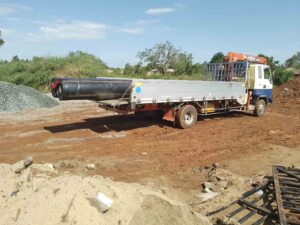
Installing a dam liner is a crucial step in any containment project to prevent leakage and seepage of water, industrial wastes, municipal waste, or hydrocarbons. Achieving long-lasting waterproofing is not only dependent on the quality of the dam liner material itself; it heavily relies on how it is installed. Improper dam liner installation can lead to dam liner failure, leakage, structural collapse, and costly repairs. That is why understanding the full installation process; from surface preparation to dam liner welding and anchorage is essential. Proper dam liner installation is a delicate yet vital process that requires technical expertise, precise machinery, and strict quality control. This section of the article delves into essential steps and key considerations to ensure proper dam liner installation, long-term functionality, and structural integrity of your containment project.
Site assessment

The first step in preparing to install a dam liner is arguably the most important. Begin by evaluating the terrain, topography, and stability to anticipate installation challenges. This evaluation includes analyzing soil type, identifying areas prone to erosion, and assessing any irregularities that could affect dam liner placement. Weather patterns and climate conditions should also be considered as they can impact both the timing and manner of dam liner deployment. Access routes for transporting materials and equipment to the site should also be assessed to ensure smooth logistics during the installation process. The assessment can tackle factors such as;

  • The angle/steepness of the side slopes. Sloped walls are key to avoid cave-ins, though they should not be too steep.
  • Depth to and variation of the ground water level/water table i.e. this may subject the dam liner system to hydrostatic backpressure. Additionally, air may be entrapped, causing gas pressure if the groundwater level rises.
  • Nature of soil at the site i.e. erodible soils, collapsing soils, stable soils, etc.
  • Existence of/potential to generate subterranean gases i.e. presence of gases in the soil especially if due to presence of peat or organic matter.
  • The temperature of the liquid or wastes to be contained i.e. elevated temperatures accelerate aging of the dam liner.
  • The presence and strength of wind at the site.
  • The risk of differential settling (i.e., poorly consolidated soil, recent backfill, landfills).
  • The risk of internal erosion (i.e., karst soils, fine silty sands).

Selection of dam liner material

There are various types of materials used for dam liners including PVC, HDPE, EPDM, XR-5, and others. The choice of dam liner material depends on factors such as budget, environmental conditions such as UV radiation, temperature extremes, potential chemical interactions, and required lifespan. Ultimately, the chosen dam liner must balance strength, flexibility, and durability to match the project’s operational lifespan and environmental challenges.

Measurement and cutting of dam liner sections

Measure the dimensions of the excavated pit carefully to ensure that the dam liner will fit properly. Cut the dam liner material according to measurements, leaving some extra material at the edges to allow for adjustments during installation. Careful calculations ensure the dam liner completely covers the intended area while minimizing wastage. The next step is creating a detailed layout plan that maps out how the dam liner will be positioned, considering the site’s unique contours, slopes, and specific structural features. For large areas, this may include determining the placement of multiple panels and seams. A meticulous layout plan allows dam liner panels to be customized according to specific dimensions and shapes required for the project. This customization simplifies the installation process, as panels can be precut and shaped to fit designated areas, producing a tailored dam liner that fits perfectly and covers all the necessary areas without excessive overlapping or gaps. The detailed drawings should include seam locations and anchoring details.

Site preparation

Before installation, the surface needs to be prepared adequately, ensuring a stable and dam liner friendly base. This includes clearing the area of any debris, vegetation, roots, stones, or sharp objects that could potentially perforate or damage the dam liner. Once clear, the surface is graded and leveled, with particular attention to smoothing out any irregularities. Next, the substrate is compacted to provide a firm and stable base, and in some cases, a protective layer of finer material like sand or gravel is added to act as a cushion for the dam liner. Proper drainage systems may need to be integrated at this stage to prevent water accumulation beneath the dam liner, which could compromise its effectiveness. This preparation protects the dam liner, extends its lifespan, and helps maintain the overall integrity of the structure. The base surface should be dry, compacted, flat, free of cracks, sharp protrusions, and foreign objects. No freestanding water, mud, vegetation, or excessive moisture may be present at the time of dam liner placement.

Placing of underlay/geotextile fabric

In some cases, an underlay material may be used beneath the dam liner to provide additional protection and cushioning. This underlay helps to prevent punctures and abrasions to the dam liner from the underlying surface. The most suitable underlay material is a non woven geotextile fabric, which should be laid on a base free of water seepage, silt, water collection, organic residues, and harmful substances. This protective non woven geotextile layer is placed beneath the geomembrane dam liner to act as a cushion, reducing the risk of punctures and extending the life of the dam liner system. Additionally, the underlay provides functions like drainage, filtration, gas venting, stress buffering, and increased stability. It acts as a protective cushion shielding the dam liner from sharp objects in the underlying ground such as rocks, gravel, roots, and construction debris. This prevents tears or punctures during and after installation; which would compromise the dam liner’s primary function of preventing seepage of its contents. The choice of non woven geotextile fabric is guided by factors such as mass, thickness, and elongation capacity.

Installation of the dam liner

Unrolling and unpacking of the dam liner should be done using appropriate machinery or equipment to avoid any damage during the process such as tears and punctures, especially for larger dam liners. Panels should be unrolled in a controlled manner that aligns with the layout plan, paying close attention to the orientation of the dam liner to avoid unnecessary adjustments later. Lay the dam liner over the prepared surface of the containment site. Start from one end and gradually unfold the dam liner across the entire surface, smoothing out any wrinkles or creases as you go. It is essential to ensure the dam liner is flat and without any folds to prevent potential weak spots. To avoid stress induced damage like tearing, stretching, or puncturing, the dam liner must be laid out smoothly, without wrinkles or folds, which could concentrate stress in specific areas. During installation, careful attention must also be paid to the dam liner’s interaction with the substrate and any structures or objects it comes into contact with. Any areas where the dam liner would experience stress, such as sharp bends or corners should be reinforced or cushioned to mitigate the risk of damage. It is advisable to undertake installation during favorable weather, in absentia of wind, rain, or too much sunshine and extreme temperatures; for which case, early morning hours are the best timing for dam liner installations.

Securing the dam liner

Once the dam liner is in place, it needs to be secured (temporary anchoring) to prevent shifting or displacement. This can be done using various methods depending on the dam liner material and site conditions. Common methods include anchoring the edges of the dam liner with soil, rocks, sandbags, temporary ballast, or other heavy materials or using mechanical fasteners such as screws or bolts. This temporary anchoring of the dam liner helps to secure the dam liner, preventing movement or shifting during backfilling or use, as well as securing panels against wind uplift.

Seaming/welding the dam liner panels

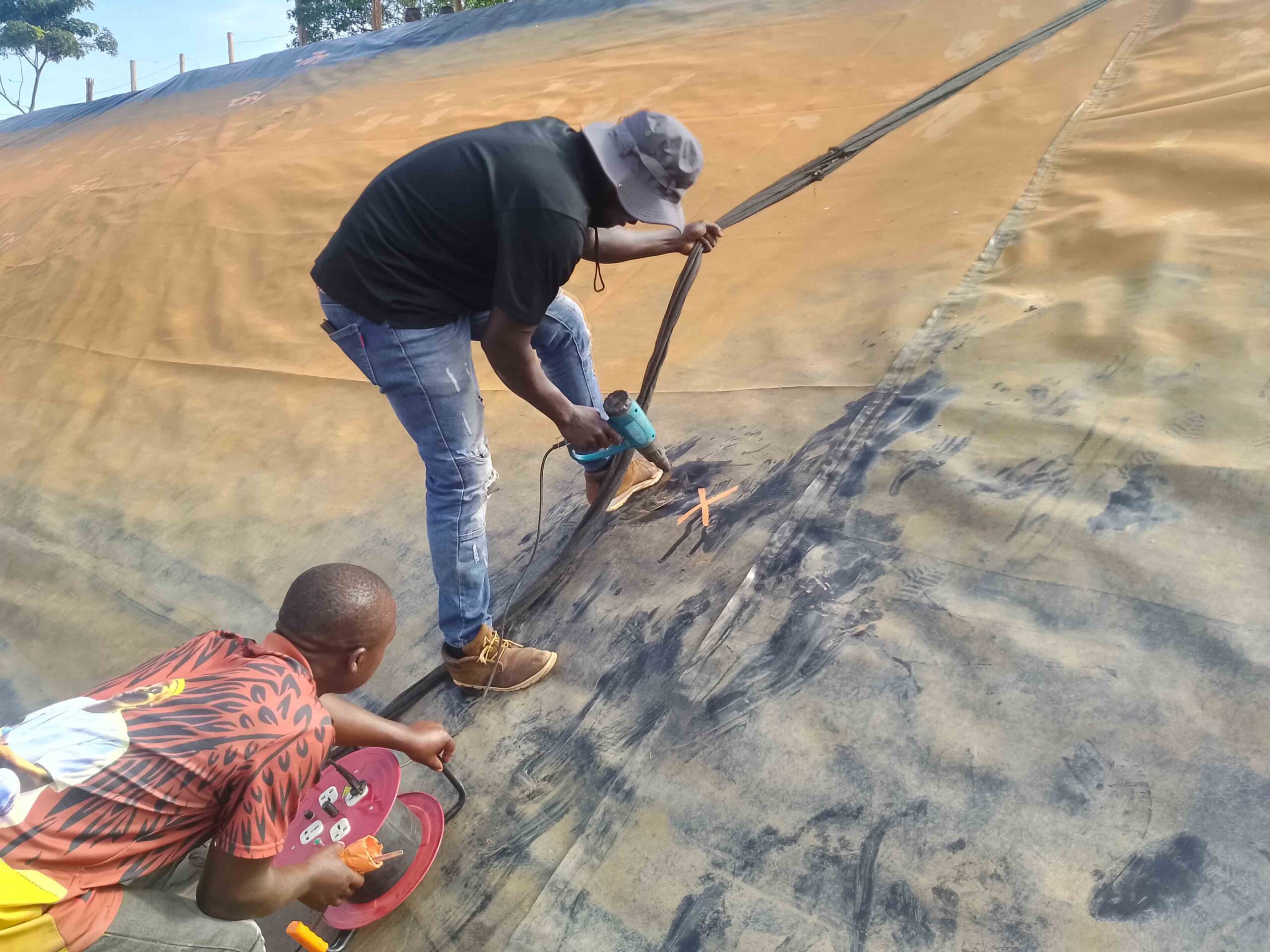
If the containment area is larger than the size (width) of the dam liner, multiple pieces of the dam liner may need to be seamed together. Dam liner welding involves melting the dam liner material under high temperature at the point of joining them. Once melted, the layers are gently pressed one over the other; and as they harden, they become one unit. This is typically done using heat welding, adhesive bonding, or other specialized techniques to create a watertight and airtight seal between the sections. Precision is key to a watertight barrier during the seaming phase of dam liner installation. Overlap specifications provided by the supplier should be strictly followed for each panel to guarantee optimal sealing. The seaming process should be executed by trained personnel using tools and materials specified for the dam liner type to create strong, durable joints. Expert seaming is critical for dam liner installation because the seams are the most vulnerable point of the entire dam liner system; their integrity directly determines the success of the containment project. Subpar seaming leads to leaks, environmental contamination, and costly failures. In essence, a dam liner system is only as strong as its weakest seam, and expert seaming is the only way to ensure that there is no weak link in the containment chain. Dam liner weld joints should remain completely clean and free from dirt, sand, water including dew, and other debris that could compromise the welding quality. These contaminants impede the fusion process resulting in weakened welds that may be susceptible to leaks and failures. Seaming should not be undertaken during conditions such as;

  • Moisture, for moisture in the seam will cause failure of the seam.
  • Soft subgrade soil.
  • Condensation on the dam liner.
  •  
  • Ponded water.
  • Excessive wind/dusty conditions.
  • Other contaminants.

Perimeter anchoring of the dam liner/dam liner termination

Once installation of the dam liner is completed, then it must be secured using permanent anchorage to prevent uplift due to wind or slippage down the side slope, in accordance with manufacturer’s recommendations. For HDPE dam liners, allow a period of at least 24 hours before backfilling the anchor trench, or follow manufacturer recommendations, to allow for thermal expansion and contraction. Dam liners must be securely anchored to prevent shifting, bunching, or uplifting due to environmental factors like wind, water flow, or the weight of stored contents. Specific anchoring methods will vary depending on the type of dam liner and containment structure, but commonly include;

  • Mechanical fastening to the containment structure.
  • Using anchor trenches.
  • Ballasting with materials like gravel.
  • Use of soil bags or sand bags.
  • Anchoring by rammed clay.

Regardless of the method, anchor points must be strategically placed to provide an even distribution of tension across the dam liner, avoiding areas of excessive stress that could lead to damage. The ballasting must allow for dam liner movement with regard to the settlement; but needs to be of an amount to prevent the dam liner from sliding down the slope. The choice of anchoring method should also consider the potential for dam liner damage from wear or abrasion and incorporate protective measures like padding or protective covers.

Inspection and quality checks

Once the dam liner is deployed and anchored, detailed inspections should be conducted to verify the integrity of the installation and confirm that there are no defects or vulnerabilities. Inspections include;

  • Checking for proper seam welds.
  • Ensuring that the anchoring is secure.
  • Confirming that there are no wrinkles, fish mouths, voids, scotch marks, or undue stress points.
  • Verify seam integrity and liner quality to ensure leak free performance.
  • Conduct visual inspections for tears, wrinkles, or contaminations.
  • Any initial deformation issues.

Immediately make adjustments if any issues are identified during the quality checks. These corrections may involve re-seaming areas, repositioning or tightening sections of the dam liner, or adding additional anchoring or reinforcement where needed.

Safety and protection

Install appropriate safety features to minimize hazards from the completed containment structure. Use warning signs, fences, escape ladders, texturing, ropes, bars, rails, and other devices, as appropriate, to ensure the safety of humans, wildlife, and livestock. As a minimum rule, the project area should be fenced off to keep off animals and traffic prohibited within the vicinity.

Maintenance

Regular maintenance of the dam liner is essential to ensure optimal performance and long-term effectiveness. This may include periodic inspections, repairs of any damage or wear, proper management of vegetation and debris, periodic desilting of the dam’s bottom. The following maintenance activities should be undertaken;

  • Inspect the dam liner. Regularly check your dam liner for signs of damage, such as tears, punctures, or excessive wear. Catching and addressing issues early can prevent extensive damage and expensive repairs.
  • Control vegetation growth. Keep the surrounding area clear of overgrown vegetation to reduce the risk of dam liner damage from roots or fallen branches. Be cautious when trimming plants or mowing near the containment structure to avoid accidentally cutting or puncturing the dam liner.
  • Remove roots from trees and large shrubs at first appearance.
  • Look for any unusual damp spots, which may signal leaks.

Common pitfalls to avoid during dam liner installation

  • Inadequate sub grade preparation i.e. sharp objects or uneven surfaces can puncture dam liners, reducing effectiveness.
  • Poor welding practices. Dirty seams or improper temperatures reduce seam strength.
  • Insufficient overlap. Less than 100mm overlap leads to higher leak risk.
  • UV exposure. Leaving dam liners exposed to strong sunshine for over 48 hors reduces lifespan.

Conclusion.

Selecting the right dam liner material and thickness is a critical engineering decision, not a simple choice of ‘thicker’ is better. The optimal thickness is one that meets all regulatory, load, and exposure requirements without excessive cost or installation difficulty. By conducting a thorough site analysis and consulting with environmental engineering experts, you can specify the smartest, most cost effective dam liner for a successful and long lasting containment project.

At SANKOFA, we coalesce decades of experience undertaking dam liner installation projects; and possess well-honed knowledge and engineering expertise in design, supply, and installation of different types of geomembrane dam liners for various containment projects. For projects requiring non woven geotextile fabric underlays, we, as an EPC firm offer authoritative technical knowledge and guidance; ranging from design, supply, and installation services for the same, serving as a one-stop company for your project needs, right from consultation and design, to supply and installation. We supply high quality, high density, and UV treated dam liners for new installations, both textured and smooth dam liners. We as well undertake repairs for damaged dam liners, in the case of existing installations.

Sankofa Consulting Engineers

We are a premier multidisciplinary engineering consulting company based in Uganda. We offer services across a wide spectrum of engineering disciplines, such as electrical and power engineering, water and sanitation engineering, civil and building engineering, surveying and geomatics engineering, mining and petroleum engineering, environmental management, agricultural mechanization and irrigation engineering, among others.

Contact Info

Copyright © 2025  SANKOFA CONSULTING ENGINEERS. | All Rights Reserved | Privacy Policy

error: Content is protected !!