Electrical, Power, and Energy Engineering
Under the electrical, power, and energy engineering consulting subsector, we offer a comprehensive suite of services, including but not limited to;
- Tidal energy,
- Wave energy,
- Nuclear energy,
- Solar energy,
- Wind energy,
- Liquefied natural gas (LNG),
- Geothermal energy,
- Biogas energy,
- Thermal power,
- Hydropower energy,
- Dam safety assessments,
- Waste to energy initiatives,
- Energy audits,
- Electrical, power, and energy equipment.
Continuous, clean, and uninterrupted power is the lifeblood of modern civilization, industrialization, and business. Without power, most businesses and organizations of all types and sizes would be unable to achieve their business objectives. This means enterprises must have 24-hour power availability, day after day, year after year. Business practices in most business and industrial operations mandate continuous uptime for all computer and network equipment, and various production machinery to facilitate round the clock trading and operations, anywhere and everywhere in the world. Businesses and industries are completely intolerant of unscheduled downtime, given the guaranteed loss of business that invariably results. At SANKOFA, our goal is to provide the best electrical, power, and energy equipment and engineering services to achieve reliable 24-hour power at all times.
In designing numerous energy plants, our experts take into account all applicable standards of the energy project requirements, including the configuration of the energy system, connected loads, stability limits, troubleshooting time, system expansion options, maintainability, etc. The creative design process covers economic, technical, environmental, social, aesthetic and other aspects. Our expertise spans network studies, primary design, protection design, automation and control system design, primary and secondary plant design, earthing design, lighting and insulation coordination, full secondary design, engineering design coordination and project management, environmental impact assessments (EIAs), transport analysis, planning of electrical networks, architectural design services, and fire engineering.
Tidal Energy
Tidal Energy
Tidal energy, generated by the natural ebb and flow of ocean tides, stands out as a reliable renewable power source. There have been significant advancements in utilising tidal movements to produce electricity, particularly in regions with substantial tidal range.
We conduct detailed tidal energy studies, undertake engineering design of tidal energy systems, and deliver solutions backed by thorough technical assessments, lifecycle costing, and investment appraisals. Our expertise extends to calculating and assessing the Levelised Cost of Energy (LCOE), and offshore engineering design for station keeping, mooring design, vessel stability, and structural integrity. Through numerical modelling and physical model testing, we offer high quality analysis and consultancy capabilities, reinforcing our commitment to advancing the tidal energy industry.
Our experts have a comprehensive understanding of tidal resources and the technical specifications of their implementation thus offer well founded opinions to inform investment and development in the sector. Our experts excel in mechanical engineering design and analysis, materials science, fatigue and corrosion prevention, and the application of metals and composites in marine environments. We offer unparalleled expertise in underwater engineering and transmission systems.
Wave Energy
Wave Energy
Wave energy, a growing field within the renewable energy sector, presents a promising alternative to conventional power sources. With over 200 wave energy devices currently under testing and demonstration worldwide, the technology’s potential remains largely untapped due to scarce data on its viability. Recognising the vast possibilities offered by wave energy, we are committed to exploring sustainable usage levels and competitive viability against existing energy technologies.
Our services encompass environmental assessments, permitting, and the complete engineering design process from concept to delivery of unique wave energy plants. We specialise in both electrical and design engineering, ensuring that wave energy projects are not only viable but also environmentally responsible and operationally efficient within coastal zones.
We cover project management, front end engineering design (FEED), detailed engineering design, construction, and operation.
Nuclear Energy
Nuclear Energy
Nuclear energy is not only cleaner than fossil fuels but it also provides low-carbon energy to millions of people worldwide. Nuclear energy produces electricity that can be used to power homes, schools, businesses, and hospitals. Nuclear power is one of the leading low carbon power generation methods of producing electricity, and in terms of total life-cycle greenhouse gas emissions per unit of energy generated, has emission values comparable to or lower than renewable energy.
We offer services in the nuclear energy sector for proposed nuclear new-build developments, including nuclear power plant siting and radioactive waste disposal facilities; and we provide support for nuclear sites undergoing decommissioning. We specialise in providing technical advice to authorities on subjects related to nuclear waste management and safety assessments of disposal facilities.
We offer nuclear energy related services, including but not limited to;
- Feasibility study and engineering design of nuclear power development and nuclear power stations, including floating nuclear power plants,
- Decommissioning studies for nuclear power plants. Nuclear decommissioning is the process of dismantling a nuclear facility to the point that it no longer requires measures for radiation protection, returning the facility and its parts to a safe enough level to be entrusted for other uses,
- Nuclear waste disposal i.e. spent fuel from nuclear reactors (high level waste) and contaminated items as clothing (low level waste), options as spent fuel pools, dry cask storage, deep ground injection, etc,
- Nuclear site safety and nuclear plant safety, enabling compliance with a host of safety regulations in the nuclear sector,
- Supply and installation of nuclear reactors i.e. pressurised water reactors (PWR), boiling water reactors (BWR), pressurised heavy water reactors (PHWR), advanced gas-cooled reactors (AGR), light water graphite-moderated reactors (LWGR), and fast neutron reactors (FNR).
Engineering Design of Nuclear Power Plants.
The engineering design of a nuclear power plant needs to consider specific site characteristics, operational aspects and future decommissioning plans so as to achieve the highest levels of safety. A comprehensive and thorough safety assessment is key to ensure the adequate protection of workers, the public, and the environment.
The objective of engineering design is to provide for the safe and effective operation of the nuclear power plant, minimising the likelihood of accidents and ensuring that their consequences can be reliably mitigated.
The primary means to achieve this is the ‘defence in depth’ approach, consisting in the implementation of consecutive and independent levels of protection. In relation to engineering design, the safety provisions of the ‘defence in depth’ approach include: an adequate design for the site characteristics, multiple physical barriers to the release of radioactivity, and the application of strong safety requirements and proven engineering practices to ensure adequate safety margins and a high reliability of design features that preserve the integrity of these barriers.
This is achieved mainly by the use of technology and materials of high quality, control, surveillance and protection systems, and an appropriate combination of inherent safety features and engineered safety systems. These items must also meet stringent requirements for withstanding internal and external hazards, redundancy and diversity, as appropriate. The ‘defence in depth’ approach also relies on effective management systems.
The safety of the plant needs to be demonstrated throughout all stages of its entire lifetime, in particular before the loading of the nuclear fuel and the beginning of operation. A comprehensive safety assessment, including a deterministic and probabilistic safety analyses for internal accidents and external events, needs to be carried out to ensure that all safety requirements established for the design are met and are in accordance with relevant national and international codes and standards, laws, and regulations.
The engineering designs of nuclear power plants are constantly undergoing a process of improvement and modernisation; hence all designs must allow for design changes and modernization.
Solar Energy
Solar Energy
Solar power is the generation of electricity from sunlight.
Concentrated solar power (CSP) systems are systems that use mirrors or lenses to focus a large area of sunlight onto a small area. Electricity is produced when solar energy is converted into heat, which drives a heat engine connected to an electricity generator. Concentrated solar power plants are used to power the electrical grid.
Concentrated solar power plants come in various types, i.e. parabolic dishes, solar power towers, and parabolic troughs.
The CSP plant primarily comprises of four subsystems as summarized below;
- Solar collector field: consists of all systems and infrastructure related to the control and operation of the heliostats,
- Molten salt circuit: includes the thermal storage tanks for storing low and high temperature liquid salt, a central solar-thermal tower receiver, pipelines, and molten salt to steam heat exchangers,
- The power block: consists of the steam turbine and generator, as well as the air-cooled condenser and associated feed water system,
- Auxiliary facilities and infrastructure: consists of the switch yard, step-up transformers, power transmission lines, access routes, water supplies and facility start-up generators (gas or diesel fired, dependent on detailed engineering design).
We supply a number of solar energy equipment, including;
- Submersible solar water/irrigation pumps,
- Solar surface booster water pumps,
- Solar pump controllers,
- Solar lithium batteries, solar inverters,
- Solar street lights,
- Solar CCTV cameras (with remote monitoring capabilities via internet/phone),
- Solar street light poles,
- Container energy storage systems,
- Outdoor portable power stations,
- Solar lighting systems i.e. solar home systems as solar lanterns,
- Solar water heaters,
- Solar refrigerators,
- Solar cold storage,
- Roof mounted solar systems, ground mounted systems, floating solar farms, carport solar systems, containerized solar systems,
- Battery energy storage systems (BESS) and solar power backup systems,
- Solar mini and micro grid systems,
- Sole pile driver machines/solar post ramming machines,
- eMobility charging stations,
- Solar cells and solar panels/PV systems i.e. mono crystalline silicon, poly crystalline silicon, thin film solar panels, concentrated photovoltaic panels, passivated emitter and rear cell (PERC), hetero junction (HJT), bifacial solar panels, and perovskite solar panels.
We offer the following services in respect of solar energy;
- Technical consultancy in troubleshooting of non-functional solar systems,
- Feasibility study, engineering design, and construction of solar power plants/mini grids, including electrical substations and transmission lines,
- Feasibility study, engineering design, and installation of floating solar energy plants,
Solar PV (photovoltaic) testing, crucial for ensuring that your solar energy system performs at its best. It involves a thorough series of inspections and measurements designed to evaluate the performance, efficiency, safety, and reliability of solar PV systems.
Wind Energy
Wind Energy
Wind power is the conversion of wind energy into a useful form of energy, such as using wind turbines to make electricity. We undertake wind resource assessments and offer services in design and installation of onshore and offshore wind farms.
Our energy experts conduct detailed wind energy resource assessments and studies, assess orographic conditions, wind strength and direction, seismic activity and other aspects, ensuring the most optimal designs are provided, be it for new wind energy plants or wind power plant modernization, in the case of already existing plants. We also support investors by preparing windfarm business plans.
We undertake supply and installation of wind farm infrastructure, such as;
- Wind turbines,
- Step-up transformers,
- Weather towers (for collecting wind data).
Fixed and Floating Foundation Engineering and Design.
We provide structural analysis and engineering design of bottom fixed and floating wind turbine generator (WTG) foundations, substations, foundation load simulations, coupled load assessments, installation assessment, weather downtime analysis, and mooring and anchor analysis.
We provide the characterisation of the wind resource by collating existing wind hindcasts, preparing maps and statistical summaries of the wind fields spatial and temporal variability, and operational wind conditions. We dwell on curated dataset of satellite observations, which we use for hindcast calibration and enhancing confidence in the characterisation of the wind resource for feasibility and site selection assessments.
Liquefied Natural Gas
Liquefied Natural Gas
Liquefied Natural Gas (LNG) is a rapidly emerging industry, offering economic benefits to global locations with plentiful gas supplies and environmental benefits to the world. As the cleanest burning fossil fuel, LNG represents an excellent alternative to other fossil fuels while aiding to reduce greenhouse gas emissions.
We support LNG projects with a full range of geotechnical, civil, environmental, mechanical, and electrical engineering services for LNG projects, from front end engineering and design (FEED) to detailed final construction and record drawings, specifications, and construction supervision. We offer services as;
- Environmental and social impact assessments,
- Environmental site monitoring, fish studies, and fish and crab salvage,
- Site sediment and erosion control planning,
- Geotechnical site investigations (offshore and onshore),
- Geotechnical parameters for foundation design, construction borrow materials, construction road layouts and design,
- Terrain hazards, slope stability analysis, and site seismicity analysis (offshore and onshore),
- Project management and field supervision of construction,
- QA/QC services for verification of design conformance.
Geothermal Energy
Geothermal Energy
As the world pushes toward greener energy solutions, geothermal energy offers us a cost-effective and reliable power and heat alternative. Geothermal power plants receive heat from geothermal sources inside the earth. These facilities can only be built in certain geographical areas, which significantly limits their application.
Our team undertakes geothermal field development right from conceptual modelling, data collection and integration, numerical reservoir simulation, exploration targeting, well design and testing, and general development project management. We have expertise in exploring, designing, constructing, starting up, and operating geothermal wells, resource, and power production facilities. We implement work on single, dual, triple flash and binary power plants, and direct use of geothermal fields.
We undertake feasibility studies, geothermal reservoir simulation and operations optimization. Our multidisciplinary team with extensive breadth of experience blends geosciences, geophysics, geochemistry, and geomechanics with innovative, modern data analytics. Collectively, our team possesses a deep understanding of geothermal resource characterization, enabling us to undertake extensive studies and hence execute successful geothermal energy projects.
Regarding geothermal energy development, we support clients to explore, drill, develop, and manage their projects. Our experience in both high enthalpy hydrothermal and low enthalpy sedimentary heat systems, enables us to guide you through your geothermal project, starting with a geologic investigation and project siting to help you determine the best drill site. Then we will provide drilling and wellfield design, reservoir engineering, field testing, and general project development and strategies.
Biogas Energy
Biogas Energy
Biogas is a fuel produced by the degradation of organic matter by microorganisms in the absence of oxygen and consists of the breakdown of substances contained in plants, sludge, and animal by-products. Biogas systems turn waste into a resource.
Biogas systems make it possible to produce biogas from;
- Agricultural biomass (corn, sorghum, sunflower, straw, cereal flour, agricultural waste in general),
- Livestock manure (cattle slurry, cattle manure, pig slurry, goat manure, sheep manure, poultry manure,
- Other biomass produced from processing waste (sewage sludge, fruit and vegetable residues, agro-food residues, table scraps, slaughterhouse waste, fish processing residues, blood, serum).
Biogas and Biomethane.
The different biogas plants are distinguished according to the matrix used i.e. from livestock manure and/or agricultural biomass, or from the organic fraction from waste. All biomethane and biogas plants must be carefully designed to ensure high safety, high reliability, and low management costs.
Biogas can be refined and purified for production of biomethane (99% methane) which has conditions and characteristics of use corresponding to those of methane, can be stored, transported or placed in the natural gas network. The different biogas plants are distinguished according to the matrix used i.e. from zootechnical waste or agricultural biomass, or from the organic waste fraction.
The production of electricity and heat from biomass represents a new and high source of income, thanks to the ever-increasing need for energy from renewable sources. The energy produced is considered green energy because it is produced with low environmental impact.
The main types of biogas digester technologies for small to medium sized units are fixed dome, floating dome, and tubular polybag. The technology for large sized biogas digesters is a concrete active bioreactor with balloon gas holders.
Common types of biogas digesters.
The most common types of biogas digester technologies are briefly described below. They are categorised as continuous wet digestion systems. This means they operate with daily input of fresh feedstock (“continuous”) into the same active bioreactor volume and are fed with a feedstock with high water content or by adding water. The waste material is a slurry and flows like a fluid material. The active bioreactor is always full (steady state system). In other words when fresh material enters the active bioreactor, digestate leaves the active bioreactor.
A fixed-dome plant includes a cylindrical rigid active bioreactor with a rigid gas-holder dome, a feedstock inlet, and an outlet area also called expansion chamber. The gas produced in the digester is stored in the upper part of the unit (in the gas holder dome). With a closed outlet gas valve, gas pressure inside the dome increases with time, pushing the digestate into the expansion chamber. When the gas valve is open for gas utilisation, gas pressure drops, and a proportional amount of slurry flows back from the expansion chamber into the active bioreactor. Typically, such a biogas unit is constructed underground, protecting the active bioreactor from low temperatures at night and during cold seasons. Given that the gasholder dome undergoes pressure, this system needs experienced and skilled construction to ensure gas tightness. Also, given its underground construction, it should be considered as permanent infrastructure.
A floating-drum biogas plant consists of a cylindrical active bioreactor and a movable, floating gasholder (drum). The produced gas collects in the gas drum, which rises or falls again, depending on the amount of gas produced and used. The rising and falling drum, thus, provides a helpful visual indicator of the gas production and available gas quantity. The weight of the gas drum creates gas pressure. To increase gas pressure, weights can be added on top of the gasholder.
A tubular polybag digester consists of a longitudinal shaped heat-sealed, weather resistant plastic or rubber bag that serves as an active bioreactor and gas holder. The gas is stored in the upper part of the bag, and the inlet and outlet are attached directly to the bag at each end. As a result of the longitudinal shape, no short-circuiting occurs and slurry flows through the biogas unit in a plug-flow manner. Gas pressure can be increased by placing weights on the bag while taking care not to damage it. The benefit of this technology is that it can be constructed at low cost by standardised prefabrication. However, the plastic balloon is quite fragile and susceptible to mechanical damage and has a relatively short life span of 2-5 years. To avoid damage to and deterioration of the bag, it is also important to protect the bag from direct solar radiation with a roof. Additionally, it is recommended that a wire-mesh fence protect it against damage by animals.
Concrete digesters with balloon gasholders are typically used for large scale systems, although the technologies described above can also be used for large units. Concrete and balloon designs are typically aboveground and have different units serving different purposes. With this technology, mixing pits are often an additional component. These allow feedstocks to be mixed and homogenised before they are fed into the digester. The mixing pits are equipped with propellers for mixing and/or chopping the feedstock and often a pump is used to transport the feedstock into the digester. The active bioreactor itself is made of concrete or steel and often insulated. Large active bioreactors are almost always stirred by slow rotating paddles, rotors, or injected biogas. The gas holder is usually made of flexible material. It can be placed either directly above the active bioreactor to act as a balloon plant or in a separate ‘gas-bag’.
Thermal Power
Thermal Power
While the world moves towards renewable sources of energy, thermal power generation still plays an important role, often being used in conjunction with renewables. The design of thermal power plants (TPP) requires the participation of a multidisciplinary team of electrical engineers, architects, civil engineers, ecologists, etc.
Our team has extensive experience in many aspects of thermal power stations, including environmental protection, fly ash disposal, heavy machinery foundations, chimney stacks, and major engineering structures such as boiler houses. Thermal power plants can utilize different types of fuel, i.e. coal, fuel oil, or natural gas. Coal is considered a more affordable and economically viable fuel. However, it has serious disadvantages associated with the environmental impact of the process and its effectiveness. In each case, an individual approach is needed. Coal fired thermal power plants release huge amounts of fly ash, a waste that is very detrimental to the environment.
We offer consultancy and implementation services in the thermal power energy sector, including but not limited to;
- Feasibility study, detailed engineering design, and construction of thermal power plants,
- Engineering design of ash dams for disposal of fly ash,
- Modernization of thermal power plants,
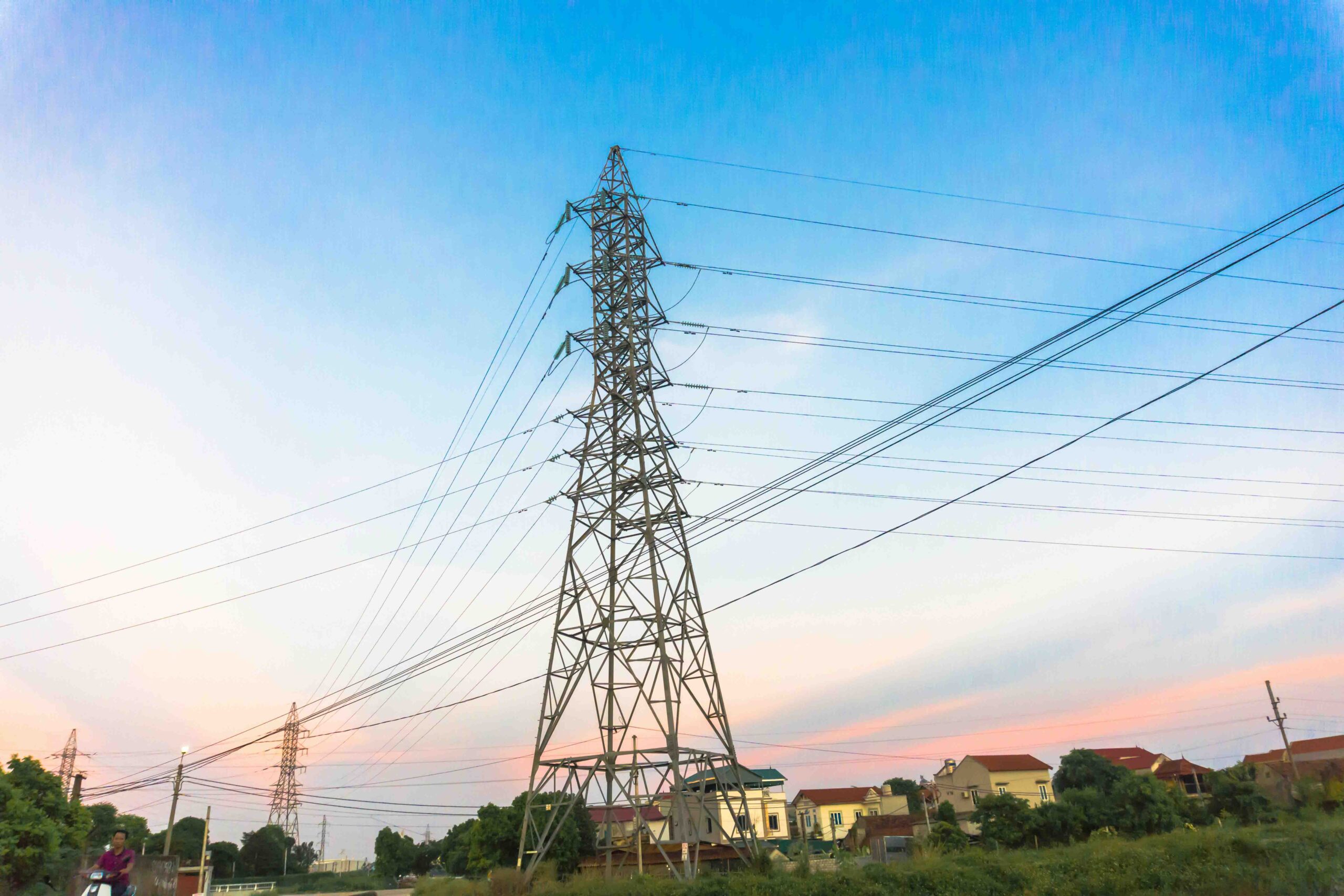
- Power transmission tower constructions,
- Laying overhead power lines,
- Engineering design and construction of electrical substations,
- Installation of automation systems (SCADA equipment),
- Thermal plant modernization and modifications to existing facilities i.e. improve the efficiency of old equipment, minimization of energy losses, and increase the generating capacity. This increases the reliability of TPPs, simplifies maintenance, and allows the owner to use the land more efficiently.
Effects of the modernization of thermal power plants.
- Increasing the generating capacity of the power plant,
- Increasing the transmission of electricity through existing power lines,
- Obtaining competitive advantages in terms of the cost of electricity,
- Freeing up space on the construction site to install additional equipment,
- Improving environmental performance to avoid fines,
- Transition to more suitable types of fuel, etc.
Hydropower Energy
Hydropower Energy
Hydropower is the power that is derived from the force of moving water, which can be harnessed for useful purposes. Our team’s advanced knowledge in the field of hydraulics engineering and hydropower allows us to offer a full range of technical solutions for hydroelectric power projects.
We undertake feasibility studies and detailed engineering design for large and mini hydro power plants. Our work stretches from engineering design/consultancy, through to construction supervision, development of operation and maintenance plans, and routine dam safety audits for the constructed power plants.
Our in-depth knowledge and expertise spans network studies, primary design, protection design, automation and control system design, primary and secondary plant design, earthing design, lighting and insulation coordination, full secondary design, engineering design coordination and project management, environmental impact assessments (EIAs), transport analysis, planning of electrical networks, architectural design services, and fire engineering. We tackle virtually every element of power transmission and distribution network systems, including overhead power lines and towers, transformers and reactive compensation equipment, substations and switchyards, underground and submarine (undersea) cables, high-voltage direct current (HVDC) and extra high-voltage (EHV) networks, as well as supervisory control and data acquisition (SCADA) systems and distribution management systems (DMS).
In feasibility study and engineering design of hydropower plants, our design services include the following;
- Conceptual assessments,
- Route selection and optimization,
- Voltage selection and optimization,
- Interconnection studies,
- Interconnection voltage optimization,
- Point-of-Interconnection (POI) location assessment,
- Power system planning,
- Capital cost estimate,
- Power flow analysis,
- Environmental studies and permitting,
- Grid connection support, civil, and electrical engineering design,
- Smart grid development,
- Integrated power solutions,
- Cable design and selection,
- Substation design,
- Remote equipment monitoring,
- Plant optimization and modernization studies,
- Corrective and preventive maintenance programs for hydropower plants,
- Rehabilitation and upgrade of wooden power transmission lines to concrete poles or pylons,
- Powerline inspections, powerline surveying, tower inspections, HAZMAT inspection and detection,
- Upgrade and expansion of grid systems modernization to increase capacity and energy production,
- Feasibility studies and detailed engineering design for run-off the river and pumped storage hydropower projects,
- SCADA systems design and installation. SCADA is a centralized system for real-time data acquisition, monitoring and control of remote equipment, using sensor and other devices,
- Installation of advanced metering infrastructure (AMI). AMI is a system that collects, measures and analyses energy usage over a two-way communication network connecting smart meters and the utility’s control systems. It allows remote meter reading, connection-disconnection, theft-tamper detection, outage management, and distributed generation management,
- Development of mini grids for rural electrification,
- Engineering design for all hydropower plant components i.e. spillways, weirs, penstocks, headraces, tailraces, dams, desilting basins, power intakes, energy dissipaters,
- Physical hydraulic model studies for various components of hydroelectric projects,
- Reservoir and dam design for different types of dams i.e.
- Concrete faced rockfill dams,
- Roller compacted concrete dams,
- Asphalt core rockfill dams,
- Mass gravity and stepped spillway dams,
- Earth embankment dams,
- Rockfill masonry concrete dams,
- Membrane dams,
- Multi-arch concrete dams.
Dam Safety Assessments
Dam Safety Assessments
Dam components are prone to deterioration with time, as a result of numerous factors, including ageing, water ingress, soft water attack, and seismic activity, among others. To ensure corrective measures are undertaken before any disaster happens, dam safety assessments (dam condition assessments) are of paramount importance. Our civil and hydraulics engineers offer technical assistance in undertaking thorough dam safety assessments, helping identify and prevent potential catastrophic disasters before they happen.
In our structural integrity assessments and inspections for dam facilities and appurtenant structures, we check out for defects such as;
- Seepage,
- Rust,
- Clogging of drains (blocked drains),
- Cracks,
- Spalling/scaling of concrete,
- Erosion of concrete materials,
- Soft water attack,
- Calcite formations on concrete surfaces,
- Visible displacement of segments and exposed reinforcement bars,
- Anti-slip stability and seepage stability tests for numerous structures.
The results of our assessments guide key undertakings such as dam emergency response planning and instrumentation selection i.e. monitoring instruments, including design and interpretation of surveillance data.
In regards to dam safety assessments, we offer the following services;
- Dam monitoring using satellite remote sensing technology i.e. mapping of ground displacement, sinking, toppling, slope failures, overtopping, and other geohazards,
- Detailed dam inspections and investigations,
- Preparation of operations, maintenance, and surveillance manuals (OMS),
- Emergency action plans (EAP),
- Dam breach analysis,
- Dam emergency response planning,
- Instrumentation selection i.e. monitoring instruments and design and interpretation of surveillance data,
- Detailed scour analysis,
- Scour countermeasure designs,
- Scour monitoring recommendations.
Waste-to-Energy Initiatives
Waste-to-Energy Initiatives
We undertake a suite of waste-to-energy initiatives, for both solid waste, plastic waste, and organic waste. In essence, our solutions aim to recover energy from numerous waste components such as bagasse, human waste, domestic organic waste, industrial wastewater, among others.
We support clients to design, supply, and install high-end technology plants to convert the different wastes into energy, which can be used for various purposes such as lighting, cooking, running production plants, etc.
Our sustainable and efficient high end technology equipment and solutions deploy hydrolysis and thermolysis, converting both organic and plastic waste into various products such as;
- Distilled water,
- Bioethanol,
- Electricity,
- Heat,
- Bunker fuel,
- Biochar,
- Hydrogen,
- Pavers and roofing tiles.
We supply and install high quality thermolysis plants, hydrolysis, and sorting plants. Our equipment relies on the process of thermodecomposition and employs heating, as opposed to burning. Our waste to energy plants, with capabilities of processing municipal waste to produce renewable electricity and other products hold the promise of replacing landfills and dumpsites, helping getting rid of waste and generating electricity.
Energy Audits
Energy Audits
In recent times, energy efficiency has become very paramount, both in building systems, production plants, and numerous energy consuming operations. An energy audit is an energy efficiency study or inspection survey and analysis of energy flows for energy conservation in a building, factory, or other system. It entails critical study of equipment, processes, and operations with the objective of identifying energy saving opportunities that can help reduce the energy bills of a production plant without impacting production volumes, quality, or safety. Energy audits are planned and conducted as part of the identification and prioritization of opportunities to improve energy performance, reduce energy waste, and obtain related environmental benefits.
During energy audits, we undertake comprehensive study and inspection of various system components, among them electrical systems, lighting systems, pumps, motors, HVAC systems, and SCADA, automation, and control systems. Whilst undertaking energy audits, we conduct condition monitoring of equipment, site survey of energy consumption, identification of major energy utilization equipment, identification of minor snags in the system, assessment of energy saving measures, and an evaluation of operational controls.
An energy audit will show which processes require energy and in what quantities. The next step is to implement active and passive energy efficiency measures. Passive measures are defined as easy-to-implement actions, while active measures require significant changes to existing equipment and processes, including expensive automation and optimization. The last step is energy reporting and monitoring, through which the facility or plant operator can set targets for future energy efficiency measures and identify key performance indicators for the implemented measures.
Through our energy audits, we give clients the insights they need to understand their energy use and help them to monitor and control them. Routine undertaking of thorough energy audits helps guide entities on energy optimization in their operations, resulting in significant operational cost savings. Through our energy audit reports, we present every detail about the building or plant facility and its components to the client. Our suggestions detail the effective steps towards implementing a package of improvements to achieve the client’s goals. These goals could include reducing energy consumption, improving comfort throughout a structure, improving indoor air-quality, eliminating health and safety hazards, or even carbon footprint reduction.
Energy Management.
Key components of energy management practices include the following;
Energy Audit.
Conducting a comprehensive assessment of energy consumption to identify where and how energy is used, wasted, or could be saved. This includes evaluating energy systems, equipment, and practices.
Energy Monitoring and Metering.
Installing meters and sensors to track energy consumption in real-time. This data helps in identifying trends, anomalies, and opportunities for improvement.
Energy Efficiency Measures:
Implementing strategies and technologies to reduce energy consumption. This can include upgrading to energy-efficient lighting, HVAC systems, motors, and insulation, as well as optimizing operational practices.
Renewable Energy Integration.
Incorporating renewable energy sources such as solar, wind, and biomass to reduce reliance on non-renewable energy and lower greenhouse gas emissions.
Building Management Systems (BMS).
Using automated systems to control and monitor building operations such as heating, ventilation, air conditioning (HVAC), lighting, and security systems to optimize energy use.
Energy Procurement.
Strategically purchasing energy to secure favorable rates and terms. This may involve negotiating contracts, considering alternative energy suppliers, and exploring options like demand response programs.
Demand Management.
Adjusting and controlling energy use during peak demand periods to avoid high charges and reduce strain on the energy grid. This can involve load shifting, load shedding, and using backup generators.
Employee Engagement and Training.
Educating and involving employees in energy conservation efforts. Training programs and awareness campaigns can encourage energy-saving behaviours and practices.
Electrical Tests Services.
Under this service, we offer a complete range of electrical testing solutions, including;
Installation Testing.
We conduct thorough assessment and verification of electrical installations to ensure safety and compliance with standards.
Earth Ground Testing.
We undertake determination of effective earth grounding to prevent electrical hazards and optimize equipment performance.
Power Quality Analysis.
We conduct in-depth analysis of power systems to identify and rectify issues related to voltage variations, harmonics, and power factors.
Thermography.
We utilize infrared imaging to detect potential faults or anomalies in electrical systems, helping prevent overheating and potential failures.
Battery Testing.
We undertake evaluation of battery performance, capacity, and health to maintain optimal functionality in various applications.
Our comprehensive electrical testing service ensures the reliability, safety, and efficiency of your electrical infrastructure.
Electrical, Power, and Energy Equipment
Electrical, Power, and Energy Equipment
We supply a number of electrical, power, and energy equipment, including;
- Electrical transformers i.e. pole mount and pad mount transformers, dry type transformers and oil immersed transformers,
- Electrical switchgears,
- Coaxial cables,
- High voltage cables, medium voltage cables, insulated PVC sheathed power cables,
- PVC flexible cables,
- Cable glands,
- Cable lugs,
- Suspension clamps,
- Solar sensors,
- Surge arrestors,
- Fuse cutouts,
- SCADA RTU cabinets,
- Cable joints and termination kits,
- Post hole diggers (electric poles digging machines),
- Diesel and petrol generators i.e. 1kVA to 5,000kVA,
- Standby generators, enclosed generators, trailed generators (mobile generators),
- Diesel welding generators,
- Wind turbines, pelton turbines, francis turbines, and kaplan turbines,
- Load break switches,
- Submarine cables (subsea and underwater cables),
- Underground cables, concentric cables, industrial cables,
- Marine current turbines (tidal turbines),
- Armoured cables,
- Solar cables,
- Flame retardant and fire-resistant cables,
- ABC cables (aerial bundled conductor),
- Bare overhead conductors,
- Submersible pump cables,
- Capacitor banks,
- Pre-stressed concrete electric poles,
- Treated timber utility poles,
- Pylons/steel towers,
- Lightening arrestors,
- Transformer test benches,
- Industrial automation systems,
- Electricity prepaid meters,
- Aluminium overhead conductors,
- Overhead line switch disconnectors,
- Overhead line air disconnectors,
- High voltage test equipment,
- Transformer test equipment,
- Switchgear test equipment,
- Battery test equipment,
- Oil test equipment,
- Bushings,
- Synchronous motors,
- Microgrid power solutions,
- Three phase portable energy meter calibration equipment,
- Real-time power factor correction equipment,
- Fault detection sensors,
- Vacuum circuit breakers,
- Stainless steel perforated cable trays and cable ladders,
- Energy audit equipment such as infrared cameras, infrared thermometers, multimeters, lux meters, combustion analyzers, power loggers, anemometers, gas leak detectors, light meters, blower doors, duct leakage testers, ultrasonic flow meters, moisture meters, tachometers, digital pressure gauges, hygrometers, carbon monoxide detectors, infrared thermal imaging cameras, power meters, laser distance meters, pressure pans, smoke devices, R h meters, temperature and humidity loggers, airflow measurement devices/airflow meters, power quality analyzers, portable dissolved oxygen meters, clamp meters, conductivity meters, indoor air quality meters, compact flue gas analyzers, ultrasonic leak detectors,
- Prefabricated compact substations.
We offer electrical, power, and energy related services such as;
- Engineering design and construction of electrical substations,
- Feasibility study, detailed engineering design, and construction of gas-to-power projects,
- Transmission lines, substations, and interconnection studies,
- Design, supply, and installation of industrial boilers and furnaces i.e. fire tube boilers, water tube boilers, electric boilers, oil and gas boilers, steam boilers, biomass boilers,
- Preventive maintenance and repair of electricity generation plants i.e. site surveys and condition assessments, breakdown assistance and repairs, turbine system component replacements,
- Engineering design and construction of undersea cables, onshore transmission lines, and distribution substations,
- Power and energy transformation system design,
- Network planning and design, distribution design, and substation design,
- Design, supply, erection, and commissioning of substations, overhead lines, sub transmission lines, and distribution transformers,
- Laying of overhead and underground power lines/cables,
- Design of overhead lines and towers (overhead route design),
- Design and construction of high and extra high voltage substations, including refurbishment of existing substations,
- Electrical system installation, testing, inspection, and troubleshooting,
- Feasibility study, detailed engineering design, and construction of both run-off the river and pumped storage hydroelectric projects,
- Feasibility studies for hydropower plant upgrade, modernization, and power station expansion,
- Consultancy for off grid renewable energy development,
- Development of energy strategies,
- Renewable energy resource evaluations i.e. hydroelectric, solar, wind, etc,
- Hydraulic modelling and simulation studies,
- Hydrologic modelling studies,
- Design, supply, and installation of power transmission lines,
- Switchyard design,
- Control system installation, grid automation, and remote monitoring,
- Design and construction of energy efficient kitchens and undertaking of clean energy (clean cooking) initiatives i.e. solar aided cookstoves, improved cookstoves (ICS), lava volcanic stoves, lorena stoves, rocket stoves, institutional energy saving stoves, energy briquettes, etc,
- Power distribution network design and construction, network component maintenance, management of faulty systems, and power quality and reliability analysis,
- Electricity distribution and energy management i.e. automated metering infrastructure, energy loss reduction, and power systems automation and data analytics,
- Planning, construction, and maintenance of medium- and low-voltage electricity networks,
- Design, installation, and commissioning of renewable energy systems i.e. solar PV, biogas, wind, hydropower,
- Design of bagasse cogeneration plants for sugar industries,
- Technical audits and value for money audits for technical projects,
- Independent project monitoring and evaluation,
- Energy market surveys,
- Energy auditing in industrial and commercial buildings,
- MV network planning,
- Compressed air system design and maintenance, air compressor maintenance, air conditioning,
- Design and construction of overhead power lines i.e. overhead route design, tower design, etc,
- Power systems protection, coordination, and control,
- Transformer and switchgear maintenance,
- Generator installation and repair,
- Grid design, planning, and specifications (power grid planning),
- Powerline infrastructure design and construction,
- Designing for the decommissioning of aging hydroelectric dams,
- Power control systems design and construction,
- Smart grid communication architecture (smart grids and renewable energy – intelligent power grids),
- Smart grid applications for grid modernization (smart grid operation and control),
- Engineering and powerline surveys.