Engineering Consultancy
Engineering consultancies, mainly in the form of feasibility studies, definitive feasibility studies (DFS), preliminary economic assessments (PEA), preliminary designs, scoping studies, conceptual studies, masterplans, and front end engineering designs (FEED) remain a very critical step before undertaking various engineering infrastructural investment projects. This initial step (feasibility study) is aimed at assessing the value, plausibility, and potential of the projects, before investors and governments can commit substantial resources into implementation of the intended projects. Consultants are expected to undertake in depth exploration and studies and offer objective, unbiased views on technical, economic, financial, legal, and environmental feasibility. This stage also identifies constraints to the proposed project, such as risks, technical, budget, laws and regulations.
Based on our experience, there are no two projects that are exactly the same, thus no universal solutions that can be equally suitable for any two projects. Every project is unique, thus necessitating its own feasibility study to take into account the individual requirements of that particular project, national and international standards, safety rules, and other factors. Additionally, consultancies and feasibility studies require teams of highly experienced professionals with multidisciplinary expertise and specialised skills, for quality deliverables. Multidisciplinary consulting companies like SANKOFA provide clients with the confidence to invest in their projects by delivering the technical guidance and planning necessary to transform their visions into realities (infrastructure facilities).
At SANKOFA, we undertake specialised consultancies in Electrical, Power, and Energy Engineering; Civil and Building Engineering; Water Resources, Sanitation, and Public Health Engineering; Agricultural Mechanization and Irrigation Engineering; Environmental and Natural Resource Management; Mining and Petroleum Engineering; Surveying and Geomatics Engineering; Bridges, Roads, and Highway Engineering; and Marine, Coastal, and Offshore Engineering sectors.
We have a comprehensive understanding of local and international procurement guidelines i.e. PPDA, FIDIC Yellow Book, FIDIC Red Book, FIDIC Silver Book, FIDIC Orange Book, FIDIC MDB Pink Book form of Contract, etc., enabling us to deliver on both design and EPC contracts to the desired compliance standards. We do deliver business aligned solutions that endure the test of time. We ensure that our solutions and designs align with the multitude of regulatory policies and standards ever present in the various engineering subsectors. Our highly trained and experienced engineers lead our clients through complex technical, regulatory, and economic challenges. Using sound engineering design principles, we deliver the best designs and quality works for the following engineering consultancies;
Agricultural Mechanization and Irrigation Engineering.
- Feasibility studies and detailed engineering design of solar powered irrigation systems (including irrigation basin and dam studies) and large-scale irrigation scheme development projects,
- Development of national irrigation master plans,
- Engineering design and automation of irrigation systems (irrigation network instrumentation),
- Engineering design and installation of misting systems (fogging solutions) for greenhouses, agricultural humidification, and controlled agricultural environments,
- Engineering design and installation of boom irrigation systems for agricultural greenhouses and nurseries,
- Engineering design and installation of lawn irrigation and turf irrigation systems for compounds, golf courses, football pitches, stadiums, and as dust suppression systems,
- Engineering design and construction of agricultural greenhouses (polyhouses),
- Technical audits, troubleshooting, and water and energy efficiency assessments for irrigation systems,
- Performance evaluation and design of irrigation scheme improvement strategies,
- Engineering design of various farm structures i.e. cattle spray races, valley dams/valley tanks, water storage reservoir dams, automated livestock drinking troughs, goat sheds, poultry cages.
Water Resources, Sanitation, and Public Health Engineering.
- Development of water source protection plans/source protection plans (SPP),
- Feasibility study and detailed engineering design for solar powered piped water supply systems,
- Preparation of urban drainage masterplans,
- Development of water supply and sanitation masterplans,
- Feasibility study, engineering design, and tender documentation of gravity flow schemes,
- Undertaking of surface water hydrological assessments,
- Undertaking of river basin water resources assessments,
- Undertaking of geophysical site investigations and drilling supervision for production boreholes,
- Consultancy for feasibility study and detailed engineering design of sanitation services,
- Engineering design and construction supervision of water supply and sanitation systems,
- Development of water resources management and development masterplans,
- Undertaking studies for national hydrogeological aquifer mapping,
- Feasibility study and detailed engineering design of wastewater treatment plants,
- Feasibility study and detailed design for faecal sludge service chain management systems in unsewered urban centres,
- Undertaking biofilter bed condition and performance assessments,
- Development of water safety plans (WSP) and water security plans,
- Development of district WASH masterplans and WASH sector strategic investment plans,
- Development of integrated urban sanitation and sewerage plans,
- Feasibility study and detailed engineering design of onsite and sewered sanitation systems (city sanitation masterplans),
- Preparation of river basin management plans (RBMP),
- Feasibility study for groundwater recharge dam projects in arid environments,
- Development of city sewerage management plans (sewerage masterplan studies),
- Development of operation and maintenance manuals (O&M manuals) for piped water supply schemes.
Civil and Building Engineering.
- Structural design, architectural design, MEP design, and construction supervision of building infrastructure,
- Development of urban physical development masterplans,
- Undertaking structural integrity assessments,
- Undertaking technical audits, value for money (VfM) audits, and forensic engineering for engineering infrastructural projects,
- Design of misting systems for outdoor cooling and dust control,
- Undertaking constructability reviews and serving the role of owner’s engineer,
- Undertaking waterproofing, thermal insulation, and acoustic insulation of engineering infrastructure,
- Undertaking steel structural design, steel fabrication, and structure installation, as well as steel piping,
- Construction project management,
- Undertaking structural design and drafting for steel fabrication and concrete structures,
- Planning and engineering design of industrial parks,
- Feasibility study and design of low cost housing solutions,
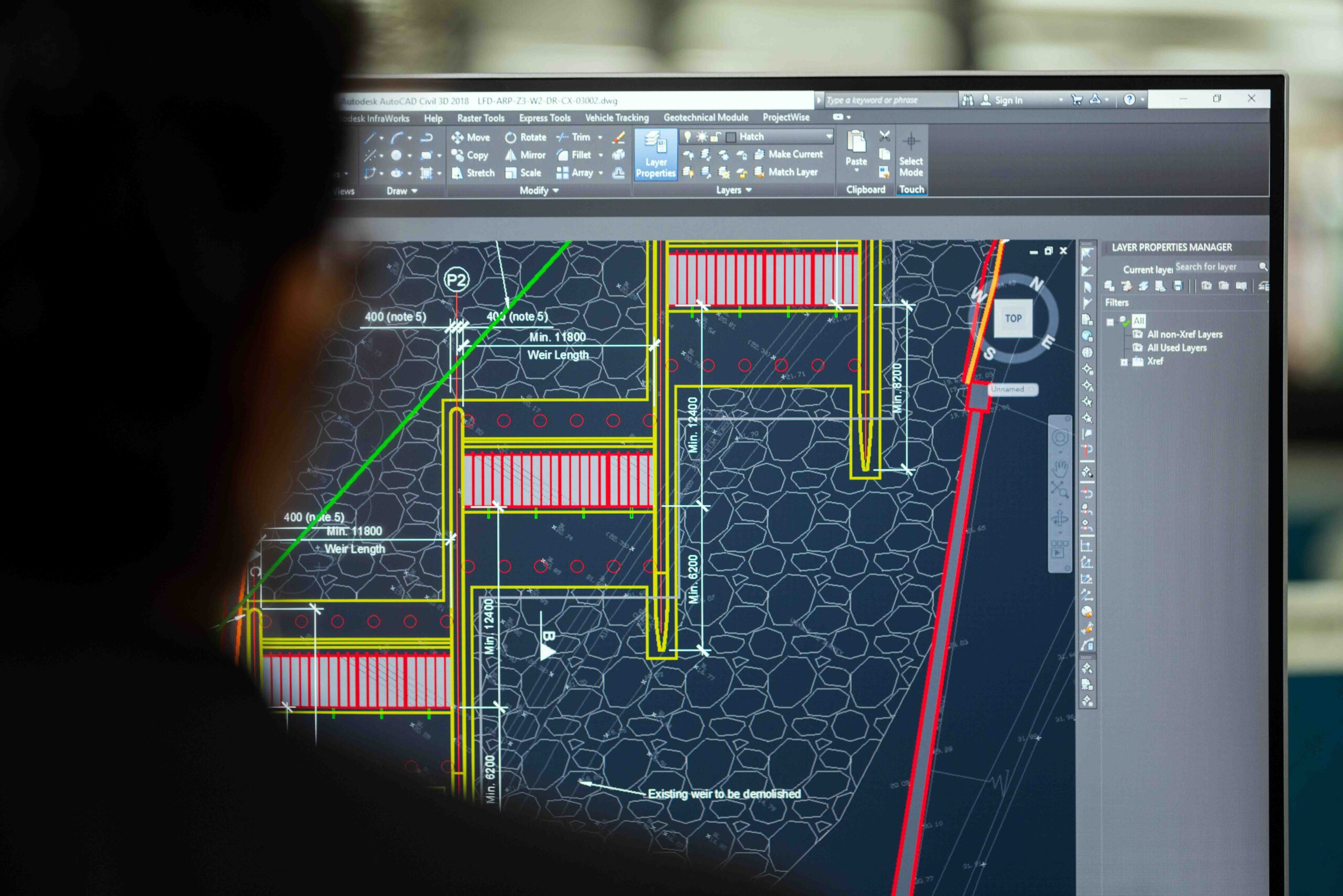
- Preparation of engineering technical drawings (CAD drawings), schematic drawings, blueprints,
- Development of infrastructure master plans and integrated development plans.
Electrical, Power, and Energy Engineering;
- Masterplan studies for national hydropower development (hydropower development masterplans),
- Development of energy transition and investment plans,
- Design, supply, erection, and commissioning of electrical substations, overhead lines, sub-transmission lines, and distribution transformers,
- Network planning and design, distribution design, and substation design at 11kV, 33kV, 132kV, and 275kV voltage levels,
- Engineering design and construction supervision of gas turbine power plants (GTPP),
- Engineering design and construction supervision of thermal power plants (TPP),
- Undertaking of energy audits in buildings, industries, and production plants,
- Undertaking dam safety inspections,
- Feasibility study, detailed engineering design, and preparation of detailed project reports (DPR) for run-off the river and pumped storage hydroelectric projects,
- Designing for the decommissioning of aging hydroelectric dams,
- Network planning and design, distribution design, and substation design,
- Design of overhead lines and towers (overhead route design),
- Feasibility studies for hydropower plant upgrade, modernization, and power station expansion,
- Design of bagasse cogeneration plants for sugar industries,
- Energy auditing in industrial and commercial buildings,
- Feasibility study and detailed engineering design for floating solar power plants.
Surveying and Geomatics Engineering;
- Undertaking bathymetric surveying,
- Undertaking hydrographic surveying,
- Undertaking topographical surveying and engineering surveying,
- Undertaking cadastral and land surveying,
- Undertaking GIS, remote sensing, geodetic surveys, and land cartography projects,
- Application of drone surveying and LiDAR technologies in engineering construction projects and crop monitoring in agriculture,
- Undertaking of As Built surveys and preparation of As Built drawings and site layout maps,
- Environmental valuation and accounting (valuation surveying),
- Undertaking hydroacoustic surveying for fish stock assessments.
Bridges, Roads, and Highway Engineering;
- Feasibility study and detailed engineering design for roads, railways, highways, and bridges,
- Engineering design of road drainage networks,
- Undertaking road safety audits and blind spot identification,
- Engineering design and installation of bridge abutments, bridge piers, bridge decks, wing walls, retaining walls, and bridge embarkments,
- Engineering design and construction supervision of flyover bridges, underpasses, overpasses (overbridges), pedestrian bridges,
- Undertaking of bridge condition assessments,
- Undertaking road condition assessments,
- Engineering design of non motorized transport (NMT) route corridors,
- Undertaking geometric road design and route corridor identification,
- Detailed engineering design of express highways, road junctions, roundabouts, intersections, interchanges, sidewalks, pedestrian footpaths, cycling lanes, parking facilities, runaways, tunnel roads,
- Detailed engineering design and construction of landing sites and ferry landing jetties,
- Engineering design of intelligent transport monitoring systems (ITMS),
- Engineering design and installation of fuel service stations,
- Undertaking road network condition assessments.
Environmental and Natural Resources Management;
- Design of municipal solid waste management (SWM) and reuse plans,
- Undertaking research on plastic waste pollution and assessing circular economy opportunities to enhance plastic waste management in cities and urban centres,
- Undertaking of environmental and social impact assessments (ESIA),
- Preparation of environmental and social management plans (ESMP),
- Undertaking environmental and social safeguards monitoring and reporting,
- Development of resettlement action plans (RAP) for project affected persons (PAP),
- Development of catchment management plans (CMP),
- Development of wetland restoration and action plans,
- Development of pollution control plans,
- Development of integrated water resources management plans,
- Undertaking environmental audits,
- Implementation of pollution monitoring programs,
- Undertaking climate change vulnerability assessments,
- Preparation of disaster risk mitigation plans,
- Preparation of detailed dust management plans for construction sites,
- Development of disaster management plans,
- Engineering design and construction supervision of municipal sanitary landfills,
- Undertaking carbon auditing and carbon stock assessment,
- Development of drought and desertification control plans (drought mitigation plans).
Mining and Petroleum Engineering;
- Undertaking of mineral resources and ore reserves audit,
- Undertaking of mineral exploration studies, mineral resources estimation, and mine planning,
- Feasibility study and front end engineering design (FEED) for oil refineries,
- Detailed engineering design and construction supervision of tailings storage facilities and heap leaching systems,
- Detailed engineering design of open pit mines,
- Undertaking contaminated site assessment and remediation,
- Undertaking feasibility studies and front end engineering design (FEED) for oil and gas drilling projects, including detailed process flow diagrams (PFD), piping and instrumentation diagrams (PID), process mechanical construction packages, and 3D models and visualizations,
- Engineering design and construction of oil and gas central processing facilities (CPF) for upstream oil and gas operations,
- Engineering design of well pads,
- Undertaking prefeasibility studies (PFS) and definitive feasibility studies (DFS) for mineral resource evaluation and mineral project viability,
- Engineering design of quarries,
- Preparation of mineral resource development masterplans,
- Undertaking grade control and geometallurgical analysis,
- Detailed engineering design of underground mines.
Marine, Coastal, and Offshore Engineering;
- Undertaking of tidal energy studies,
- Design of environmental monitoring systems for real-time data collection on water quality, currents, tides, and weather changes,
- Feasibility study and front end engineering design (FEED) for jetties,
- Port and harbour designs i.e. port layouts and masterplans,
- Engineering design of offshore oil drilling platforms,
- Undertaking of lifeguard training programs and water rescue trainings,
- Design of floating offshore wind (FOW) assets, ocean wave energy (tidal energy studies),
- Tidal energy floating platform design,
- Hull design and construction,
- Beach extension studies, beach rehabilitation studies, and jetty design,
- Conceptual and detailed design of quay walls, jetties, offloading facilities, breakwaters, and intake and outfall systems,
- Design of various types of retaining walls/quay walls such as sheet piles, slurry walls and combi walls, blockwalls and other gravity walls,
- Design of ground anchors and screens, building pits, piled foundations,
- Design of mooring and breasting dolphins,
- Technical studies for preparation of shoreline management plans.
Feasibility Study
Feasibility Study
A feasibility study is a tool used to assess the value, plausibility, and potential of a project. A feasibility study involves an in-depth exploration of all aspects of the project to determine an objective idea of the costs, benefits, and risks involved. It MUST be thorough, unbiased and objective to determine that the project is realistic and has potential.
The five (05) key areas of a feasibility study are technical, economic, legal, operational, and scheduling feasibility.
Technical feasibility.
Focuses on the technical resources available and the hardware, software, and other technology requirements of the proposed project, i.e. service delivery, proximity to transportation nodes, etc. Technical feasibility is carried out to determine whether the owner has the capability, in terms of software, hardware, personnel and expertise, to handle/manage the completion of the project.
Economic feasibility.
Economic analysis is the most frequently used method for evaluating the effectiveness of a new project. More commonly known as cost/benefit analyses, the procedure is to determine the benefits and savings that are expected from a candidate project and compare them with costs before financial resources are allocated to the project.
Legal feasibility.
Investigates to ensure no aspects of the project are conflicting with legal requirements such as zoning laws.
Operational feasibility.
Operational feasibility is a measure of how well a proposed project solves the problems and takes advantage of the opportunities identified during scope definition.
Scheduling feasibility.
Scheduling feasibility looks at the estimated time the project will take to complete. It is a measure of how reasonable the project timetable is. Given the required technical expertise, are the project deadlines reasonable? Some projects are initiated with specific deadlines. It is necessary to determine whether the deadlines are mandatory or desirable.
Other Feasibility Factors.
Market feasibility.
Market Feasibility takes into account the importance of the business in the selected area.
Resource feasibility.
This involves questions such as how much time is available to build the new project, when it can be built, whether it interferes with normal business operations, type and amount of resources required and dependencies.
Cultural feasibility.
In this stage, the project’s alternatives are evaluated for their impact on the local and general culture.
Financial feasibility.
Financial viability can be judged on the following parameters;
- Total estimated cost of the project,
- Financing of the project in terms of its capital structure and debt equity ratio,
- Projected cash flow and profitability.
When these areas have been examined, the feasibility study will identify constraints to the proposed project such as technical, budget, laws and regulations, etc.
In investment engineering, a high-quality feasibility study lays a foundation for the rational allocation of financial or other resources, protecting the business from making unreasonable decisions, for some common mistakes at this stage can be very expensive. Preparation of the Feasibility Study requires a strong background both in the technical and financial aspects of the project. The perceived objectivity of the evaluation is an important factor in the credibility placed on the feasibility study by potential members, lenders, and other interested parties. For this reason, it is important to hire a consultant with no formal ties to the project, equipment manufacturers, or marketers, so an unbiased evaluation of project operating potential and efficiency can be made. At SANKOFA, we duly meet this criteria, and thus offer impeccable and plausible solutions, on account of our joined-up thinking backed by technical insight.
Construction Project Management
Construction Project Management
Project management refers to the structured process of leading a team to achieve specific project goals within constraints of scope, time, and budget. It involves planning, organizing, executing, and controlling project activities, while managing resources and risks to ensure successful delivery of the project’s intended outputs.
The key aspects of project management include;
Scope management. This entails clearly defining the project’s deliverables and what is included in the project,
Time management. This entails setting realistic timelines and schedules for task completion,
Cost management. This entails controlling project expenses and ensuring the project stays within the defined budget,
Quality management. This entails ensuring that the project’s output meets the specified quality standards,
Risk management. This entails identifying potential risks and developing strategies to mitigate them,
Resource management. This entails allocating and optimizing human, technical, and financial resources for the project,
Communication. This entails having effective and timely communication with team members and stakeholders to keep everyone informed.
Effective project management is crucial to ensure project goals are achieved, projects are completed on time and within budget, and that resources are managed efficiently while delivering the required product quality that satisfies stakeholder needs. Construction project management involves overseeing construction of buildings, bridges, roads, installation of process machinery and equipment, and other infrastructural projects.
At SANKOFA, we offer project management and planning services for construction projects, ensuring infrastructural projects are delivered to the highest standards and meet all necessary regulations and requirements. In managing your infrastructure project, our engagement ranges from effective preparation, planning, analysis of risk aspects and risk management, procurement, execution, project control, contract management, completion, and commissioning. A summary of our project management services include;
- Contract administration,
- Construction consulting,
- Constructability reviews,
- Construction engineering and inspection,
- Construction management,
- Project controls/schedule review and management,
- Change order/claims review,
- Quality assurance.
Our integrated team of civil engineers, electrical engineers, hydrologists, geologists, mining engineers, water engineering specialists, environmental specialists, social workers, and surveyors possesses a unique mix of skills to internalise your project at length, and proffer you bespoke technical support. We provide you with sound strategy, solid engineering, and socially responsible solutions, hence you can always trust us for providing innovative and cost-effective solutions, and benefit from the depth and breadth of our technical excellence. We deliver high value technical advisory for both medium and complex projects in the broad engineering spectrum.