
Friday, December 19, 2025 3:16 pm

Geotextile Fabrics in Uganda – An Insight into Types, Applications, and Installation

Geotextile fabric is a strong, permeable material made from synthetic fibers like polypropylene, used to reinforce soil, improve drainage, and prevent erosion in construction, landscaping, and environmental projects. Geotextile fabrics are available in three forms, which include woven geotextiles, nonwoven geotextiles, and composite geotextiles.
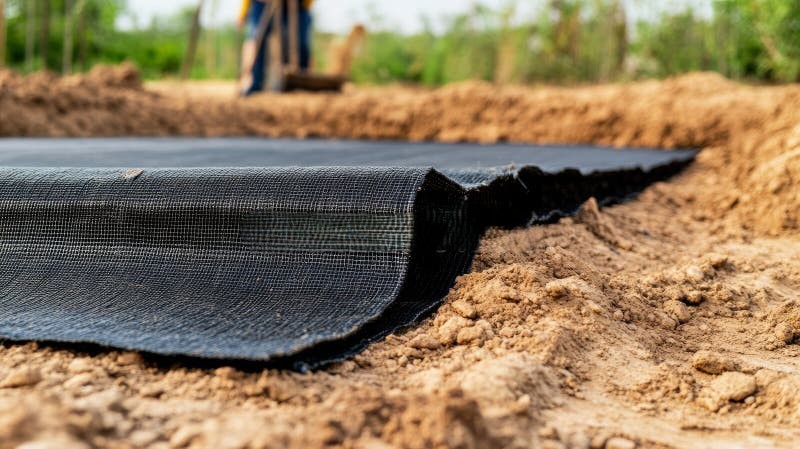
Woven geotextiles are made from precisely woven fibers and are typically used in projects requiring high load-bearing capacity, such as road construction and heavy infrastructure projects. They offer high strength and tensile resistance, making them suitable for applications with stringent stability requirements. Woven geotextiles are an ideal solution for reinforcement, soil stabilization, and load distribution.
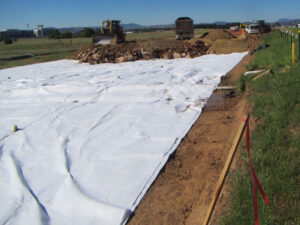
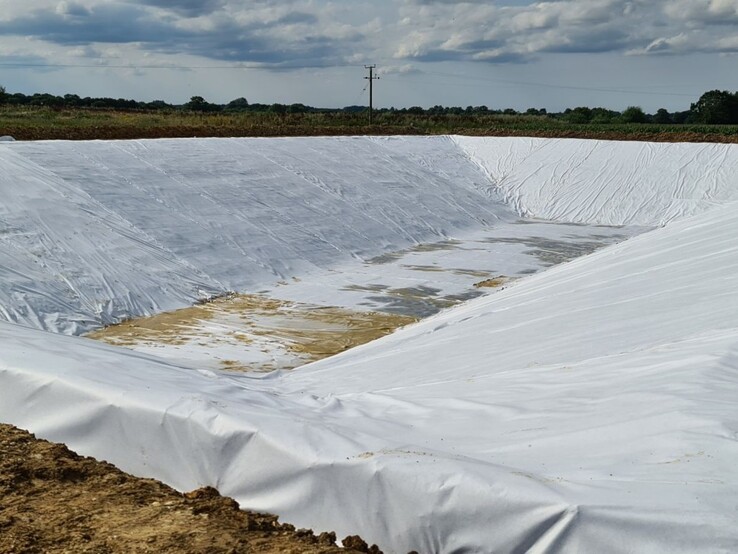
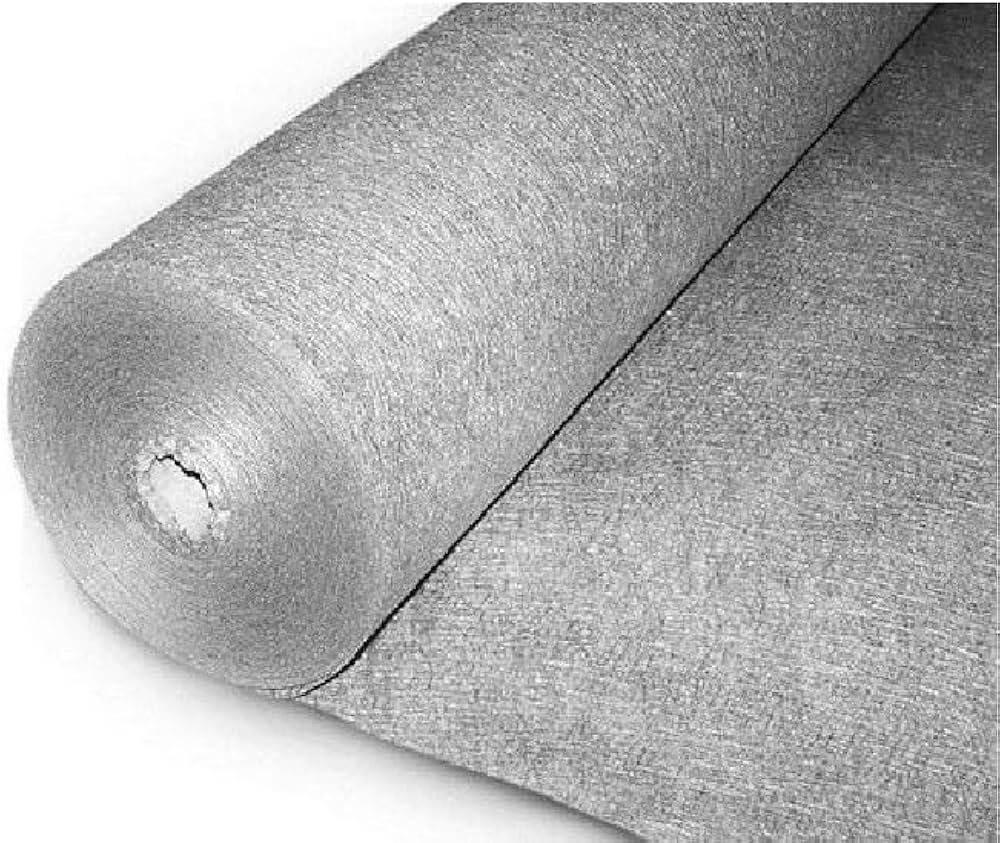
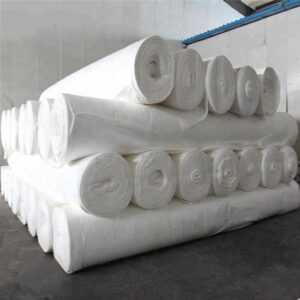
Nonwoven geotextile fabric is a polypropylene, needle-punched fabric engineered for strength and permeability. Made in several different weights and filtration levels, these geotextiles are an ideal solution for separation, drainage, and sediment control.
In the world of civil engineering, landscaping, and environmental management, geotextiles play an invaluable role in enhancing soil stability, providing filtration, and contributing to erosion control. These remarkable materials with their diverse types and applications remain the silent forces shaping our landscapes and protecting our environment. With the global geotextile market projected to reach $9.4 billion by 2027, what exactly is this fabric, and why is it so widely used? This technical article serves a comprehensive guide, delving into the characteristics, applications, installation, and benefits of geotextile fabrics.
Types of Geotextile Fabrics.

  • Woven geotextile fabric.
  • Nonwoven geotextile fabric.
  • Composite geotextile fabric.

Prices of Geotextiles Fabrics.

The geotextile fabric market in Uganda is comprised of different manufacturer brands, which differ in terms of quality, performance, and price. The average prices for different grades of geotextile fabric are as summarized below:

  • UGX. 5,000 per SQM for 100GSM nonwoven geotextile.
  • UGX. 6,000 per SQM for 150GSM nonwoven geotextile.
  • UGX. 7,500 per SQM for 200GSM nonwoven geotextile.
  • UGX. 9,000 per SQM for 250GSM nonwoven geotextile.
  • UGX. 11,000 per SQM for 300GSM nonwoven geotextile.
  • UGX.12,500 per SQM for 400GSM nonwoven geotextile.
  • UGX. 15,000 per SQM for 500GSM nonwoven geotextile.
  • UGX. 18,000 per SQM for 600GSM nonwoven geotextile.

Differences between Woven and Nonwoven Geotextiles

Properties: Woven geotextiles are known for their high load-bearing capacity and tensile strength, making them ideal for applications requiring tough and durable materials. Nonwoven geotextiles are generally more porous, allowing higher water flow-through rates. This makes them more effective for filtration and drainage tasks. In contrast, the tighter structure of woven fabrics limits permeability but increases mechanical strength.
Material composition. Woven geotextile is made using slit-film polypropylene or polyester yarns while nonwoven geotextile is made using polyester or polypropylene fibers bonded together.
Manufacturing process. Woven geotextile is manufactured by weaving synthetic fibers into a strong, grid-like structure while nonwoven geotextile is manufactured using needle-punching, thermal bonding, or chemical processes.
Water permeability. Woven geotextile has low permeability and limits water flow while nonwoven geotextile has high permeability and allows water to pass through easily.
Primary use. Woven geotextile is generally used for reinforcement, soil stabilization, and load distribution while nonwoven geotextile is primarily used for drainage, filtration, and erosion control.
Flexibility. Woven geotextile is stiff and less flexible while nonwoven geotextile is soft, flexible, and easier to conform to uneven surfaces.
UV resistance. Woven geotextile has higher UV resistance due to tightly woven fibers thus more suitable for long-term outdoor exposure while nonwoven geotextile has lower UV resistance and may degrade faster under direct sunlight.
Resistance to puncture. Woven geotextiles are more resistant to puncture due to rigid structure while nonwoven geotextiles are less resistant to puncture but provide better adaptability.
Filtration and drainage. Woven geotextile has limited filtration ability and is mainly used for reinforcement while nonwoven geotextile is excellent for filtration and drainage systems.
Cost. Woven geotextiles are typically more expensive due to their complex manufacturing process, extra treatments for UV resistance, high quality materials, and durability; while nonwoven geotextiles are typically low cost due to their simpler manufacturing process.

Properties and Technical Specifications of Geotextile Fabrics

Mass: Mass, or more accurately mass per unit area, is a primary indicator of a geotextile’s robustness. A higher mass generally means greater thickness, higher puncture strength, and better cushioning ability. While it is not a direct measure of tensile strength or permeability, it is a good general guide to the geotextile fabric’s overall substance and durability. Heavier geotextile fabrics are used for more demanding applications.
Tensile strength: This is the maximum pulling force the geotextile fabric can withstand before it ruptures. It is generally expressed in kilonewtons per meter (kN/m). Tensile strength and puncture resistance are crucial properties for reinforcement applications.
Tearing strength: This refers to the force required either to start or to continue to propagate a tear in a fabric under specified conditions.
Puncture resistance: Puncture resistance indicates how well a geotextile can withstand puncturing or penetration by sharp objects. It thus reflects the actual force needed to puncture the material. A higher number indicates greater resistance to damage from blunt objects and aggregate. This is a crucial property for geotextile fabrics used in road stabilization or as protection layers. It is quantified in units of Newtons (N).
Elongation at break: This measures how much of the geotextile fabric stretches at the point of failure (maximum load), expressed as a percentage of its original length. A woven geotextile might have an elongation of 15%, while a needle-punched nonwoven geotextile could have an elongation of 60%. High elongation is not necessarily bad; it allows the fabric to conform to deformations in the soil without rupturing. However, for reinforcement, a lower elongation (higher stiffness or modulus) is often desired so that the fabric engages and starts carrying load before the soil deforms too much.
Permeability: Geotextiles have specific permeability characteristics. These attributes define their capacity to permit the passage of water. Permeability is measured in hydraulic conductivity. It is expressed in liters per square meter per second (L/m²/s). Geotextile products are designed to allow water to pass through while retaining soil particles. This is crucial to achieve and maintain drainage efficiency.
Permittivity (ψ): This is the key parameter for filtration. It measures the quantity of water that can pass through a unit area of the fabric, per unit of time, under a unit hydraulic head. Put simply, it is the volumetric flow rate of water per unit cross sectional area per unit head under laminar flow conditions, in the normal direction through a geotextile. The units are inverse seconds (sec⁻¹). A higher permittivity value means a higher flow rate across or through the plane of the fabric. For a drainage application, like wrapping a perforated pipe, you need a permittivity high enough to allow water to freely enter the drain without building up pressure.

A common point of confusion is the difference between permeability and permittivity. Permeability (k) is an intrinsic property of a porous medium (like sand or a geotextile) and has units of velocity (cm/sec). Permittivity (ψ) is equal to the permeability divided by the thickness of the material (ψ = k/t). For geotextiles, permittivity is the more useful design parameter because it directly gives the flow rate per unit area without needing to know the thickness.

Hydraulic transmissivity (θ): Sometimes called in-plane permeability, this measures the quantity of water that can flow within the plane of the fabric. It is the volumetric flow rate of water per unit width of specimen per unit gradient in a direction parallel to the plane of the specimen. The units are area per time (e.g., m²/sec). This property is important when the geotextile itself is intended to act as a drain, collecting water and conveying it to an outlet.
Apparent opening size (AOS): This is the gatekeeper of soil particles. If permittivity measures how much water can get through, AOS describes the size of the pores available for that water. It is a measure of the largest effective pore size in the fabric i.e. an indicator of the approximate largest particle that would effectively pass through the geotextile. The selection of AOS is a delicate balancing act.

  • If the AOS is too large, fine soil particles will pass through the geotextile fabric along with the water. This is a failure of the filtration function, a phenomenon known as piping, which can lead to erosion and loss of structural support.
  • If the AOS is too small, the soil particles will quickly block the openings on the surface of the geotextile fabric, a failure mode called blinding or clogging. This will dramatically reduce the geotextile fabric’s permittivity and can cause hydrostatic pressure to build up behind it.
The proper AOS is determined based on the particle size distribution of the soil being retained. There are well-established filtration criteria that relate the soil’s properties (like the D15 and D85 particle sizes) to the required AOS of the geotextile to ensure that a stable, natural soil filter can form adjacent to the fabric without it clogging. Making sense of these technical values is the bridge between choosing a generic material and specifying a precise engineering tool for a specific geotechnical problem. Clay soils require a smaller AOS to ensure proper filtration, while sandy soils can accommodate a larger AOS.

Applications of Geotextile Membranes

Geotextile materials have a wide range of applications in civil engineering, environmental protection, and construction. Here are some key applications:

  • Separation: Prevents different types of soils or materials (e.g., subgrade and base course) from mixing, maintaining the integrity and function of each layer. This effectively avoids the intermingling of materials with different particle sizes, ensuring the design performance of structural layers.
  • Filtration: Allows water to pass through smoothly while effectively retaining and stabilizing soil particles, preventing the loss of fine-grained soil. This characteristic of permeability and soil retention is key to its application in drainage systems as French drains and underdrains.
  • Drainage: Collects and directs water flow along its plane, providing efficient drainage for engineering projects. Its three-dimensional fiber structure forms continuous water flow channels, effectively removing excess pore water. It is able to utilize the plane of the geo fabric to create a wicking effect.
  • Protection: Their thickness and cushioning ability make them excellent for protecting geomembrane liners (landfill or pond liners) from punctures by sharp aggregates or waste materials. By dispersing stress, they protect waterproofing layers from puncture, abrasion, and perforation by sharp objects.
  • Reinforcement: Geotextile fabric disperses loads through its tensile strength, enhancing the shear strength and overall stability of the soil matrix. It is commonly used for reinforcing soft foundations and slopes. The friction interaction between the geotextile and soil improves the mechanical properties of the soil. Forces are transferred to the geotextile layer rather than into the ground. This prevents sloped sites from slipping, crumbling, or eroding over time.
  • Soil stabilization: Geotextiles enhance soil strength by preventing displacement and improving load-bearing capacity, making them ideal for road construction and embankments. Stabilization via improvement of the load bearing capacity of a section allows construction to continue when poor soils are discovered.
  • Landscape fabric/weed control: In landscaping, geotextiles are used as landscape fabric to create a barrier and inhibit weed growth while allowing air, water, and nutrients to reach the soil. This makes them a popular choice for gardens, flowerbeds, and other green spaces.
  • Erosion control: Geotextiles are often used to stabilize slopes and prevent soil erosion. By providing a barrier between the soil and external factors such as rain or water flow, these geotextile fabrics help maintain the integrity of landscapes.

Installation Procedure for Geotextile Fabrics

Geotextile is an important material that directly affects the success of infrastructure projects. It needs to be correctly selected and properly installed. This brief technical guidance highlights critical steps to achieve correct installation of geotextiles.

Choose the right geotextile.

The first and most important step in geotextile installation is selecting the appropriate type of material. When choosing a geotextile type, evaluate the soil structure, water conditions, and project requirements of the area where it will be installed. The characteristics of geotextiles should be chosen based on the purpose of installation and environmental conditions.

There are three primary types of geotextiles:

  • Separation geotextile. This type of geotextile is used to prevent the mixing of two different materials. For example, it helps maintain long-term soil stability by preventing the mixing of gravel and soil.
  • Drainage geotextile. Drainage geotextiles allow the passage of water while preventing the movement of soil, sand, and similar materials. These geotextiles are commonly used to prevent water accumulation and ensure the proper flow of water beneath the surface.
  • Reinforcement geotextile. Reinforcement geotextiles are used to strengthen the ground structures and increase load-bearing capacity. They are typically used in areas with weak soils to improve the foundational load-bearing capacity.
Prepare the ground/subgrade.

One of the most critical steps in geotextile installation is properly preparing the ground surface. The ground should be smooth, and large stones, roots, and other foreign objects should be removed. Additionally, the slope of the surface should be adjusted as it can affect water drainage.

  • Site cleaning. Ensure that sharp stones, large rocks, roots, and other foreign materials are not present on the surface. These obstacles can damage the geotextile or prevent it from functioning properly.
  • Smooth surface. The surface should be leveled to ensure the proper placement of the geotextile. Additionally, the slope of the surface should be designed to direct water in the correct manner. Level and compact the subgrade to eliminate air pockets and create a firm base.
Place the geotextile.

Unroll the geotextile across the prepared surface, keeping it as taut as possible without stretching it. Correct placement of the geotextile is crucial for the success of the project. Some important points to consider when placing the geotextile are:

  • Placing on vertical surfaces. Geotextiles should be placed horizontally when possible. If the geotextile is to be used on a vertical surface, appropriate support systems should be used to prevent the fabric from slipping.
  • Seams and connections: When the geotextile fabric needs to be joined, the correct stitching techniques should be employed. The seams should be durable enough to prevent the material from separating over time. The frequency and alignment of the stitches are also important.
  • Join the fabric layers. Overlap adjacent rolls of fabric by at least 12 inches (300 mm). Increase the overlap to 18–32 inches (450–800 mm) or more on soft or uneven subgrades. For optimal performance on soft ground, consider welding the seams with a propane burner or blowlamp if the geotextile weight allows it. On slopes, shingle the fabric so that the uphill panels overlap the downhill panels. Secure the edges and overlaps with pins or landscape staples, as per the project specifications. Use of anchor trenches can also apply for geotextiles installed on steep slopes.
  • Tight placement. Once placed, the geotextile fabric should be installed tightly. There should be no wrinkles, folds, or slack in the material. Otherwise, the geotextile fabric may shift or fail to perform as intended over time. If needed, use small amounts of fill material to temporarily hold the fabric in place. Secure the geotextile from wind forces, for example by placing small bags with sand on the fabric to hold it in place.
Add and compact fill (soil and aggregate layers).

After the geotextile is laid, appropriate material layers should be added on top until the desired thickness is achieved. For example, in road construction, materials that increase stability can be placed on top of the geotextile fabric. Correct placement of the upper layers is important for the proper functioning of the geotextile.

  • Soil layers. The soil or sand placed over the geotextile should be evenly distributed without disturbing the function of the geotextile material.
  • Stone and aggregate layers. If the project involves road construction or stone filling, stone or aggregate layers should be evenly spread over the geotextile fabric.
Surface application and inspection.

Install edging or curbing to lock the system in place and prevent the geotextile from being exposed. After the geotextile installation, the entire area should be inspected to ensure that the material has been placed correctly. Any damage, loosening, or shifting of the geotextile should be observed, and corrections should be made if necessary. Perform quality control checks to ensure there are no exposed fabric, trapped folds, or contamination of the cover material. Verify drainage flows as designed.

  • Damage inspection. The geotextile fabric should not be damaged during the installation process. Damaged areas may cause the material to lose its functionality, which could compromise the success of the project.
  • Placement inspection. The geotextile material should be checked frequently to ensure that it is placed properly. If any shifting or loosening is detected, the material may need to be repositioned.
Common mistakes to avoid during geotextile installation.
  • If heavy construction equipment is used, driving on exposed geotextile must be avoided. It creates tears and pulls.
  • Insufficient overlaps or wrong shingle direction on slopes.
  • Under-compaction of the first lift. It causes rutting and fabric strain.
  • Wrong fabric type i.e. woven where filtration is critical; nonwoven where high puncture strength is mandatory.
  • Edge light leak, number-one source of “mystery weeds.” Do not skip overlap as weeds sneak through gaps. Do overlap 12 inches on slopes.
  • Stretching of the geotextile, potentially leading to damage.
  • Contact with sharp objects, leading to tearing.
  • Poor ground penetration. Skipping site cleaning or leveling can cause fabric damage or shifting. Ensure all debris is removed and the surface is compacted to 95% Proctor density.
  • Improper seaming. Weak seams can cause separation under load, reducing geotextile effectiveness by 30%. Use UV-resistant stitching or heat bonding, and test seam strength to ensure it meets 80% of the fabric’s tensile strength.
  • Inadequate cover layers. Insufficient cover thickness can expose the geotextile fabric to UV damage or punctures, reducing lifespan by 15 – 20%. Maintain a minimum cover of 15 cm for light applications and 30 cm for heavy loads.
Recommendations for delivery, handling, and storage of geotextiles.
Delivery and Handling.

Rolls should be delivered in suitable protective plastic wrap. They should be rolled onto either a plastic, steel or cardboard core, which has sufficient strength, using correct lifting or placement techniques during unloading, storage, and laying operations to maintain roll core integrity. Lifting and movement of rolls should only be carried out using appropriately safe rated lifting equipment, slings, or prongs that are appropriate for the work to be undertaken. Personnel involved in such operations should be aware of the dangers involved in the incorrect handling of such rolls. Handling should always be undertaken such that fabric integrity is maintained at all times.

Storage.

Rolls should be stored in a secure area. They should be stored off ground and stacked such that the rolls are stable without damage to fabric or cores and will not be a cause of injury to personnel. Rolls should be left in the protective plastic wrap until required for use. If the product is to be stored outside without cover (but inclusive of plastic wrap) for longer than one month the product should additionally be protected by temporary suitable “tarpaulin” cover. Rolls should be protected from exposure to fuels, acids, alkalis, excessive heat, or other events that may cause roll damage. Rolls should not be left exposed to direct sunlight for periods longer than 3 days after removal of protective plastic wrapper. For storage on-site, the rolls should be placed on raised platform e.g. a pallet or planks and well covered from exposure to rain and direct sunlight. The rolls should be protected against vandalism or damage from operating equipment used on site.

Design Considerations in Selection of Geotextile Fabrics

When selecting the appropriate geotextile, it is necessary to assess the specific requirements of the project. The following are some factors to consider when choosing geosynthetic fabrics:


Layering and thickness. The thickness and layering of the geotextile can affect its performance. Ensure the selected thickness meets the requirements of the specific application.

Installation conditions. Evaluate the site conditions, including soil moisture, temperature, and potential for mechanical damage during installation.

Environmental impact. Consider the environmental implications, including potential leaching of materials and the effects on local ecosystems.

Environmental and regulatory requirements. Use UV-stabilized geotextile fabrics for temporary caps and those that are pH-resistant for leachate exposure. Ensure the selected geotextile meets relevant standards and regulations for the specific project or application.

Project longevity. Consider the expected lifespan of the geotextile and any maintenance requirements that may be necessary over time. Permanent infrastructure projects require durable materials designed for an extended service life, necessitating careful material selection and design considerations for long-term creep (deformation under constant load).

Compatibility with other materials. Assess how the geotextile will interact with other materials used in the project, such as soil, aggregate, and other geosynthetics.

Soil conditions. Understand the moisture content, groundwater level, stability, and particle size of the subgrade soil to select a geotextile with suitable filtration performance. The type of soil (cohesive or sandy) and particle size determine the required apparent opening size (AOS) of the geotextile to ensure effective filtration (balancing soil retention and water permeability).

Load conditions. The magnitude of expected static or dynamic loads determines the required tensile strength, tear strength, and puncture resistance of the product. For heavy-duty projects such as highways or large-scale infrastructure, choose woven geosynthetic fabrics to meet high-strength requirements.

Intended use i.e. project function and application. Choose based on whether the project requires drainage, reinforcement, or waterproofing. For high permeability, select nonwoven geosynthetic fabrics.

Environmental conditions. Consider how the geosynthetic fabrics perform under different climates, particularly their resistance to UV radiation and chemicals.

Mechanical and hydraulic properties. These technical specifications, typically found on the manufacturer’s technical data sheet, dictate performance.

UV resistance. If any portion of the geotextile fabric will be exposed to sunlight, a UV-stabilized material (usually black in color, containing carbon black) is required to prevent degradation and strength loss over time.

Cost i.e. integrating project specific requirements with cost benefit analysis. Analyze the budget constraints while balancing cost against the performance and longevity of the geotextile. This involves not only matching the material to the primary function but also considering the practicalities of installation, the hierarchy of performance needs, and the economic realities of the project budget. A truly wise selection is a holistic one, balancing technical perfection with practical constraints. It is tempting to simply choose the cheapest material that meets the minimum specifications. This is a shortsighted approach. The true cost of a geotextile is not its price per square meter. The true cost includes the material cost (initial purchase price), installation cost, maintenance cost, and risk cost (the financial and social cost of failure). Risk cost is the most important yet overlooked factor. The cost of a premium geotextile in a landfill liner system is minuscule compared to the cost of cleaning up a leak. The extra cost of a proper reinforcement geotextile is trivial compared to the cost of a failed retaining wall.

Chemical and biological resistance. The ground is a chemically active environment. Soil water contains dissolved salts, acids, and bases, resulting in a wide range of pH levels. Industrial sites may contain hydrocarbon contaminants or other aggressive chemicals. A geotextile must be able to withstand this chemical environment for its entire design life without significant degradation, ensuring longevity in the ground. In addition to chemicals, the soil is teeming with biological life. Thankfully, the synthetic polymers used for geotextiles are not a food source for bacteria, fungi, or insects. They are inert and will not rot or biodegrade, which is a primary reason for their use over natural fibers like jute or coir in permanent applications. This inherent biological resistance ensures that the fabric’s properties will not be compromised by microbial attack over time.

Common mistakes to avoid when choosing geotextile fabric.
  • Choosing based on price alone. Selection based on price tempts project owners to prioritize cheap geotextile fabrics. If the application involves higher loads and requires higher puncture resistance, this could lead to premature failures or costly ongoing repairs and replacements. Design engineers can avoid this by always matching geotextile weight to the applicable loads; and hence the required puncture resistance.
  • Ignoring site-specific conditions. This could lead to installation of lightweight geotextile fabrics in high-load areas or use of unsuitable geotextile fabric in acidic leachate; all which can lead to shortened lifespan. Design engineers are encouraged to always test leachate pH and choose geotextile grades suited for heavy waste applications.
  • Overlooking installation requirements. This mainly leads to inadequate overlaps i.e. less than 300mm or poor subgrade preparation. This leads to increased installation or O&M costs via redoing the installations or hiring other experts to rectify installation mistakes of the initial installation teams. Project owners can avoid this by hiring experienced installation experts and ensuring they follow ASTM D5818 standards.
  • Neglecting certifications. This typically involves using untested geotextile fabrics lacking ASTM compliance. The challenge with this is that such products could be substandard and if discovered, project owners risk fines for noncompliance. Project owners and design engineers are encouraged to request third party test reports for AASHTO M288 compliance.

Benefits of Using Geotextiles.

Cost-effective: Geotextiles are an economical solution for many construction projects compared to alternative conventional solutions. Their durability and effectiveness reduce the need for frequent replacements, lowering long-term maintenance costs.

Environmental protection: By preventing soil erosion and controlling sedimentation, geotextiles play a crucial role in protecting the environment. They help maintain the natural balance of ecosystems by preventing the loss of soil and nutrients.

Ease of installation: The flexibility and lightweight nature of geotextile fabric make it easy to handle and install as compared to alternative traditional construction solutions. This reduces labor costs and speeds up project timelines.

Versatility: With a wide range of applications, geotextiles are a versatile tool in both large-scale construction projects and small-scale landscaping tasks. Their ability to perform multiple functions makes them a go-to material for many engineers and landscapers.

Improved engineering quality and safety: Geotextiles enhance soil stability, reducing the risk of structural failure.

Extended service life: Geotextiles reduce maintenance costs caused by soil instability or soil erosion and do generally extend the lifespan of engineering infrastructure like roads, tunnels, and landfills.

Environmental friendliness: By reducing soil erosion, geosynthetic fabrics contribute to environmental protection and promote sustainable development.

Conclusion.

The selection of a geotextile for one’s project is a thoughtful process of inquiry, a dialogue between the demands of the project and the capabilities of the material. It requires one to move beyond a superficial understanding and to appreciate the subtle yet profound consequences of choices made at the molecular and structural levels. Moreover, the careful interpretation of mechanical and hydraulic data are not mere technicalities; they are the very grammar of a resilient design.

How we actually measure and compare the performance of two different geotextiles lies in the technical data sheet. This document, provided by the manufacturer, is filled with numbers derived from standardized laboratory tests. To a novice, it can be an intimidating collection of jargon and acronyms. The values are typically determined by following test methods from organizations like ASTM International or ISO. To an engineer, it is the fabric’s resume, detailing its strengths, weaknesses, and suitability for a given role. Our experts have thorough understanding of these key properties, which are very essential for making an informed selection.

As geotextile fabrics increasingly become an important part of modern infrastructure construction, it is paramount to understand that poor selection and mistaking one for the other can lead to underperformance or even catastrophic failure. Choosing the wrong geotextile is like trying to use a filter paper to carry a heavy load or a steel plate to filter coffee, for such application would be ill advised. Both are functional materials, but their utility is entirely dependent on applying them in the context for which their structure was designed. At SANKOFA, we offer technical support to enable you make the right selection of geotextile specific to your project, assuring better performance, cost effectiveness, and long-term durability. It is noteworthy that SANKOFA is an experienced company in the field of non woven geotextiles and remains among Uganda’s leading suppliers of bulk orders of non woven geotextile fabric in the construction and landscaping industry.

Sankofa Consulting Engineers

We are a premier multidisciplinary engineering consulting company based in Uganda. We offer services across a wide spectrum of engineering disciplines, such as electrical and power engineering, water and sanitation engineering, civil and building engineering, surveying and geomatics engineering, mining and petroleum engineering, environmental management, agricultural mechanization and irrigation engineering, among others.

Contact Info

Copyright © 2025  SANKOFA CONSULTING ENGINEERS. | All Rights Reserved | Privacy Policy

error: Content is protected !!