
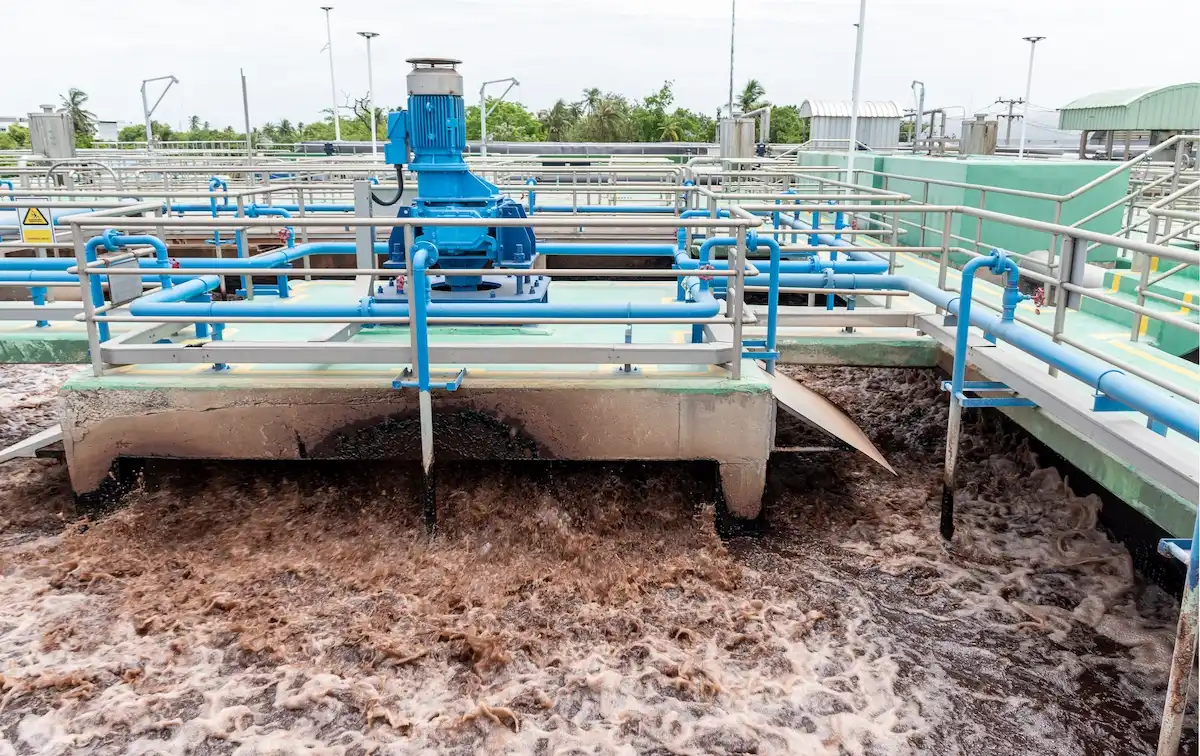
Wastewater is any water that has been used and discarded, whether from households, industries, or agriculture. Wastewater contains various pollutants, including chemicals, pathogens, and nutrients, that can harm human health and the environment if not properly treated before discharge. This calls for wastewater treatment.
Wastewater treatment is a process that converts wastewater from its unusable state into an effluent that can be either returned to the water cycle with minimal environmental issues or reused for another purpose. When wastewater is not treated properly, it can pollute water sources, damage natural habitats, and cause serious illnesses. The wastewater treatment process removes the contaminants from the wastewater and converts it into an element that can be returned to the water cycle with minimum environmental impact. This process typically takes place in a wastewater treatment plant.
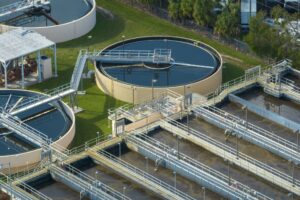 A wastewater treatment plant refers to a facility that receives and treats municipal and industrial wastewater to remove contaminants and convert them into effluent that can be safely discharged back into the environment or reused for several purposes. A wastewater treatment plant combines physical, chemical, and biological processes to purify contaminated water. These facilities serve as the backbone of urban sanitation systems, processing millions of liters of sewage and industrial effluent daily before safely returning clean water to the environment. These plants accelerate natural purification, handling large volumes of water by filtering solids, breaking down organic matter (often with microbes), and disinfecting the water before it is released into rivers, lakes, or reused for things like irrigation. With growing urbanization and increasing water scarcity, the importance of efficient wastewater treatment plants has never been more critical. To this effect, the global wastewater treatment market, which was valued at $250.38bn in 2021 is forecasted to reach $462.49bn by the year 2030 at a CAGR of 7.41 over the projected period. This is largely driven by rapid urbanization, industrial expansion, water scarcity, water pollution concerns, and stringent water quality regulations.
As an industry leader and experienced company in wastewater treatment and wastewater management sector, SANKOFA offers a compressive suite of products and services, including.
- Feasibility study and detailed engineering design of wastewater treatment plants for municipal sewage and industrial wastewater such as textile, dairy, pulp and paper, pharmaceutical, and beverage manufacturing.
- Construction of various types of municipal and industrial wastewater treatment plants.
- Undertaking wastewater mass balance studies and wastewater characterization studies.
- Supply and installation of wastewater monitoring sensors, SCADA, and instrumentation equipment.
- Undertaking plant audits and performance assessments for wastewater treatment plants.
- Preparation of operation and maintenance manuals for wastewater treatment plants.
- Undertaking planned preventive maintenance (PPM) and rehabilitation of wastewater treatment plants.
- Undertaking wastewater treatment plant modernization, retrofits, plant optimization, and performance improvements i.e. capacity and wet weather improvements.
- Preparation of capital improvement plans and preparation of biosolids reuse plans.
- Supply of equipment and components as screw press machines, vacuum trucks, air quality monitoring sensors (gas sensors), compact wastewater treatment plants, septic tanks, bio culture, and sewage pumps.
- Design and construction of on-site sanitation systems, such as septic tanks, drain fields, and toilets/latrines.
- Undertaking life cycle impact assessments (LCIA) for wastewater treatment plants.
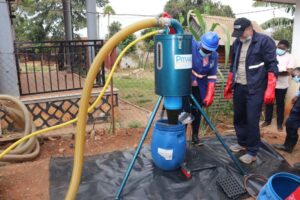 Effluent Treatment Plant (ETP).
In the manufacturing industry, water is an essential liquid to be used in coolant, solvent and many other chemical based applications. After the manufacturing process is complete, wastewater is produced as a by-product called effluent, which contains both toxic and non-toxic materials. Effluent cannot be disposed of in the environment as it contains harmful materials. Consequently, an effluent treatment plant is essential for companies in the manufacturing, chemical, and pharmaceutical industries in order to purify the industrial wastewater that is created. Each industry will utilise a slightly different effluent wastewater treatment system based on the physical parameters, chemical parameters, and the biological parameters.
Sewage Treatment Plant (STP).
Essentially, a sewage treatment plant operates by circulating air to encourage the growth of bacteria to break down the sewage. These microorganisms used in wastewater treatment cause the pollutants to oxidize, creating a sludge type substance biologically. The goal of this wastewater treatment system is to deliver a much cleaner and more environmentally friendly effluent. Depending on the size of each particular treatment plant, these plants can treat the sewage system of a number of commercial properties and/or domestic dwellings.
Lagoon.
Wastewater treatment lagoons are earthen ponds that use natural biological, physical, and chemical processes (sunlight, algae, bacteria, wind) to break down organic pollutants in sewage, providing a cost-effective, low-maintenance alternative to mechanical plants, common in rural areas and for smaller communities, relying on aerobic, anaerobic, or facultative conditions to reduce BOD and suspended solids before safe discharge. Wastewater treatment lagoons are also used by industrial and commercial facilities as a component of their wastewater treatment facilities.
Moving Bed Biofilm Reactor (MBBR).
Moving Bed Biofilm Reactor (MBBR) is a compact, efficient biological wastewater treatment system that uses small, plastic biofilm carriers in an aeration tank to grow bacteria for breaking down organic pollutants, offering a robust solution for fluctuating loads in municipal and industrial settings with a smaller footprint than traditional methods. These carriers, moving freely, provide high surface area for biomass, improving treatment capacity and allowing for easier upgrades or retrofitting. MBBR systems are highly efficient, producing effluent that meets stringent environmental regulations. The integration of biological treatment and membrane filtration within a single tank reduces the overall footprint compared to conventional activated sludge plants. This compact design makes MBBR systems ideal for locations with space constraints.
Sequencing Batch Reactor (SBR).
Sequencing Batch Reactor (SBR) is an advanced and flexible type of activated sludge process for wastewater treatment. Unlike continuous flow systems, SBRs treat wastewater in batches, with each cycle consisting of five stages: fill, react, settle, decant, and idle. During the react phase, wastewater is mixed with activated sludge, and biological treatment occurs under carefully controlled conditions. Following the react phase, the mixture is allowed to settle, and the clear effluent is decanted, leaving the sludge behind for the next cycle. This batch process allows for precise control over reaction times and operational parameters, making SBRs highly effective at removing organic matter, nutrients, and solids from wastewater. Their modular nature, versatility, and ability to handle varying loads make them particularly suitable for municipal and industrial applications where space constraints and flexibility are important considerations. Additionally, SBRs can be easily adapted for nutrient removal and other advanced treatment processes, further enhancing their applicability in diverse wastewater treatment scenarios.
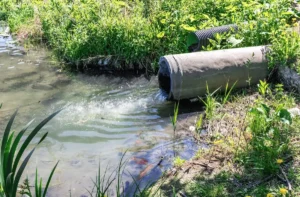 Dissolved Air Flotation (DAF) System.
DAF systems are engineered to efficiently remove suspended solids, oils, greases, and other contaminants from wastewater. In a DAF system, air is dissolved into the wastewater under pressure and then released into a flotation tank, where it forms tiny bubbles that attach to the contaminants. These bubbles rise to the surface, carrying the contaminants with them, and form a layer of sludge that can be easily skimmed off. The clarified water is then discharged or directed for further treatment. DAF systems are particularly effective for treating highly turbid waters and industrial effluents, making them ideal for applications in the food processing, petrochemical, and manufacturing industries. Their ability to handle high loads of suspended solids and other contaminants ensures that effluents are treated to meet stringent environmental standards. Additionally, the versatility and efficiency of DAF systems make them a preferred choice for industries seeking reliable and cost-effective wastewater treatment solutions.
Upflow Anaerobic Sludge Blanket (UASB) reactor.
Upflow Anaerobic Sludge Blanket (UASB) reactors are bioreactors that treat wastewater anaerobically (without oxygen) by passing it upwards through a dense bed of granular sludge, where microorganisms digest organic matter, producing biogas (methane/CO2) and cleaner effluent, offering energy recovery, low sludge production, and high organic removal, but requiring post-treatment for pathogens and nutrients. The unique sludge granules form naturally, creating a highly efficient, self-mixing system that retains solids and avoids mechanical mixing, making it a sustainable solution for industrial and municipal waste.
Faecal Sludge Treatment Plant (FSTP).
Faecal Sludge Treatment Plants (FSTPs) are specialized facilities that process concentrated human waste (fecal sludge/septage) from on-site sanitation systems (like pit latrines/septic tanks), unlike regular sewage plants, to safely manage it, prevent disease, and recover resources like treated water, solids (compost/biogas), and nutrients, crucial for areas lacking centralized sewers. They typically involve steps like screening, anaerobic digestion, dewatering (e.g., screw press), and biological treatment (e.g., vermifiltration) to transform harmful sludge into safe, reusable byproducts, often using modular, cost-effective designs for urban and rural settings.
Constructed Wetland.
A constructed wetland is an organic wastewater treatment system that mimics and improves the effectiveness of the processes that help to purify water similar to naturally occurring wetlands. The system uses water, aquatic plants (i.e.: reeds, duckweed), naturally occurring microorganisms and a filter bed (usually of sand, soils and/or gravel). Constructed wetlands can be used for either secondary or tertiary wastewater treatment. Many different designs exist including vertical wetlands, which require less land, but more energy for operations like pumping or siphoning than horizontal wetlands, which can instead rely on gravity and topography. The extensive options in design, materials, and technology allow the constructed wetland to be adapted to local conditions and land availability.
Septic Tank.
A septic tank is a buried, watertight tank designated and constructed to receive and partially treat raw domestic sanitary wastewater. Heavy solids settle to the bottom of the tank while greases and lighter solids float to the top. The solids stay in the tank while the wastewater is discharged to the drain field or leach field for further treatment in the soil and dispersal. A septic tank is essential for properties without municipal sewer access, reducing solids into sludge and scum, though requiring periodic pumping, while the liquid part is filtered by the soil. The septic tank concept goes back to 1860, when John Mouras built the first one in France.
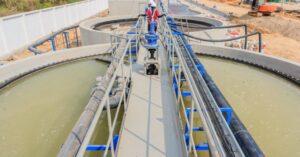 Type and strength of wastewater contaminants. The type and strength of wastewater contaminants greatly influence the selection of treatment systems. Industries producing wastewater with high concentrations of specific pollutants may require specialized treatment processes or additional treatment stages. Understanding the composition and concentration of contaminants through comprehensive characterization studies is crucial for designing an effective and efficient treatment system.
Compliance with regulations. To secure the required permits and approvals for construction and operation of a wastewater treatment plant, it must meet specific regulatory criteria. It is thus crucial to understand national environmental standards for the quality of effluent discharged into bodies of water. Treated water must prevent the spread of waterborne diseases and protect aquatic ecosystems from pollution, preserving biodiversity and ecological balance. Ensuring that a plant meets all relevant environmental regulations on permitted pollutant levels, treatment processes, and operational standards helps avoid legal penalties.
Size of the plant. Size should be based on a careful assessment of local conditions as well as factors such as cost and infrastructure availability. Facilities that are too small may struggle to keep up with demand, while those that are too large may not be able to recover sufficient operating costs. When planning the size of a plant, then, it is important to strike an appropriate balance so that both local residents and the facility itself can thrive.
Wastewater characteristics. Before designing a wastewater treatment system, it is crucial to analyze the characteristics of the wastewater to be treated thoroughly. Factors such as flow rate, temperature, pH, organic and inorganic content, and the presence of toxic substances must be considered. Understanding these characteristics is crucial because it allows engineers to make informed decisions about which treatment processes and technologies to employ.
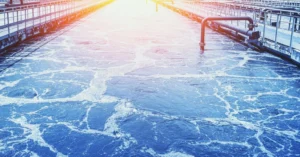 Treatment objectives. Defining treatment objectives early in the design process is crucial for informed decision-making regarding treatment processes and system design. This proactive approach ensures that the treatment system is customized to achieve desired outcomes, such as meeting discharge limits or producing high-quality water for reuse. For irrigation reuse, additional treatment steps like advanced filtration, disinfection, or advanced oxidation processes may be incorporated to remove any remaining contaminants and pathogens. The goal is to produce treated wastewater that meets specific quality requirements, minimizing risks to crops, soil, and groundwater. For discharge purposes, treatment objectives focus on meeting regulatory standards set by local authorities. These standards address acceptable contaminant levels, discharge limits, and environmental impact assessments.
Scalability and flexibility. Anticipating population growth and changing demands, the system should be designed with expansion capabilities to avoid the need for costly retrofitting or replacement. Flexibility in treatment options is also essential to address emerging contaminants or changing regulatory requirements. By incorporating modular components and adaptable processes, the system can be easily modified or upgraded to incorporate new treatment technologies or adjust performance parameters. This scalability and flexibility ensure that the wastewater treatment system remains effective and compliant over time, providing a sustainable solution that can readily adapt to the evolving needs of the community and the environment.
Site conditions. When planning a wastewater treatment facility, site characteristics play a critical role. It is essential to take into account existing conditions, such as topography, hydrology, and local land use. For example, in urban areas, the presence of residential neighborhoods requires design engineers to mitigate any potential disturbances associated with the facility, such as odors and noise.
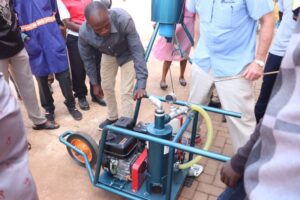 Safety protocols. Ensuring the safety of wastewater treatment plant personnel and the surrounding community is a critical aspect of plant operation. This includes implementing safety procedures, such as lockout/holdout protocols, confined space entry procedures, and the use of personal protective equipment. Regular safety training should be provided to all staff, and emergency response plans should be in place to address potential hazards, such as chemical spills, fires, or gas leaks, thus minimize disease exposure, accidents, and injuries.
Record keeping and reporting. Maintaining accurate and up-to-date records is a critical aspect of operating and maintaining a wastewater treatment plant. This includes maintaining records of process data, maintenance activities, safety incidents, and employee training. These records can be used to identify trends, evaluate performance, and support decision making. Additionally, wastewater treatment plants are required to submit regular reports to regulators, demonstrating their compliance with discharge permits and other requirements.
Preventive maintenance. Regular preventive maintenance is essential to maintaining the reliability and efficiency of a wastewater treatment plant. This includes routinely inspecting, cleaning, and maintaining equipment, such as pumps, motors, blowers, and control systems. A well-documented maintenance schedule should be in place to ensure that all components receive timely attention. Preventive maintenance helps extend the life of equipment, reduce the risk of unexpected breakdowns, and lower overall operating costs.
Process monitoring and control. Effective operation of a wastewater treatment plant requires continuous monitoring and process control to ensure that treatment processes are operating as intended. Key parameters to monitor include flow rates, pH levels, dissolved oxygen, nutrient concentrations, and the presence of contaminants. Monitoring can be done through manual sampling and analysis or using sensors and automated control systems. Based on the monitoring data, operators can adjust process parameters to improve treatment efficiency and maintain compliance with regulatory requirements.
Regular equipment maintenance. Equipment such as pumps, aerators, clarifiers, and filters must be regularly checked for proper functioning, and maintenance activities such as cleaning, lubrication, and replacement of worn parts must be performed. This prevents equipment failure and reduces downtime.
Sampling and testing of treated water. Treated water must be sampled and tested regularly to ensure it meets discharge standards. This involves analyzing parameters such as pH, turbidity, biochemical oxygen demand (BOD), total suspended solids (TSS), and total nitrogen and phosphorus.
Sludge dewatering and disposal. The wastewater treatment process generates a by-product known as sludge, which must be managed properly. Sludge is typically dewatered to reduce its volume, and then disposed of in an environmentally responsible manner, such as by land application, incineration, or landfilling.
Intake management. Controlling what enters the system is critical. This includes scheduling delivery times to prevent overwhelming reception facilities, sampling incoming loads for unusual contaminants, and maintaining accurate records of volumes and sources.