

Shallow Wells and Hand Dug Wells – Understanding the Advantages and Setbacks of Shallow Well Drilling
SANKOFA, a leading water engineering company, active in the field of borehole drilling is a trusted consultant for hydrogeological...
Water Resources, Sanitation, and Public Health Engineering
A borehole is a narrow shaft bored in the ground for the purpose of extracting groundwater. Boreholes are cased, gravel packed, and equipped with a pump and wellhead protection. The borehole penetrates the earth’s surface to underground stores of water held in permeable rock known as aquifers. The water is pumped to a supply point on the surface. The pumping is done either with a hand pump or motorised pump. Boreholes are used to extract water, usually from depths between 20m and 200m.
Numerous drilling techniques exist, which depend on water table depth, cost, site accessibility/terrain, soil type, type of geological formation, etc. Regarding borehole drilling and well development, we offer the following services;
Hydrogeological Survey and Groundwater Exploration (Borehole Siting).
Before borehole drilling is undertaken, there is a need to conduct a hydro-geological survey in the proposed site. Generally, groundwater is unequally distributed, thus hydrogeological surveys ascertain suitable sites for exploration of significant quantities of groundwater before carrying out any drilling exercise. This ensures the best spot is selected according to the geological data. The hydro-geological data, maps, graphs and cross-section profiles obtained from the hydro-geological survey are used in determination of important information such as estimation of drilling depth and identification of stress areas. Another aspect of borehole siting that demands careful consideration in populated areas is the potential for contamination by livestock and pit latrines or other waste disposal facilities.
The objective of a hydrogeological survey is to give some understanding of what is going on under the ground; the potential depth-to, location and type of aquifers, direction of groundwater flow and the relative position to possible sources of contamination.
Advanced underground water detectors.
We offer the latest, advanced underground water detectors, that can detect underground water up to a depth of 1,200m. Our technology is able to provide a 3D image and analysis of water properties, including the optimal drilling location with the highest volume, the depth of the discovered water, salinity, rock composition, and type of water i.e. fresh, natural, salty, or very salty. This advanced scientific instrument enables our hydrogeologists to visualize subsurface water layers in unprecedented detail, through the 3D image and detailed analysis, providing a complete and accurate report on underground water.
Borehole camera inspection.
Borehole camera inspection helps determine the water rest level, casing installations, actual depth of borehole and determination of pump inlet level. In instances of borehole collapse, the extent is also determined. This helps in developing the borehole design.
Borehole flushing.
Borehole flushing is needed when the pores of the aquifer inside the borehole get clogged by silt and sand-sized particles or mineral deposits. This is key to clear blockages, maintain borehole health, open up damaged aquifer zones, and ensure a reliable supply of clear and safe water.
Borehole flushing, or clean out is the utilization of high-pressure water and compressed air to remove sediment and debris from a borehole i.e. high-pressure water cleansing to blast away the built-up sediment. Borehole flushing helps maintain optimal flow rates and pressure conditions for groundwater extraction, ensuring an efficient and reliable water supply for domestic, agricultural, and industrial purposes. It also removes borehole clogging and contamination by removing debris and sediments. Regular flushing and cleaning extend the service life of pumping systems and borehole infrastructure by minimizing wear and corrosion, reducing maintenance requirements, and improving operational reliability. Precisely, borehole cleaning is aimed to remove silt, remove mineral and sand deposits, and increase borehole yield.
Borehole test pumping.
Test pumping is critical to determine the actual borehole yield (done after flushing) and recharge. This is critical as it guides on the abstraction design (pump/motor design, power requirements).
A pumping test is aimed to achieve the following objectives;
We supply a number of borehole and handpump related items, including;
Protected Springs (Spring Protection).
A spring is where underground water flows to the surface. Springs may occur when the water table meets the ground surface; these are called gravity springs. Other times water is forced to the surface because the water carrying layer meets an impermeable layer (gravity overflow springs or contact springs). In some cases, groundwater is held under pressure and springs come to the surface because of a natural break in the rock, or because a shallow excavation is made (artesian springs). Springs are formed when groundwater flows laterally to intersect the land surface and is discharged. Springs form where soil cavities, fractures, or perched water tables intersect the ground surface.
Springs should be protected to prevent contamination by surface water. The ground acts as a bacterial filter, making spring water a reliable water source. Springs can make very good water supplies provided that they are properly protected against contamination. If springs are found above the village, they can feed a pipe system for providing water close to homes. When a spring is at the same, or lower level than the village, it can still be protected, but greater care is needed and it is unlikely that water will flow through the pipe system by gravity. The first step in deciding whether a spring should be protected is to determine whether it provides enough water for the expected number of users.
A storage tank may be needed so that water flowing from the spring at night can be stored and used during the day, instead of running to waste.
To protect a spring, a retaining wall or box is constructed around the “eye” of the spring, where the water emerges from the ground. The area behind the wall or box is backfilled with sand and stones to filter water as it enters the box and help remove contamination in the groundwater. The backfill area is capped with clay to restrict surface seepage and grass is planted on top.
The whole area is fenced and a ditch dug above the spring to prevent surface water from eroding the backfill area and contaminating the spring. The collection area is covered with concrete and sufficient space left beneath the outlet pipe for people to place jerry cans and buckets.
A lined drain is constructed to carry spilled water away from the spring. The water could be used for laundry, to feed an animal-watering trough, or for irrigating a garden. In other situations, spilled water may be drained to a soak-away pit or to the nearest surface water body. To prevent mosquito breeding, water from the spring should not be allowed to form pools.
The constructed spring well comprises of: internal terrace to collect water from sources, spring box to store and reduce speed of water, an apron to provide space for inspection and renovation of the spring well, screens to remove solid elements from water, brick wing wall to raise water level, non-rusting outlets to direct clean water from the spring well to containers, rabbles to prevent soil erosion, and an external terrace to direct untapped water to safe disposal.
Protected springs remain a source of domestic water for rural communities in Uganda, on account of factors such as;
Our teams’ well-honed knowledge and skills enable us to plan, design, and construct all aspects of water and sanitation infrastructure. We possess deep domain knowledge and expertise to proffer you bespoke technical guidance for all your water and sanitation needs; and to ensure phenomenal client service throughout the consultation process.
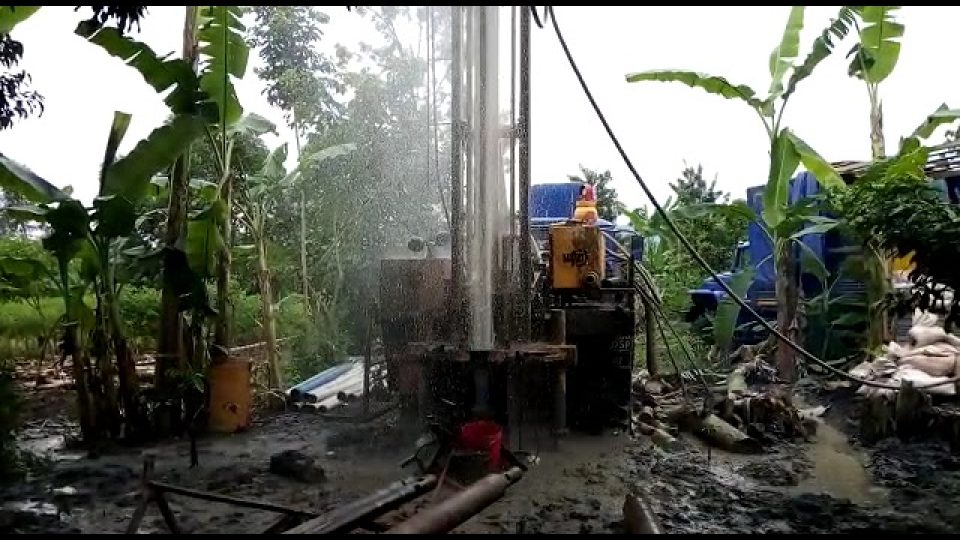 Play video: Production well drilling in Jinja District, Uganda (from YouTube)
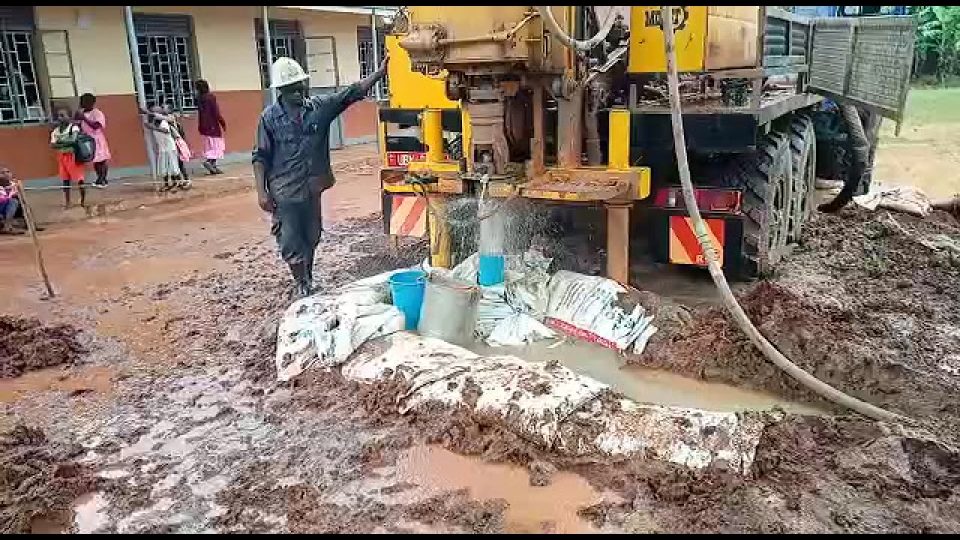 Play video: Drilling and well development of a motorized borehole for a primary school (from YouTube)
Videos play from YouTube when you press play.

SANKOFA, a leading water engineering company, active in the field of borehole drilling is a trusted consultant for hydrogeological...

As one of the leading water engineering companies in Uganda, SANKOFA offers advanced technical solutions in the field of water tre...

As one of the leading water engineering companies in Uganda, SANKOFA offers customized water supply system designs that are effici...
Tell our team what you need. We will review the scope and prepare the next steps.