

Shallow Wells and Hand Dug Wells – Understanding the Advantages and Setbacks of Shallow Well Drilling
SANKOFA, a leading water engineering company, active in the field of borehole drilling is a trusted consultant for hydrogeological...
Water Resources, Sanitation, and Public Health Engineering
Rainwater harvesting is the collection, filtering, storage, and distribution of rainwater. This can be used for irrigation of lawns, or as an emergency supply or even as a complete off-the-grid system. Depending on the volumes stored, the water could be collected into water tanks or reservoirs.
At SANKOFA, we undertake feasibility studies, design, and installation of rainwater harvesting systems, for both above ground and underground storage tanks. All our systems incorporate water purification and filtration technologies as first flush (foul flush) diverter systems and rainwater filters, ensuring high quality water goes to the storage tanks and reservoirs. Our designs can either be based on dry rainwater harvesting systems or wet rainwater harvesting systems, according to client preferences. We also implement other complex rainwater harvesting and stormwater runoff management initiatives as rain gardens, managed aquifer recharge (MAR) and injection wells, water pans, sand dams, and valley tanks (valley dams).
Our rainwater harvesting consultancy and implementation services encompass but are not limited to the following;
We offer numerous types of water and reservoir storage tanks, such as;
First Flush Diverter Systems.
Whenever it starts to rain, dirt and debris from catchment surfaces and collection devices will be washed into the conveyance systems (e.g., down-pipes). Relatively clean water will only be available sometime later in the storm. This first batch of each rainfall is known as “first flush/foul flush”. This first rain shower must be diverted away from the storage tank to avoid contaminating storable water with pollutants from the atmosphere and the catchment roof.
Several manual and automated means of selectively collecting clean water for the storage tanks exist. One such method is the use of constant and adjustable volume first flush diverters.
How it Works.
First flush diverters are installed at each downspout that supplies water to the tank, or where the downspouts enter the tank. They utilise a dependable ball and seat system. As the water level rises in the diverter chamber, the ball floats and, once the chamber is full, the ball rests on a seat inside the diverter chamber, preventing any further water from entering. The subsequent flow of water is then automatically directed along the pipe system to the tank. A floating ball valve stops the diverted water from washing back out of the diverter and into the tank. A small drain hole near the end of the diverter pipe allows the diverted water to run out slowly so that the diverter is empty and ready for the next rainfall. A threaded cap is placed at the end of the diverter pipe to allow for periodic removal of leaves and other debris (The first flush pipe should be bigger than the inlet pipe, to ensure sufficient closure/sealing).
A few reasons why a first-flush diverter can make a big difference in your rainwater catchment system:
The diverted water is discarded or used in applications that do not require high quality water.
Rooftop Rainwater Filters.
Rainwater harvesting is a technique of collection and storage of rainwater into natural reservoirs or tanks, or the infiltration of surface water into subsurface aquifers (before it is lost as surface runoff). One method of rainwater harvesting is rooftop harvesting. With rooftop harvesting, almost any surface i.e. tiles, iron sheets, can be used to intercept the flow of rainwater and provide a household with water.
We install and retrofit rooftop rainwater filters to new and existing rainwater harvesting systems. The rooftop rainwater filter is a simple, low tech, low maintenance technology that filters any physical impurities in your harvested rainwater, prior to storage. With 60-, 130-, and 136-micron mesh filters, our rainwater filters are able to filter out physical impurities that are as tiny as the thickness of a human hair. The rainwater filters are critical for keeping rainwater clean in the storage tank. They prevent silt, dust, leaves, and other organic matter from entering the storage tank.
Stormwater Management (Flood Risk Management) and Stormwater Infrastructure.
Whenever it rains, cities produce what is called stormwater runoff. Stormwater runoff is what happens when rain falls on roads, driveways, parking lots, and other paved surfaces that do not allow water to soak into the ground. Left unattended to, this stormwater runoff results in floods, leading to huge economic losses, damage on physical infrastructure and assets, as well as loss of lives. As such, efficient stormwater management becomes crucial for modern urban planning and infrastructure development.
We undertake various stormwater management solutions/infrastructure, to address flood risk occurrence, ultimately preventing both property and life loss and minimising the resulting pollution of surface waters as a result of contaminated street runoff. Our various interventions include use of rainwater regulating pits, key to tackling flash flooding in urban environments. These are fitted with applicable pumping facilities to pump the stormwater to rainwater percolation pits; helping tackle flash floods. We also design and implement rain gardens at domestic level to manage drainage and control flood occurrences through reduction of volume of runoff from individual households, roofs, driveways, walkways, parking lots, pavements, and other hard catchment surfaces. These bioretention facilities increase rain runoff reabsorption by the soil and can as well be used to treat polluted stormwater runoff. Other high efficiency solutions deployed by our team include bio swales, HDPE stormwater systems, etc.
Our focus is on efficient and innovative bioremediation systems that capture, filter pollution/chemicals from stormwater runoff, and recharge groundwater, effectively reducing runoff volume. We also implement advanced interventions as flood alert kits and warning systems, which are sensor enabled flood monitoring systems (flood early warning systems).
We implement physical stormwater infrastructure solutions ranging from backup dewatering stations that can survive power outages to stormwater pumping solutions that can reduce the risk of overflows. Our social infrastructure interventions include disaster planning, capacity-building, and training to help communities mobilize in the event of flood disasters. Both interventions are critically important elements of an urban resilience strategy.
In our stormwater management, we perform stormwater modelling for proposed solutions to ensure they meet installation demands for stormwater compliance.
Managed Aquifer Recharge Systems.
Under our rainwater harvesting program, we enable you to harness storm water. We thus design and implement surface water infiltration systems for high volumes of water flowing from paved surfaces i.e., compounds and roads, and channel this into an injection well. Our systems are excellent in diverting, filtering, and retaining storm water in an injection well, thereby augmenting groundwater level. We also use this technology to solve problems of flooding in all environmental settings. Our services are trusted and effective for any groundwater banking initiatives, managed aquifer recharge programs, surface runoff harvesting, and groundwater recharge. Commonly used recharging methods include recharging borewells, dammed storage, recharging pits, rain gardens/bioretention cells, etc.
Other methods of MAR techniques that are we implement include aquifer storage and recovery (ASR), aquifer storage transfer and recovery (ASTR), soil aquifer treatment (SAT), percolation ponds, infiltration galleries, check dams, river bank filtration (RBF), rain water harvesting (RWH), dry wells, dune filtration, underground dams, and sand dams. Our criteria for adopting a particular method of MAR depends on the land use, geological conditions (topography, drainage, type of formation, rocks), aquifer types (confined, unconfined, and semi-confined), and water quality. Water from different sources (stormwater, reclaimed water, mains water, desalinated seawater, rainwater, and groundwater from other aquifers) of different quality can be used for MAR with appropriate pre-treatment before recharge.
To successfully implement Managed Aquifer Recharge, understanding the soil and landscape characteristics is essential. While MAR technology is relatively simple and robust, extracting every drop of injected water requires precise modelling and expertise. Our design process begins with mapping suitable locations using geological maps and studying the landscape. Once the most suitable locations have been selected with the client, more accurate soil modelling, mapping, and monitoring are used to determine the optimal placement of injection wells and production wells. Calculating the retention time is crucial, ensuring that the soil and bacteria have ample time to treat the injected water, and the highest yield can be achieved from the pumping wells without creating springs in the area. MAR technology offers various possibilities for the water industry. The injected water can be treated wastewater, salt-free potable water, salt-free water to remediate brackish groundwater, or clean water to remediate contaminated groundwater.
It is imperative to note that the successful implementation of any rainwater harvesting system requires meticulous planning and execution to avoid common mistakes. The process of rainwater harvesting isn’t as simple as simply collecting rainwater in a storage tank. It demands careful planning, precise execution, and regular maintenance to avoid common pitfalls and ensure the system functions efficiently. With well-founded knowledge in rainwater harvesting, SANKOFA has earned a mark of distinction as a national leader in smart rainwater harvesting technologies in Uganda, and is thus your trusted partner in undertaking the design and installation of rainwater harvesting, filtration, and storage projects.
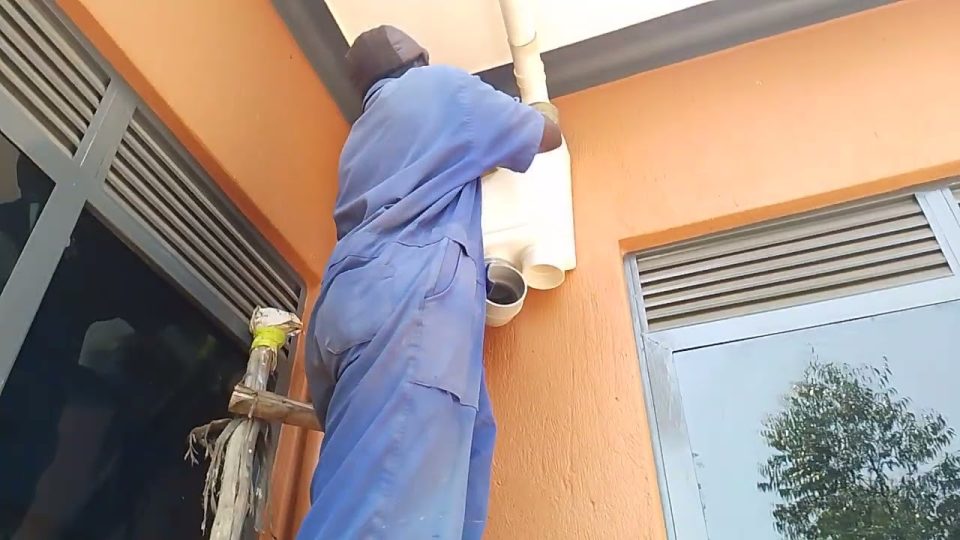 Play video: Automatic rainwater filtration system for rooftop catchment (from YouTube)
 Play video: Installation of rooftop guttering and rainwater filter for a rainwater harvesting system in Mpigi (from YouTube)
Videos play from YouTube when you press play.

SANKOFA, a leading water engineering company, active in the field of borehole drilling is a trusted consultant for hydrogeological...

As one of the leading water engineering companies in Uganda, SANKOFA offers advanced technical solutions in the field of water tre...

As one of the leading water engineering companies in Uganda, SANKOFA offers customized water supply system designs that are effici...
Tell our team what you need. We will review the scope and prepare the next steps.